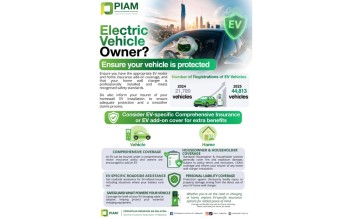
Following a recent fire at a Cheras property involving an electric vehicle home charger, Malaysia's General Insurance Association (PIAM) has moved to reassure homeowners about their coverage under existing insurance policies. The association's chief executive officer Chua Kim Soon issued a comprehensive statement addressing widespread concerns about whether standard Malaysian insurance products adequately protect properties damaged by EV charging incidents, effectively laying to rest misconceptions about potential coverage gaps that have circulated since the Cheras incident.
Standard house owner and fire insurance policies sold in Malaysia are designed to cover a broad spectrum of fire damage scenarios regardless of what initially sparked the blaze, according to PIAM's position. This blanket protection applies universally across the market, provided policyholders have acted in good faith and maintained compliance with their policy's stated conditions. The critical caveat, however, is that this coverage excludes situations involving fraud, deliberate acts of arson, or breaches of policy requirements—standard safeguards that form the backbone of insurance underwriting globally.
The classification of EV charging equipment within insurance policies varies depending on the installation type, which carries important implications for homeowners investing in electric vehicle infrastructure. Permanent, hard-wired chargers that are integrated into the home's electrical system are typically classified as fixtures and fittings under the buildings section of a standard home policy. By contrast, portable or unattached charging cables generally fall outside this framework and instead require coverage through specialised electric vehicle insurance add-ons or dedicated motor insurance packages that insurers have begun rolling out as EV adoption accelerates across Malaysia.
Insurers maintain strict expectations regarding homeowner responsibility in maintaining electrical safety standards and taking reasonable precautions to prevent loss. When evaluating claims arising from fire or electrical incidents, insurers conduct thorough investigations that incorporate findings from professional sources such as fire department reports. These investigations serve a dual purpose: they verify the authenticity of the claim while simultaneously ruling out scenarios involving deliberate arson, fraudulent claims, or installations that violate Malaysian electrical codes and safety regulations. Non-compliance with statutory requirements—such as unauthorised electrical modifications or the use of uncertified components—can materially affect coverage eligibility.
Chua emphasised that homeowners who install permanent EV chargers must actively notify their insurers as part of their policy management obligations. This proactive disclosure is far more than a bureaucratic formality; it represents a crucial protective measure that ensures the property's declared sum insured accurately reflects current rebuilding costs in light of the electrical infrastructure upgrades. Clear notification also eliminates potential ambiguity during the claims process, establishing that the insurer was aware of the modification and accepted the risk accordingly. Failure to declare such upgrades could theoretically create disputes at claims time, making this notification step essential for protecting one's interests.
Homeowners should conduct a thorough audit of their existing policies to confirm that the sum insured reflects the true replacement value of their property in its current state. This assessment becomes particularly important after any substantial renovation, upgrade, or addition of new fixtures like EV charging infrastructure. Properties that have been significantly modified since the initial policy purchase often carry outdated sum insured figures that fail to account for inflation and the installation of expensive modern systems. Rectifying this mismatch before disaster strikes prevents the potentially catastrophic scenario of being underinsured at the moment a claim is filed.
The question of public liability assumes heightened importance in Malaysia's densely populated residential landscape, where properties frequently share walls or are stacked vertically in high-rise complexes. Should an EV charger fire spread beyond the boundaries of one homeowner's property to damage a neighbouring unit—a realistic scenario in terraced houses or apartment buildings—public liability coverage becomes critical for protecting against third-party claims. While standard house owner policies typically provide a baseline public liability limit of RM50,000, this figure may prove insufficient to cover substantial damage to adjacent properties. PIAM has advised that homeowners should consider purchasing optional extensions to increase these liability limits to more appropriate levels for their residential environment.
EV owners navigating Malaysia's insurance landscape should treat their motor and home insurance policies as complementary components of a comprehensive protection strategy rather than standalone products. Reviewing both policies in tandem helps identify coverage gaps that might otherwise leave EV owners financially exposed to losses involving the vehicle itself, the charging equipment, or damage to the residential structure. As EV adoption continues its rapid acceleration in Malaysia, insurers are actively developing purpose-built coverage solutions, but homeowners must take ownership of understanding what their existing policies actually cover and what gaps remain.
The PIAM statement reflects the insurance industry's effort to provide clarity during a period when EV technology remains relatively novel to Malaysian homeowners and public perception of EV fire risks has been shaped by occasional high-profile incidents. By confirming that standard policies provide broad coverage protection, the association aims to reduce unnecessary anxiety whilst simultaneously reinforcing the importance of proper disclosure, electrical compliance, and adequate policy limits. For Malaysian homeowners considering EV adoption or those already operating chargers at home, the message is clear: existing policies likely provide sufficient foundation, but proactive engagement with insurers and policy reviews are essential to ensure gaps do not emerge when protection is needed most.

