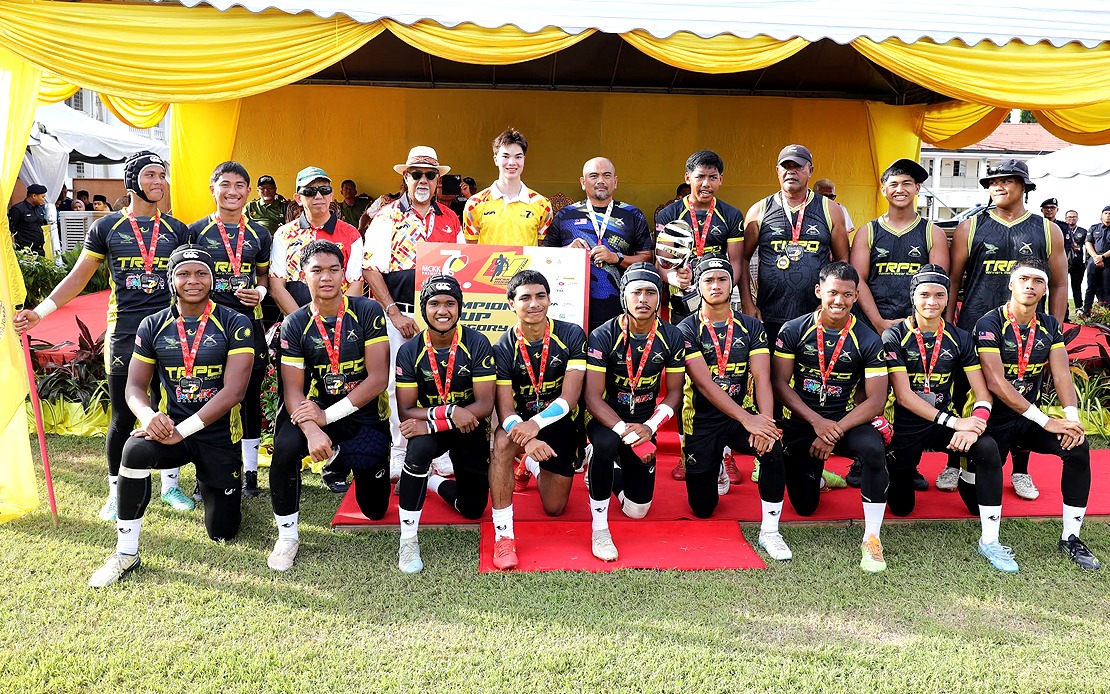
Sekolah Sukan Malaysia Pahang has successfully maintained its grip on the MCKK Premier 7s rugby championship, capturing back-to-back titles with a hard-fought 19-14 victory against Sekolah Sukan Tunku Mahkota Ismail in the Cup final held at Malay College Kuala Kangsar's rugby field in Perak on July 5. The triumph marks SSMP's second consecutive claim to the NJ Ryan Trophy, underlining the institution's dominance in Malaysia's elite school rugby sevens competition and its emergence as a force to be reckoned with in the national youth sporting landscape.
The contest between Malaysia's two preeminent school rugby programmes proved to be a thrilling encounter that captivated spectators and reflected the depth of talent now present in Malaysian secondary school rugby. Both SSMP and SSTMI displayed polished attacking movements and resolute defensive organisation throughout the match, with neither side willing to concede an inch as the competition intensified. SSMP's capacity to manage the pressure mounted by SSTMI in the latter stages of the final, while simultaneously converting their own scoring opportunities, proved decisive in securing the trophy and reinforcing their credentials as the tournament's premier outfit.
The significance of SSMP's achievement extends beyond mere trophy collection. The school's consecutive titles reflect a systematic approach to player development, coaching excellence, and sustained investment in rugby infrastructure that has positioned Pahang's sports academy as a model institution within Malaysia's competitive secondary school sports ecosystem. For Malaysian rugby administrators and observers, SSMP's success demonstrates the viability of establishing dedicated sports schools capable of nurturing young talent whilst maintaining academic standards, a balance that many national sporting bodies have struggled to achieve.
The competitive structure of the 14th edition of the MCKK Premier 7s, which encompasses multiple divisions beyond the premier competition, ensured that schools of varying development stages could participate meaningfully. SMK Tun Hussein Onn claimed the Plate division trophy with a 24-19 victory over Sekolah Sultan Alam Shah, capturing a secondary competition that provides valuable experience for emerging programmes. This layered tournament design reflects contemporary best practices in youth sports management, allowing younger or less experienced teams to gain competitive exposure without being overwhelmed by elite opponents.
The Bowl division saw SMK Hosba emerge victorious following a 17-12 triumph against SMK Syed Sirajuddin, further demonstrating the breadth of competitive rugby talent across Malaysia's boarding and day schools. Such results indicate that rugby proficiency has extended beyond the traditional powerhouses, with newer programmes developing credible player bases and tactical understanding. The proliferation of competitive opportunities across multiple divisions encourages wider participation and creates pathways for schools seeking to build rugby traditions from developing foundations.
SMK Hosba's success in the Bowl competition represents a particularly encouraging development for Malaysian school rugby's growth trajectory, as it indicates that institutions outside the traditional elite circle are cultivating playing standards sufficient to compete effectively in formal championships. This expansion of competitive depth bodes well for the future of the sport at the secondary school level, suggesting that talent development is becoming increasingly geographically and institutionally distributed across the nation.
The Shield division concluded with MRSM Balik Pulau delivering a dominant performance, crushing Royal Military College 22-0 to secure that championship tier. The emphatic margin of victory suggests a considerable gap in developmental standards between certain institutions, a reality that tournament organisers and the Malaysian school rugby governing bodies must address through targeted capacity-building initiatives and player development programmes targeting underperforming schools.
Royal Military College's winless outcome in the Shield final underscores the challenge facing even historically prominent sporting institutions in maintaining competitive standards amidst evolving national school rugby dynamics. The college's inability to trouble the scoreboard against MRSM Balik Pulau indicates that even schools with established sporting traditions require continuous investment and modernisation to remain competitive in increasingly professionalised youth sports competitions.
The tournament's closing ceremony and trophy presentation were conducted by Raja Datuk Seri Azlan Muzaffar Shah, son of the Sultan of Perak, whose presence underscored the event's significance within Perak's sporting calendar and the royal family's continued patronage of Malaysian youth rugby development. The involvement of senior royal figures in ceremonial rugby occasions reinforces the sport's status within Malaysia's institutional hierarchy and provides important symbolic validation for young athletes competing at this level.
The 14th iteration of the MCKK Premier 7s tournament continues a legacy spanning more than a decade, demonstrating the event's establishment as a cornerstone fixture within Malaysia's secondary school rugby calendar. The tournament's longevity and consistent participation from the nation's leading rugby schools has contributed substantially to elevating playing standards and creating competitive benchmarks that motivate younger players to pursue rugby excellence.
For Malaysian rugby stakeholders, the tournament results reveal an emerging two-tier competitive structure, with SSMP and SSTMI consistently occupying the elite tier whilst other schools occupy secondary rankings. This concentration of quality at the apex, whilst disappointing from a competitive distribution perspective, reflects the reality that sustained institutional commitment and resource allocation are prerequisites for achieving and maintaining championship standards in modern youth sports competition.
Looking forward, the challenge facing Malaysian school rugby administrators involves broadening the competitive base beyond the traditional powerhouses whilst maintaining the quality standards demonstrated at the MCKK Premier 7s. Achieving this balance requires sustained investment in grassroots development programmes, coaching education, and facility infrastructure across a wider geographical and institutional spread. SSMP's back-to-back championship victories serve as an important reminder that excellence in youth sports is achievable through dedication and systematic planning, offering an aspirational model for other Malaysian schools seeking to develop competitive rugby programmes.

