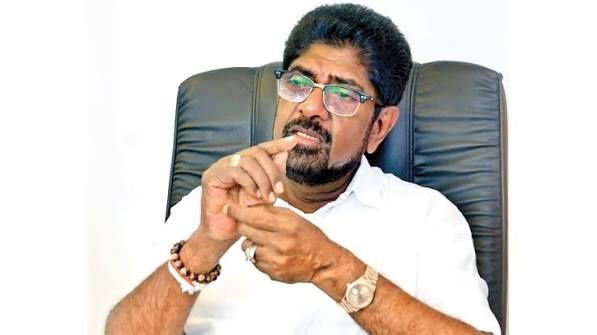
Sri Lanka's anti-corruption authorities have arrested former minister Keheliya Rambukwella over allegations that he played a role in the theft of a historically significant carved stone from the royal palace of one of the island's last independent monarchs. The Commission to Investigate Allegations of Bribery or Corruption announced the detention on Tuesday, August 18, connecting Rambukwella to the December 2022 removal of the moonstone, an ornamental granite object that formed part of the ceremonial entrance to the palace of King Veera Parakrama Narendrasinghe, who ruled until 1739.
The moonstone represents far more than a mere decorative artefact in Sri Lankan cultural memory. As a stepping stone at the symbolic threshold of royal quarters, it embodied the sophisticated architectural and spiritual conventions of the Kandyan Kingdom during its final century of independent rule. The theft of such an object carries particular resonance in Sri Lanka, where questions of national heritage preservation have become intertwined with broader concerns about institutional accountability and the stewardship of public assets during periods of crisis.
According to the corruption commission, Rambukwella did not simply remain passive during the theft but actively conspired, aided, and abetted the criminal act while holding ministerial office. More significantly, authorities alleged that he subsequently obstructed police investigations into the matter, attempting to shield the perpetrators from judicial scrutiny. These obstruction allegations suggest a deliberate effort to prevent accountability rather than a momentary lapse in judgment, lending weight to charges of systemic misconduct within state institutions.
The arrest represents merely one strand in a densely woven pattern of legal troubles ensnaring Rambukwella. Prosecutors have simultaneously pursued him on an entirely separate charge involving the misappropriation of state funds, specifically accusing him of using government money to employ six individuals for his personal commercial enterprises. This allegation points to a troubling pattern of boundary-crossing between public resources and private benefit, a recurring dysfunction that has plagued Sri Lankan governance.
More gravely still, Rambukwella faces ongoing court proceedings stemming from his tenure as health minister, during which the state procurement system acquired counterfeit pharmaceuticals intended for public hospitals. Police investigations revealed that under his authorization, the ministry purchased what was supposed to be a life-saving cancer medication that proved to be mere water—a devastating failure of institutional safeguards that directly jeopardized patient welfare and public trust. Multiple senior health ministry officials have been similarly indicted for their roles in this pharmaceutical scandal.
The timing and context of these overlapping investigations illuminate the state of institutional breakdown that characterized Sri Lanka during its acute economic convulsion. When Rambukwella held the health portfolio, the nation was grappling with an unprecedented medical supply crisis precipitated by its April 2022 default on approximately USD 46 billion in foreign obligations. The country's descent into bankruptcy had precipitated acute shortages across pharmaceutical inventories, creating desperation that may have enabled or necessitated the procurement of dubious medicinal products.
Yet the parallel investigations also suggest that desperation alone cannot excuse the alleged conduct. The counterfeit drug acquisition represented not merely a consequence of systemic scarcity but potentially a criminal betrayal of institutional responsibility. Similarly, the alleged conspiracy surrounding the moonstone theft occurred in a context where economic collapse had weakened institutional oversight and created opportunities for extraction of valuable assets—though again, this context does not diminish the seriousness of the allegations.
For Malaysian observers, these developments carry instructive implications about institutional vulnerabilities during periods of severe economic stress. Sri Lanka's crisis exposed how financial collapse can corrode the internal systems designed to restrain official misconduct. When a state defaults on foreign obligations and faces acute shortages of essential goods, the normal bureaucratic constraints that discourage outright theft or procurement fraud can become attenuated. Officials facing budget constraints or public pressure may rationalize irregular conduct as necessary improvisation.
Furthermore, the case underscores how individual corruption investigations, while necessary, may obscure deeper structural failures. Rambukwella's alleged actions occurred within institutional frameworks that failed to prevent or detect them adequately. The police and audit systems that should have flagged suspicious pharmaceutical purchases or unauthorized removal of cultural heritage appear to have functioned inadequately, raising questions about systemic checks and balances rather than merely individual malfeasance.
The courtroom proceedings against Rambukwella will likely extend over considerable time, given the multiple distinct offences involved. For Sri Lanka's recovery from economic catastrophe, however, the symbolic importance of holding senior officials accountable may ultimately matter as much as the specific verdicts. International creditors and domestic investors assessing Sri Lanka's return to stability are monitoring whether the state possesses the institutional capacity to investigate and prosecute high-level corruption despite economic pressures and political complications.
The arrest also signals that anti-corruption institutions, notwithstanding resource constraints inherent in a bankrupt state, are pursuing investigations with apparent vigour. The CIABOC's public announcements and coordinated efforts with police suggest that political will exists, at least currently, to pursue accountability for misconduct allegedly occurring at senior levels of government. Whether this trajectory persists as Sri Lanka negotiates its path toward economic stabilization will constitute a crucial indicator of institutional health.

