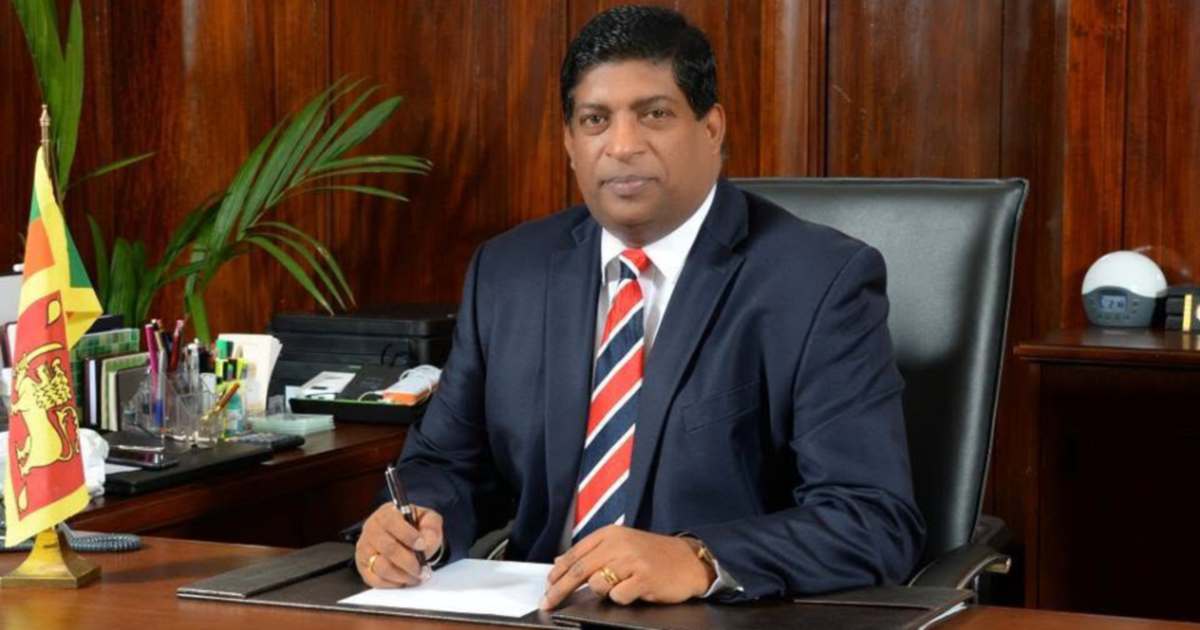
The arrest of Sri Lanka's former finance minister Ravi Karunanayake on Monday represents the latest in a series of high-profile corruption investigations that have continued to plague the island nation's political establishment. According to the country's principal anti-corruption authority, Karunanayake stands accused of channelling public money toward salaries and compensation for staff employed in his private capacity—a breach that underscores persistent questions about financial accountability within Sri Lanka's top-tier governance structures.
The timing of this development carries particular significance for Sri Lanka, which has been grappling with severe economic turbulence in recent years. The nation faced a crippling financial crisis not long ago, triggering widespread public resentment toward political elites perceived as having mismanaged or plundered state resources. Against this backdrop, investigations into former ministers become focal points for public anger and demands for systemic reform. Karunanayake's tenure as finance minister placed him at the epicentre of budgetary decisions during a critical period, making scrutiny of his financial conduct especially sensitive.
The allegations centre on a practice that resonates across Southeast Asia's governance challenges: the blurred boundaries between official duty and personal benefit. Using state machinery and resources to support private interests has become a recurring theme in anti-corruption campaigns throughout the region. Malaysia itself has witnessed similar investigations and prosecutions involving former government officials accused of misappropriating public funds for personal or family purposes. These parallel cases suggest a regional pattern requiring coordinated attention from transparency advocates and watchdog organisations.
Anti-corruption bodies in post-crisis economies face immense pressure to demonstrate effectiveness while navigating political sensitivities. Sri Lanka's anti-corruption authority has been tasked with restoring public confidence in institutional integrity. The decision to arrest a former finance minister—a figure of considerable political stature—signals that investigators are willing to pursue investigations regardless of rank or previous position. This approach, though sometimes inconsistently applied across different cases, represents the formal commitment to equal accountability under law.
Karunanayake's arrest also reflects broader struggles within Sri Lanka's institutional framework regarding the oversight of public expenditure. Financial controls designed to prevent the diversion of state resources from their intended purposes evidently failed to detect or prevent the alleged misconduct. This raises uncomfortable questions about the adequacy of internal audit mechanisms, the robustness of oversight committees, and whether systemic vulnerabilities enabled such alleged breaches to occur over an extended period without detection.
The ripple effects of high-profile corruption cases extend beyond the individual accused. When former ministers face prosecution, it inevitably influences investor confidence, complicates diplomatic relations, and shapes public perception of the government's commitment to reform. Foreign investors evaluating Sri Lanka as a destination for long-term engagement pay close attention to how the country handles corruption within its political class. Similarly, bilateral and multilateral economic partnerships often hinge partly on perceptions of institutional integrity and the rule of law.
For ordinary Sri Lankans, particularly those affected by austerity measures implemented during the economic crisis, allegations of state fund misappropriation represent a visceral betrayal of public trust. The financial hardships endured by households and businesses intensify public anger when evidence emerges that state resources may have been diverted toward enriching officials or their associates. This dynamic transforms corruption cases from purely legal matters into deeply political and social phenomena.
The investigation into Karunanayake's conduct will likely involve complex forensic accounting, examination of government records spanning several years, and potential coordination between multiple agencies. Such investigations typically consume substantial institutional resources and proceed at a deliberate pace. Establishing clear evidence of wrongful diversion requires meticulous documentation and often involves tracing financial flows through multiple accounts and intermediaries. The thoroughness of such investigations, while necessary for securing convictions that withstand legal scrutiny, means that public resolution may take considerable time.
For the Southeast Asian region, Sri Lanka's corruption investigation landscape offers instructive lessons about both the possibilities and limitations of formal accountability mechanisms. While anti-corruption bodies can pursue high-level figures, structural factors—including political interference, resource constraints, and institutional capacity—often determine whether investigations produce meaningful outcomes. Malaysia's own experiences with major corruption cases demonstrate how the courts, media scrutiny, and public pressure collectively shape the trajectory of high-profile prosecutions.
The arrest also underscores the vulnerability of transitions and institutional reform processes in emerging democracies. Sri Lanka, navigating recovery from economic crisis while attempting to strengthen governance standards, faces the challenge of maintaining investigative momentum while managing potential political backlash. Former officials under investigation sometimes enjoy residual networks of support within government and bureaucracy, creating complications for smooth prosecution.
Moving forward, the case will test whether Sri Lanka's anti-corruption architecture can deliver tangible consequences for alleged wrongdoing at the highest levels. Public expectations, shaped by years of economic hardship and perceived elite impunity, have reached a point where mere investigations prove insufficient—citizens increasingly demand convictions and meaningful penalties. The Karunanayake case thus represents more than an individual accountability moment; it functions as a barometer of the country's institutional capacity to address systemic governance failures that contributed to the broader economic crisis.

