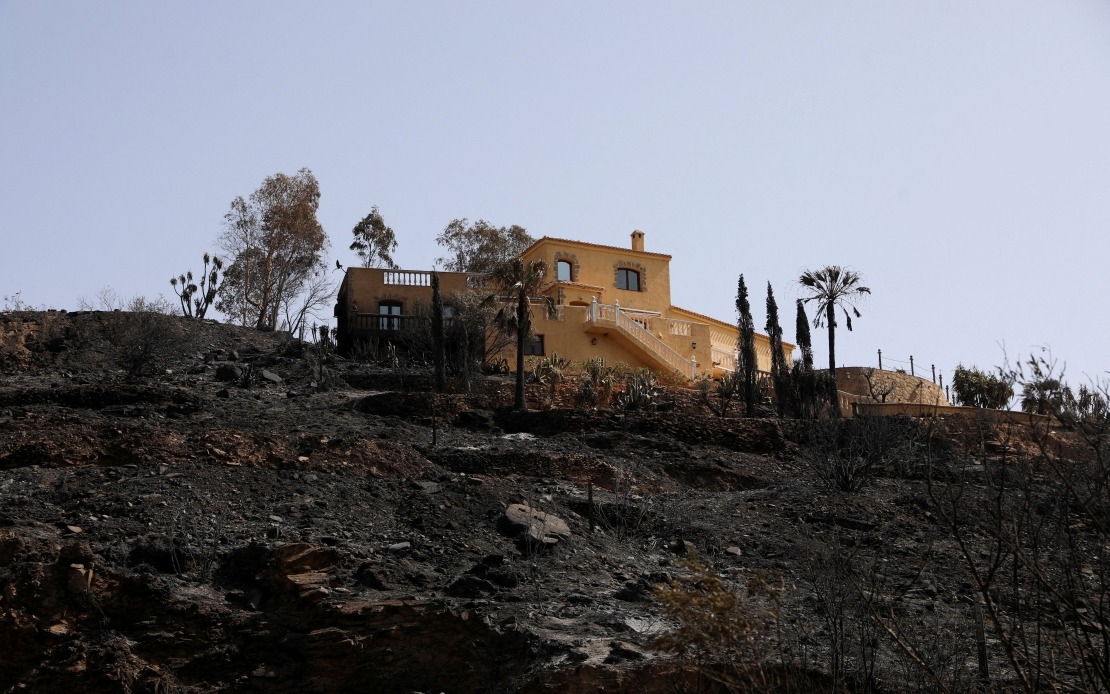
A major wildfire ravaging Spain's southeastern province of Almeria has claimed 13 lives, with regional authorities announcing Sunday that the uncontrolled blaze has been stabilised following days of intensive firefighting efforts. The disaster has left seven people hospitalised, three in critical condition, whilst another ten individuals remain listed as missing and unaccounted for in the affected areas. Many of those impacted by the conflagration are foreign nationals, according to Spain's public broadcaster RTVE, underscoring the international dimensions of this catastrophe in one of Europe's popular tourist and expatriate destinations.
The destructive fire erupted on Thursday in the vicinity of Los Gallardos municipality, located within Almeria province in the Andalusian autonomous community of southern Spain. The advancing flames consumed approximately 7,000 hectares of terrain, destroying homes, agricultural land, and natural vegetation across a vast swathe of the region. The sheer scale of the affected area represents one of the most significant fire-related disasters witnessed in Andalusia's recent history, triggering an extensive emergency response that mobilised hundreds of personnel, equipment, and resources to combat the rapidly spreading inferno.
The achievement of fire stabilisation represents a significant turning point in containment operations, enabling regional authorities to gradually scale back emergency protocols and begin permitting displaced populations to return to their residences. Approximately 600 residents were authorised to leave evacuation centres on Saturday, with around 1,000 additional evacuees granted clearance to return to their homes following Sunday's official announcement of stabilisation. This gradual reopening of previously affected communities reflects growing confidence among emergency coordinators that the immediate threat has been sufficiently minimised, though complete extinguishment and full containment remain ongoing objectives requiring continued vigilance.
Investigators continue examining circumstances surrounding the fire's ignition, with preliminary evidence suggesting the collapse of an electricity transmission pole or associated cable infrastructure may have initiated the conflagration. This emerging hypothesis points toward an accidental cause rooted in power distribution system failure, rather than deliberate arson or natural ignition sources. The investigation remains active as authorities gather additional evidence from the devastated landscape, though early indications of electrical malfunction as a trigger have already gained prominence in preliminary assessments shared with media and governmental officials.
Juanma Moreno, chief executive of Andalusia's regional government, issued a statement emphasising that the wildfire had ceased advancing and remained contained within its established perimeter, yet cautioned that substantial additional work remained necessary before authorities could declare the emergency fully resolved and the flames completely extinguished. His remarks acknowledged the ongoing challenges facing response teams, even as the immediate crisis entered a more manageable phase. Moreno utilised the opportunity to advocate for heightened public and governmental attention to climate change, characterising the disaster as a stark illustration of accelerating environmental degradation affecting the region and broader global systems.
The regional leader's commentary connected the severity and scale of this particular wildfire incident to broader climatic transformation reshaping risk profiles across southern Europe. Moreno stressed that climate change was fundamentally altering conditions in ways that intensified complexity in wildfire management, producing increasingly unprecedented conflagrations that stretched response capacity and exceeded conventional firefighting methodologies. His assertion that wildfires were becoming progressively more formidable and difficult to suppress reflects scientific consensus regarding climate-driven intensification of fire seasons and fire behaviour patterns across Mediterranean regions and beyond.
For Malaysian and Southeast Asian observers, the Almeria disaster carries instructive implications regarding wildfire management and climate resilience. Southeast Asia experiences comparable seasonal fire phenomena, particularly during dry seasons in Indonesia, Malaysia, and neighbouring regions, where transboundary smoke and air quality crises regularly affect millions across the broader area. The Spanish experience demonstrates how even heavily developed European nations with substantial firefighting resources face mounting challenges from climate-intensified wildfires, suggesting that developing nations in Southeast Asia require substantial investment in fire preparedness, early warning systems, and coordinated regional response mechanisms.
The incident also underscores vulnerability of expatriate and foreign national populations during natural disasters, a consideration highly relevant to Malaysia as a regional hub hosting significant numbers of international workers and residents. Emergency response frameworks must ensure adequate translation services, culturally appropriate support systems, and targeted communication strategies reaching diverse populations who may lack fluency in local languages or familiarity with emergency procedures. The Almeria fire's international casualty profile demonstrates that disaster preparedness planning cannot focus exclusively on citizen populations but must encompass transient and migrant communities occupying affected territories.
Climate change adaptation emerges as a critical policy priority evident from this Spanish wildfire's devastating toll. The combination of rising temperatures, altered precipitation patterns, and extended dry seasons creates conditions favouring rapid fire spread and intensity. Southeast Asian governments and Malaysia specifically should view the Almeria disaster as validation of urgent necessity for comprehensive climate action, investment in green infrastructure, forest conservation initiatives, and integrated disaster risk reduction frameworks. Regional cooperation mechanisms addressing transboundary fire phenomena and shared atmospheric challenges warrant acceleration and strengthening, given how fire smoke and air pollution readily cross political boundaries affecting multiple nations simultaneously.
The Almeria wildfire's trajectory from Thursday outbreak through Sunday stabilisation compressed immense human suffering, environmental destruction, and emergency response mobilisation into a compressed timeframe demonstrating both the rapidity of contemporary fire behaviour and the demanding nature of containment operations. As investigations continue and recovery processes begin in the affected province, the lessons distilled from this catastrophe will inform ongoing discussions regarding climate resilience, infrastructure vulnerability, and population protection strategies across Europe and internationally. For Southeast Asia specifically, the Spanish experience reinforces that proactive investment in wildfire prevention, early warning technologies, and coordinated regional response architecture represents not optional policy flourish but essential infrastructure for protecting populations and ecosystems from escalating climate-driven hazards.

