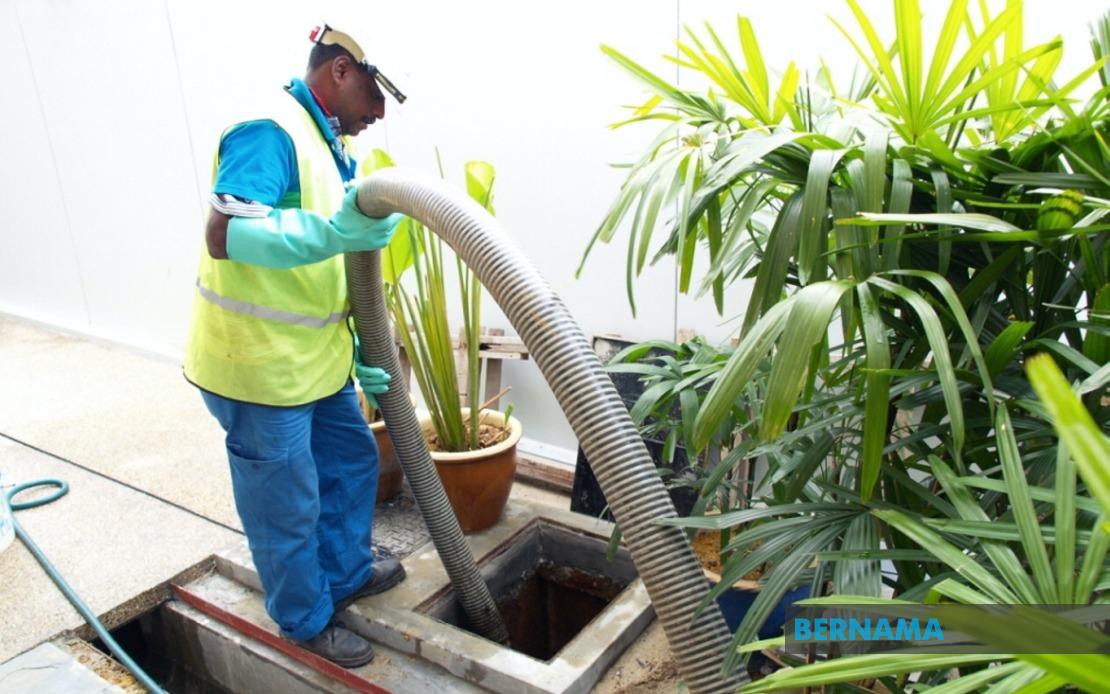
The National Water Services Commission (SPAN) has intensified regulatory scrutiny of sanitation infrastructure in Sungai Petani, issuing 270 compliance notices to property owners in the commercial district for systematic failure to maintain septic tank systems. The enforcement sweep, conducted during an operation spanning August 4 to 6, revealed a troubling pattern of long-term neglect affecting both business and residential premises across the town.
According to Ainal Yusman Mohamad Yusop, director of SPAN's Operations Division Enforcement Section, the initiative—designated Ops Padi 2—examined 341 premises in total, comprising 242 commercial establishments and 99 domestic residences. The operation uncovered that across nearly 80 percent of inspected sites, property owners had contravened maintenance directives previously issued by Indah Water Konsortium Sdn Bhd (IWK), the designated waste management service provider for the area. This widespread violation prompted SPAN to issue formal compliance notices requiring immediate remedial action.
The underlying infrastructure challenge stems partly from the age of Sungai Petani's building stock. A significant proportion of the premises subject to enforcement notices were constructed during the 1970s and 1980s, when septic systems were standard fixtures for properties lacking connection to centralized sewerage networks. Over decades, many property owners appear to have lost sight of maintenance obligations or perceived them as optional, allowing systems to deteriorate without professional attention. The enforcement data paints a stark picture of deferred responsibility: some septic tanks have undergone desludging—the professional emptying and cleaning process—only once in the past two decades, while others bear records indicating their last maintenance occurred in 1997 or 1999, suggesting gaps of 25 years or more in essential upkeep.
This regulatory action reflects Malaysia's evolving approach to environmental compliance, particularly regarding wastewater management in semi-urban centers where centralized infrastructure remains incomplete. Septic systems, when properly maintained, function as critical barriers against groundwater contamination and public health hazards. Conversely, neglected tanks become breeding grounds for pathogenic microorganisms, create overflow risks that contaminate soil and water resources, and generate methane emissions contributing to localized air quality degradation. For a town like Sungai Petani, which straddles agricultural and commercial zones with significant residential density, the implications of cumulative maintenance failures extend beyond individual properties to affect community-wide environmental and health outcomes.
Under the Water Services Industry Act 2006 (Act 655), Section 65(1)(c) explicitly mandates that premises owners maintain their septic systems by engaging licensed service providers or permit holders to execute desludging operations on a regular schedule. This legal framework establishes clear responsibility boundaries, placing onus directly on property owners rather than on public authorities. SPAN's enforcement posture interprets this statute actively, treating repeated non-compliance as a breach warranting regulatory intervention. The commission's approach signals that voluntary compliance cannot be assumed, necessitating periodic inspections and graduated enforcement responses.
Property owners receiving these compliance notices face a structured but consequential timeline. The initial 14-day response window provides opportunity to demonstrate corrective action by engaging licensed desludging contractors and scheduling tank emptying. However, failure to respond within this period triggers a documented escalation process. SPAN will proceed with supplementary enforcement mechanisms, including formal notices of alleged offense and formal investigations potentially leading to prosecution. For jurisdictions applying such enforcement, the documented trail of non-compliance significantly strengthens cases if matters reach adjudication.
The penalty framework attached to violations carries substantial weight. Anyone convicted of breaching Section 65(1)(c) faces potential fines reaching RM50,000, representing a meaningful financial sanction for individual property owners and business operators. This quantum reflects the Malaysian legislature's assessment that septic tank maintenance failures carry sufficient public health and environmental consequence to warrant upper-tier penalties. For commercial premises, such fines might directly impact operational margins or capital reserves, potentially motivating faster compliance than educational approaches might achieve.
The Sungai Petani operation illustrates broader patterns across Malaysia's secondary towns and semi-urban areas where centralized sewerage networks remain incomplete or absent. Municipalities throughout the northern and eastern regions of Peninsular Malaysia, particularly in Kedah, Terengganu, and Kelantan, likely encounter similar compliance challenges rooted in aging infrastructure, demographic shifts, and gradual erosion of maintenance discipline. SPAN's visible enforcement in Sungai Petani may serve as a precedent signaling that complacency regarding septic system stewardship carries regulatory consequences, potentially prompting property owners in comparable situations to review their own maintenance records preemptively.
For Malaysian businesses operating in Sungai Petani's commercial district, this enforcement action carries operational implications beyond immediate compliance costs. Companies subject to notices must allocate resources toward desludging contracts, typically ranging from RM300 to RM800 per tank per desludging event depending on tank size and accessibility. Beyond direct expenditures, regulatory notices potentially affect business licensing renewals, environmental compliance certifications, and corporate reputation within local business associations. Accumulated enforcement records might influence financial institutions' assessments when companies seek credit facilities, as environmental violations increasingly feature in risk evaluation matrices.
The broader significance of SPAN's Sungai Petani campaign extends to Malaysia's environmental governance infrastructure. The commission's capacity to mobilize targeted enforcement operations, coordinate with district authorities, and document violations comprehensively demonstrates institutional maturation in environmental compliance mechanisms. Successful enforcement initiatives build compliance culture by demonstrating regulatory presence and predictable consequences for violations. Over time, such visibility can shift behavioral norms, encouraging property owners to treat septic maintenance as routine operational responsibility rather than discretionary expense.
Moving forward, stakeholders in Sungai Petani and comparable towns would benefit from complementary approaches beyond enforcement alone. Public awareness campaigns highlighting health and environmental consequences of neglected septic systems, coupled with readily accessible directories of licensed desludging contractors, could reduce barriers to compliance. Local government authorities might consider subsidized desludging programs for low-income property owners, recognizing that genuine compliance obstacles sometimes stem from financial constraints rather than willful neglect. Educational initiatives targeting commercial associations and property management companies could institutionalize maintenance scheduling within standard operational procedures.

