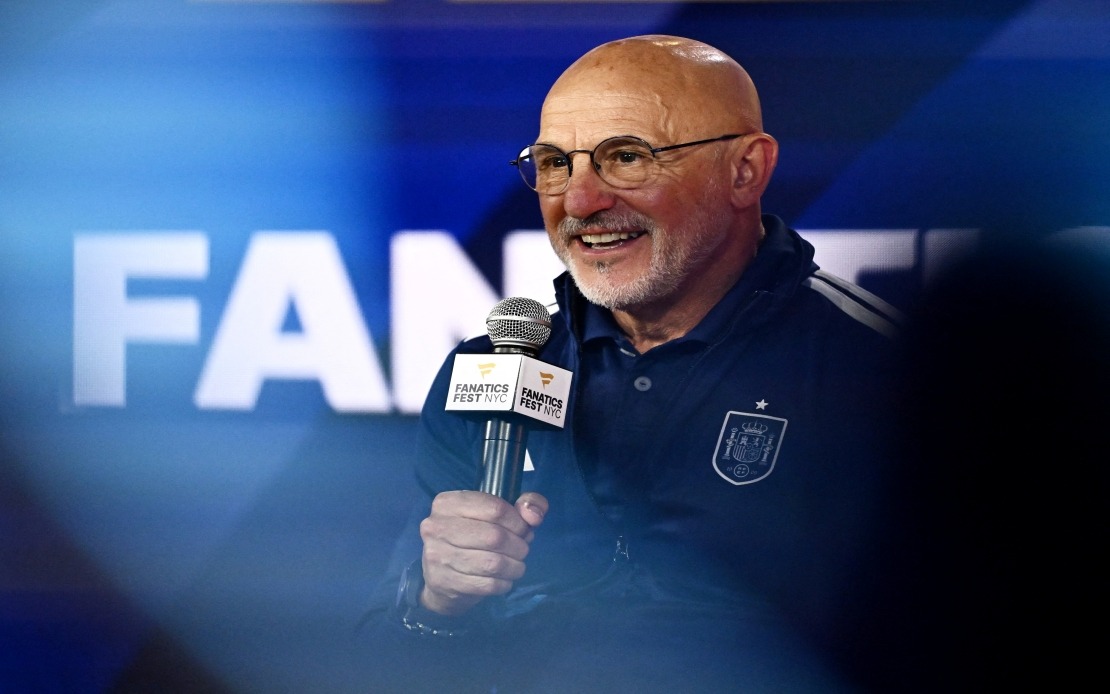
The pressure is building ahead of Sunday's World Cup final at the Met Life Stadium in New Jersey, with Spain's head coach Luis de la Fuente placing scrutiny on match officiating before the showdown against Argentina. De la Fuente has publicly emphasised that the appointed referee must maintain strict control throughout the contest and refuse to permit any infractions that would compromise the integrity of the game. His comments reflect the intense expectations surrounding what is shaping up to be one of football's most significant encounters.
Slovenian referee Slavko Vinčić has been selected to oversee the final, a choice that has drawn attention given his previous involvement with Argentina's shock 2-1 loss to Saudi Arabia during the 2022 tournament in Qatar. That match was marked by several disputed calls that many observers felt favoured the underdog Saudi side, and those controversial moments have resurfaced in discussions surrounding his appointment to this global showpiece. De la Fuente's implicit reference to ensuring that officials do not show preferential treatment suggests that consistency and fairness are uppermost in his tactical thinking as Spain prepares for their greatest challenge.
In his pre-match remarks, De la Fuente articulated a clear philosophy about how his team must approach the contest. He stressed that boundaries of sporting conduct must be observed and that neither side should be allowed to transgress the established framework of rules. His assertion that officials cannot adopt a passive stance underscores the belief that referees must actively manage the match dynamics and prevent players from exploiting grey areas. This perspective is rooted in Spain's traditional emphasis on technical excellence and controlled football, values that De la Fuente feels could be undermined if the match descends into chaos or inconsistently policed physicality.
Rather than dwelling on external factors, De la Fuente has chosen to redirect his team's mental energy toward executing their own game plan with precision and conviction. He expressed confidence in the quality of modern refereeing while simultaneously signalling that Spain understands what type of performance they must deliver to succeed. The Spanish coach highlighted the importance of maintaining philosophical consistency and not being drawn into provocative exchanges or abandoning their core principles in response to Argentina's approach. This balanced stance suggests an appreciation for Argentina's strengths while projecting confidence in Spain's ability to impose their style on proceedings.
The final carries additional historical weight given that it may well represent the last appearance on a World Cup stage for Lionel Messi, the 39-year-old Argentine legend unlikely to be competing at international level in 2030. De la Fuente shared a personal anecdote about encountering Messi's extraordinary talent years earlier when coaching youth football at Sevilla, recounting how the young Argentine magician transformed a deadlocked encounter through individual brilliance. This reflection humanises the narrative and acknowledges the unique stature of an opponent who has transcended football itself to become a global cultural figure.
Argentina's manager Lionel Scaloni has adopted a notably different psychological approach in his preparations, one rooted in cautious respect for the European champions. Scaloni articulated a philosophy of anticipatory concern, suggesting that Spain's very presence on the pitch demands tactical and mental acuity from his squad. He emphasised that worry and focus represent necessary emotional states when confronting such formidable opponents, with the implication that complacency would be fatal. His comments reflect the weight of expectation surrounding Argentina's bid to claim consecutive World Cups, an achievement last accomplished by Italy's Vittorio Pozzo in 1934 and 1938.
The Argentine boss elaborated on his concerns by pointing to Spain's contemporary pedigree and competitive maturity. Recent appearances in the Euro 2024 final and the UEFA Nations League final have provided Spain's squad with exposure to high-stakes continental competition, and several key players operate at the highest club level globally. Scaloni recognised that regardless of pre-match anxiety, once competition commences, professional athletes tend to channel emotions into performance, with pressure becoming secondary to the technical and tactical demands of the moment. His analysis suggests that Argentina cannot afford to underestimate an opponent whose consistency at major tournaments has established them as genuine contenders.
The contrast between De la Fuente's external focus on refereeing standards and Scaloni's introspective acknowledgement of opponent quality reveals different managerial philosophies. De la Fuente appears determined to shape the external environment and ensure that officiating does not become a factor that diminishes Spain's chances, while Scaloni has directed his energy toward managing his team's psychology and respecting the magnitude of the challenge ahead. Both approaches carry validity, though they reflect distinct temperaments and coaching traditions.
For Malaysian and Southeast Asian observers, this World Cup final represents a fascinating collision between two footballing cultures: Spain's possession-based, technically refined approach and Argentina's creative flair combined with competitive intensity. The match will test whether institutional refereeing standards can maintain consistency under the extraordinary pressure of global football's premier competition, and whether either side can impose their identity while adapting to real-time match circumstances. De la Fuente's insistence on impartial rule enforcement and Scaloni's acknowledgement of competitive challenges both point toward a contest where marginal differences could prove decisive.

