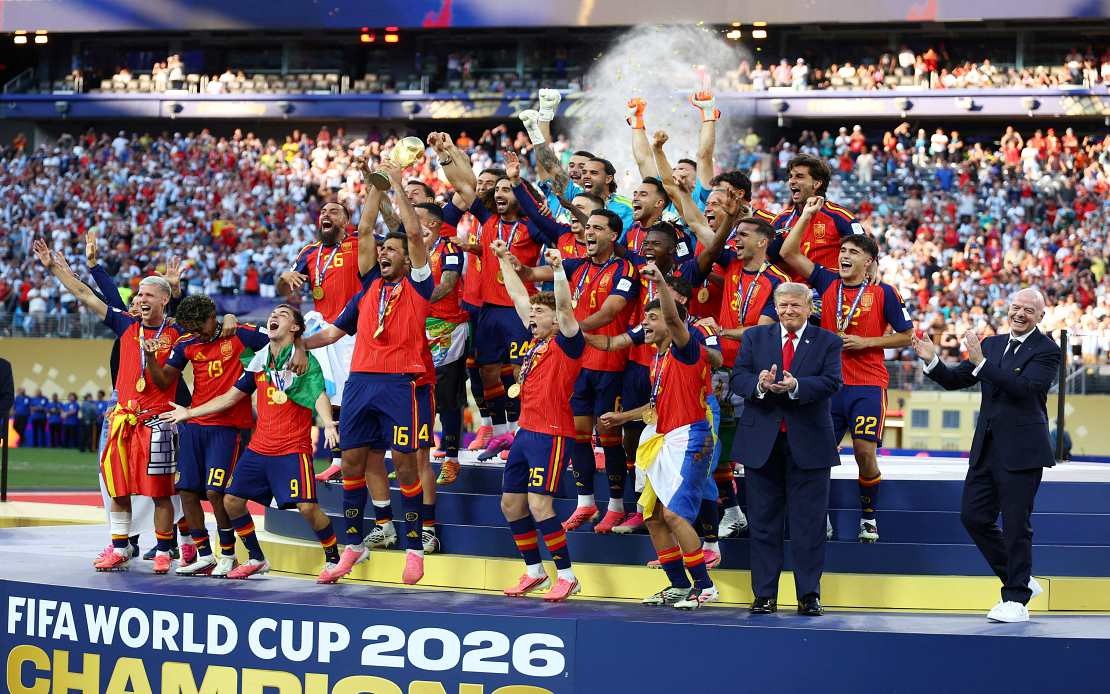
Spain is preparing for one of its most significant national celebrations in recent sporting memory as the country's triumphant World Cup squad touches down in Madrid on Monday afternoon. The team, guided by captain Rodri, is scheduled to arrive at Madrid's airport at 12:50 pm local time, marking the beginning of an extensive series of public festivities designed to honour the players' extraordinary achievement in the United States.
The magnitude of the expected turnout underscores the cultural significance of this World Cup triumph in Spain. Hundreds of thousands of supporters are anticipated to line the streets of the capital for what promises to be one of the largest public gatherings in recent Spanish history. The combination of national pride and sports enthusiasm has prompted authorities to arrange extensive security and logistical preparations to accommodate the anticipated crowds safely.
Official proceedings will commence with a formal reception at the Royal Palace in the afternoon, where King Felipe VI will host the victorious team. This royal recognition represents the formal state endorsement of the players' accomplishment and their status as national heroes. The presence of the monarchy at these celebrations underscores the magnitude of the achievement in Spanish public life, elevating the World Cup victory beyond mere sporting success to a matter of genuine national importance.
Following the palace reception, the team will embark on an open-top bus journey through Madrid's principal thoroughfares, allowing the public to demonstrate their appreciation directly to the players. This traditional parade format has long served as Spain's preferred mechanism for honouring exceptional sporting achievements, and the scope of this particular celebration suggests organisers anticipate record-breaking participation levels from the capital's residents and visitors from across the country.
The festivities will reach their climax at Cibales Square, where organisers have scheduled a substantial public event commencing at 6 pm, with the team expected to arrive at 9 pm. This central location, historically significant in Madrid's geography, has been selected to accommodate the massive expected audience and provide an appropriate venue for the concluding ceremonies. The extended timeline indicates authorities are planning an elaborate programme rather than a simple presentation.
Spain secured its second men's World Cup championship on Sunday through a thrilling extra-time victory, with forward Ferran Torres scoring the decisive goal against Argentina. This achievement represents only the second time Spain has captured the prestigious tournament, making the accomplishment even more noteworthy within the nation's sporting heritage. The manner of victory—requiring extra time and demonstrating the team's resilience—has added additional dramatic value to the triumph.
The royal family's attendance at the final match in New Jersey, alongside Prime Minister Pedro Sánchez, demonstrated the highest levels of government and state commitment to the team's campaign. Sánchez's subsequent message on the social media platform X, stating "We Are World Champions. Our national team is tremendous," reflected the broad political consensus regarding the victory's national significance. Such coordinated official acknowledgement from both the monarchy and executive leadership underscores how this sporting achievement transcends typical competition boundaries.
Defender Marc Cucurella articulated the players' perspective on returning home, emphasising their eagerness to share the celebration with supporters who could not attend the World Cup in person. His remarks highlighted an important dimension of these festivities—they serve not merely as formal honouring of achievement but as collective national participation in a significant cultural moment. Cucurella's comments suggested the team recognises their victory belongs to the broader Spanish nation, not simply to the players themselves.
For Malaysia and Southeast Asian observers, Spain's celebrations illustrate how major sporting triumphs catalyse national identity and social cohesion, particularly in nations where football holds profound cultural importance. The scale of Spain's planned festivities reflects the universal phenomenon whereby World Cup success generates extraordinary levels of public enthusiasm and governmental mobilisation. The integration of formal state institutions—monarchy, government, and public spaces—demonstrates how sports achievements in major tournaments become matters of national significance extending far beyond the football pitch itself.
The timing and logistics of Spain's homecoming reflect careful planning by Madrid authorities and the Spanish Football Federation to manage the anticipated influx of celebrants. The sequential arrangement of events, from airport arrival through palace reception to street parade and culminating square gathering, provides multiple opportunities for different groups to participate according to their proximity and accessibility. This structured approach balances the desire for spontaneous public celebration with the practical requirements of managing such enormous crowds safely.
Spain's World Cup victory also carries broader implications for European football, reinforcing Spanish football's enduring quality and depth despite the competitive pressures from other traditional powerhouses. The team's success, achieved through tactical discipline and clinical finishing in crucial moments, demonstrates that sustained investment in youth development and tactical innovation continues to yield results at the highest competitive levels. For Southeast Asian football observers studying global developments in the sport, Spain's triumph offers instructive examples of organisational excellence and sustained excellence.
The scale of Madrid's planned celebrations, with the Royal Palace reception and massive public parade, ensures that this World Cup victory will remain embedded in Spanish cultural memory for decades. These festivities represent not merely entertainment but a collective reaffirmation of national identity and unity around a shared achievement. As Spain prepares to welcome its heroes home, the celebrations will demonstrate how sports transcends competition to become a binding force for entire nations.

