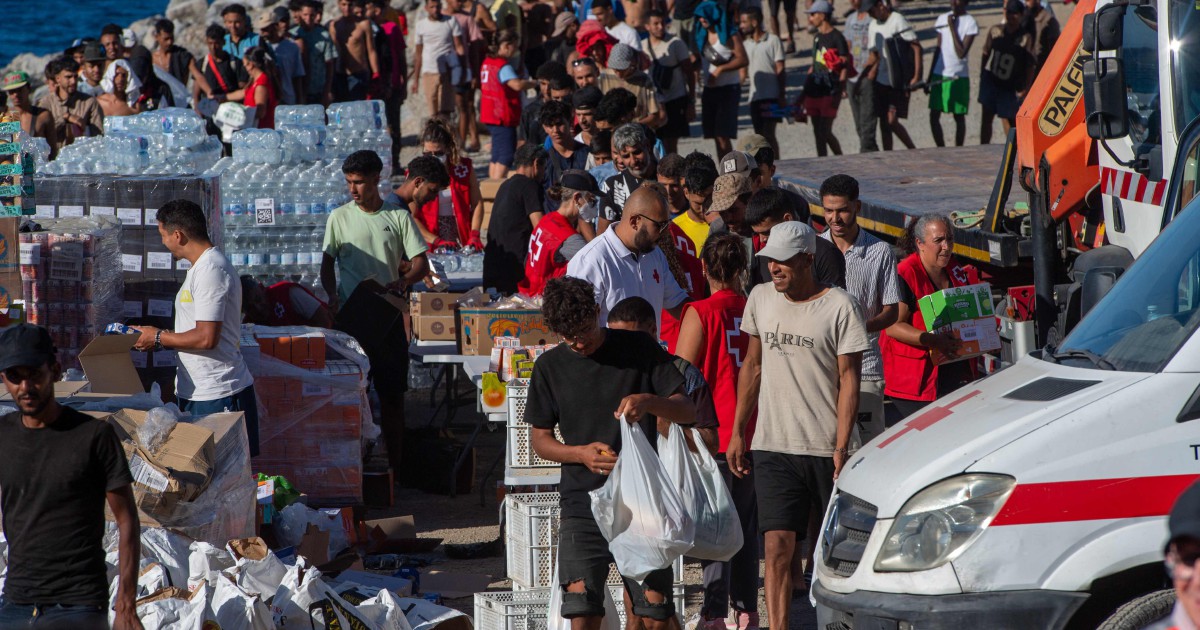
Spanish Prime Minister Pedro Sanchez has pointed to Russia and Israel as sources of disinformation regarding the country's migration policies, alleging that false narratives spread by these nations played a role in triggering the migrant influx that struck Ceuta last month. In a statement delivered on Monday, Sanchez acknowledged identifying markers and patterns consistent with interference from these two countries, though he stopped short of presenting conclusive proof linking them directly to the crisis. Notably, the Spanish government has found no evidence implicating Morocco in orchestrating the spread of misleading information, a significant point given the geopolitical sensitivities surrounding the autonomous Spanish city and its proximity to Moroccan territory.
The Ceuta situation represents a complex humanitarian and diplomatic challenge for Madrid, lying at the intersection of North African migration routes, European border security concerns, and international power politics. Located on the Moroccan coast but administered by Spain, Ceuta has long served as a flashpoint for migrant crossings, with tens of thousands attempting to reach European soil via this narrow gateway each year. The recent surge that prompted Sanchez's statements involved a dramatic spike in arrivals as migrants and refugees sought passage across the Strait of Gibraltar and through surrounding territories, straining local resources and reigniting debates about migration management across the European Union.
Sanchez's attribution of disinformation to Moscow and Tel Aviv reflects broader concerns about information warfare in Europe. Russia has long been accused of leveraging false narratives to destabilise Western nations and exploit social divisions, particularly around contentious issues like immigration that resonate across ideological spectrums. By amplifying narratives about Spanish migration policy—potentially portraying it as either too restrictive or too permissive depending on the intended audience—foreign actors could inflame tensions and undermine public confidence in government responses. The involvement of Israel in such campaigns is less commonly cited but aligns with allegations from various sources regarding selective amplification of divisive content on digital platforms.
The distinction Sanchez made regarding Morocco carries considerable weight. As Spain's closest neighbour across the strait and a nation with which Madrid maintains complex bilateral relations spanning security cooperation, trade, and shared regional interests, any suggestion of Moroccan complicity would have carried serious diplomatic consequences. By explicitly clearing Rabat of involvement in spreading false information, Sanchez appears to be preserving the diplomatic channel while simultaneously addressing domestic Spanish concerns about migration control. This nuanced positioning suggests that the Spanish government views the disinformation campaign as an attempt to weaponise the migration issue rather than a coordinated effort by regional partners.
The mechanisms through which disinformation spreads in the modern information ecosystem make attribution particularly challenging. Social media platforms, messaging applications, and coordinated networks of inauthentic accounts can amplify false or misleading narratives with remarkable speed and reach. Distinguishing between organic public discourse and deliberate information operations requires sophisticated analysis of posting patterns, language markers, timing correlations, and digital forensics. While Sanchez indicated that Spanish authorities had identified telltale signs of Russian and Israeli involvement, the classification of such evidence remains opaque to public scrutiny, as governments typically withhold specific methodologies and intelligence sources to protect ongoing investigations and operational capabilities.
For Malaysia and the wider Southeast Asian region, Spain's struggle with coordinated disinformation campaigns carries instructive lessons. Nations across the Asia-Pacific face similar challenges as foreign actors seek to exploit local sensitivities surrounding migration, religious identity, economic competition, and political legitimacy. The Ceuta situation demonstrates how external powers can weaponise real grievances and legitimate policy debates, transforming them into tools for destabilisation. Regional governments increasingly must grapple with the question of how to distinguish between authentic public concern and artificially amplified narratives designed to serve foreign strategic objectives.
The European Union's response to Spanish disinformation claims will likely inform broader security assessments across member states. If Moscow and Tel Aviv are indeed engaged in coordinated campaigns to undermine EU cohesion on migration policy, the bloc faces a significant challenge in developing unified countermeasures. Migration remains one of the most contentious issues within European politics, with member states holding divergent views on burden-sharing, integration policies, and external partnerships. Foreign actors understand this vulnerability and can exploit it by selectively amplifying messages that deepen existing fractures.
Morocco's position in this narrative merits closer examination. The North African kingdom has historically managed migration flows through its territory while navigating pressures from Europe seeking to reduce irregular crossings. By clearing Morocco of disinformation involvement, Sanchez potentially strengthens bilateral cooperation frameworks that depend on mutual trust. However, this clarity also implies that Morocco may have willingly cooperated with Spain in addressing the crisis through legitimate channels, rather than through the kind of coercive pressure that typically accompanies disinformation campaigns designed to force policy concessions.
The timing of Sanchez's statement suggests that Spanish authorities have completed preliminary assessments of the disinformation operation's scope and origins. Whether additional evidence emerges that strengthens or complicates the attribution to Russia and Israel remains uncertain. What appears clear is that Spain recognises migration policy as a vulnerability in the information environment, susceptible to manipulation by hostile state actors. This recognition aligns with broader European security assessments suggesting that disinformation represents an evolving threat requiring sustained attention and coordinated responses across member states and international partners.

