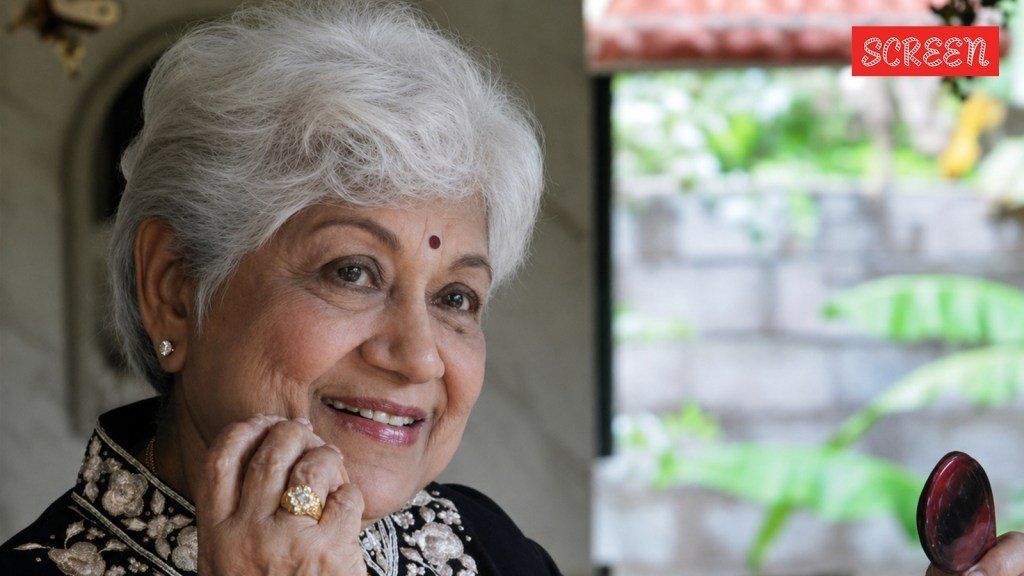
One of South India's most enduring and respected actresses, Sowcar Janaki, died on Friday following a brief spell of hospitalisation in Chennai. The 94-year-old veteran succumbed to age-related illness at a private hospital, where she had been admitted to intensive care days before her passing. Her death marks the end of an extraordinary career spanning more than seven decades in Indian cinema, during which she established herself as an indispensable talent across multiple film industries in the southern states.
The South Indian Artistes' Association president and actor Nassar formally announced Janaki's death, confirming that her mortal remains would be placed at Cenotaph Road, Teynampet, from 5 pm onwards for public viewing. Sankaramanchi Janaki, the veteran's full name, had become synonymous with maternal and character roles that defined generations of South Indian filmmaking, earning her recognition far beyond her native Tamil Nadu.
Throughout her prolific career beginning in 1950, Janaki appeared in approximately 400 films, a testament to her consistent demand across the industry. Her work transcended linguistic and regional boundaries, as she acted in Tamil, Telugu, Kannada, Malayalam, and Hindi productions with equal facility. This versatility made her one of the few truly pan-Indian performers of her era, and her ability to navigate diverse cinema industries set her apart from many of her contemporaries. Her last appearance on screen came relatively recently, with a Tamil film appearance in Biskoth in 2020 and a Telugu project in Anni Manchi Sakunamule in 2023.
Janaki's achievements were formally recognised through several prestigious awards that reflected her standing within the film fraternity. She received the Padma Shri, one of India's highest civilian honours, alongside the Filmfare Lifetime Achievement Award, two National Film Awards for Best Supporting Actress, and the Kalaimamani Award from the Tamil Nadu government. These accolades acknowledged not merely her prolific output but the quality and consistency she brought to every role, particularly in establishing archetypes for maternal characters that influenced how such roles were performed for generations.
Tamil Nadu Chief Minister C. Joseph Vijay expressed profound shock at her passing, noting in Tamil through social media that Janaki had secured a permanent place in the affections of audiences across multiple generations through her distinctive interpretive approach. He highlighted that her artistic journey of over seven decades, during which she portrayed countless memorable characters, represented an immeasurable contribution to Indian cinema. The chief minister characterised her death as a profound loss to the entire film industry and extended prayers for her soul to find peace.
Kamal Haasan, one of Tamil cinema's biggest stars, shared personal memories of working alongside Janaki for forty years, beginning with the film Paarthaal Pasi Theerum. He recalled that she frequently played his mother in films, establishing a on-screen dynamic that audiences embraced warmly. Haasan attributed his professional opportunities partly to the mentorship of director K. Balachander, who had favoured Janaki as a frequent collaborator, and described her as an acting talent absolutely essential to the development of South Indian cinema. His tribute acknowledged not just her technical abilities but her embodiment of a particular maternal archetype that resonated deeply across Tamil society.
Numerous other prominent South Indian actors and filmmakers rushed to pay their respects through social media platforms. Radhika Sarathkumar remembered Janaki as a trailblazer of independent spirit and strong will, noting that she had enjoyed a close personal friendship with Sarathkumar's father, actor M.R. Radha, whom she greatly admired professionally. Telugu stars Jr NTR and Chiranjeevi both composed lengthy tributes in their native language, emphasising Janaki's indelible contribution to Telugu cinema and her ability to transcend regional boundaries. Vishnu Manchu urged younger generations to study Janaki's career and recognise the exceptional standard of artistry she had maintained throughout her professional life.
The breadth and depth of tributes flowing from across the South Indian film industry underscored Janaki's influence not just as a performer but as a figure who had shaped expectations around character acting and professionalism in regional cinema. Unlike many of her generation, she had seamlessly transitioned into television work later in her career, demonstrating adaptability to changing entertainment formats. Her consistent engagement with audiences across platforms and decades established her as more than merely a prolific actress; she became an institutional figure whose presence legitimised the artistic ambitions of South Indian cinema itself.
For Malaysian audiences and the broader Southeast Asian region, Janaki's career trajectory offers historical perspective on the dominance of South Indian film culture throughout the latter twentieth century. Her work in multiple languages and her recognition by governments through honours like the Padma Shri illustrated how cinema transcended national boundaries and how performers could achieve continental prominence through excellence and consistency. The outpouring of tributes from contemporary stars demonstrates the continuing reverence for artistic achievement in South Indian cinema, a cultural force that remains significant across diaspora communities throughout Southeast Asia.
Janaki's passing represents the end of an era in South Indian film history, marking the departure of someone who had witnessed and participated in the industry's evolution from its classical period through the modern era. Her seven-decade engagement with cinema spanned technological changes, narrative transitions, and shifting audience preferences, yet she remained relevant and continuously employed throughout this transformation. As the film industries of South India continue to grow and evolve, Janaki's legacy serves as a benchmark for artistic integrity, linguistic versatility, and professional longevity that contemporary performers can aspire to achieve.

