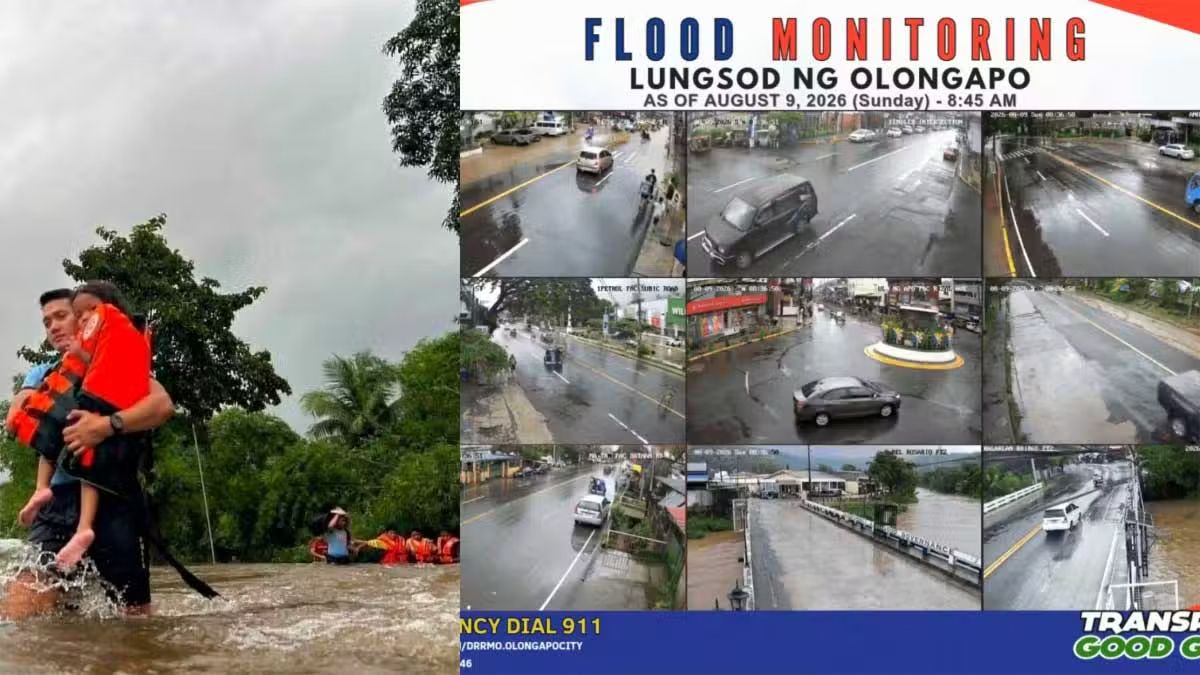
The Philippine government is mobilising extensive rescue and relief operations across flood-devastated regions as the southwest monsoon, locally known as the habagat, continues to batter the country with torrential downpours. The crisis has been exacerbated by the simultaneous influence of two tropical weather systems—Tropical Depression Luis and Tropical Storm Maymay, known internationally as Kujira—which have converged to create unprecedented rainfall patterns across vulnerable communities. Authorities reported on Sunday that at least 382,000 people from approximately 110,000 families have been affected, with the heaviest concentrations of displacement occurring across eight regions spanning both the northern island of Luzon and the southern island of Mindanao.
The human toll of the disaster has already proven substantial and tragic. At least nine fatalities have been confirmed, including a police officer who lost his life attempting a daring rescue of two colleagues trapped in a raging river in Negros Occidental. A 28-year-old resident of Cuenca, Batangas, became the latest victim after being electrocuted while navigating the waterlogged J.P. Laurel Highway in Lipa City on Saturday night. Additional deaths resulted from drowning and landslide incidents scattered across multiple provinces including La Union, Pangasinan, Benguet, and Rizal, with particularly distressing circumstances in Ilocos Sur where a minor drowned in Candon City.
Metereological forecasters have indicated that residents should prepare for sustained heavy precipitation through at least Wednesday, according to the weather advisory issued Sunday at 5 p.m. by the Philippine Atmospheric, Geophysical and Astronomical Services Administration (Pagasa). The bureau has issued particular warnings for elevated and mountainous terrain, where runoff and landslide risks intensify dramatically with additional rainfall. Forecasters have also cautioned that communities already saturated by rain in preceding days face exponentially greater risks as soil moisture approaches critical saturation levels, potentially triggering cascading flooding and debris flows.
Structurally, major water reservoirs in the region have swollen dramatically under the relentless precipitation. Angat Dam in Norzagaray, Bulacan—a critical water supply and flood control facility—rose approximately 15 metres in just ten days, reaching 164.80 metres above sea level by Sunday afternoon. This represents a striking recovery from the reservoir's historic low of 150.61 metres recorded only four weeks earlier on July 30, underscoring the intensity of current rainfall patterns. Downstream, the Ipo Dam has approached its spilling threshold at 101 metres above sea level and was discharging water at a rate of 314.91 cubic metres per second, creating downstream flooding risks that threaten communities in lower-lying areas.
Central Luzon has emerged as one of the most severely affected regions, with 98 villages inundated and nearly 170,000 individuals impacted by floodwaters. Local authorities have conducted preemptive evacuations affecting 2,544 people across Nueva Ecija and Zambales provinces in anticipation of further deterioration. In Zambales specifically, the breaching of a protective dike in San Marcelino has isolated entire communities, while a bridge in Barangay Santa Fe was destroyed by powerful currents. The municipality of San Antonio suffered additional infrastructure damage when strong winds toppled numerous structures and utility installations, leaving at least eleven houses and a community multipurpose hall damaged.
In the Calabarzon region—comprising Cavite, Laguna, Batangas, Rizal and Quezon—more than 7,000 families have sought refuge in 117 evacuation centres established across 29 different municipalities and cities. In Bulacan, coastal communities have faced compounded challenges from high tidal surges combining with inland flooding, forcing nearly 1,000 residents to evacuate as floodwaters reached depths of approximately four feet in some districts. The Bulusan Riverbank in Calumpit has become completely impassable for light vehicles, severing important transport links across the province.
Weather-related infrastructure failures have rippled across the transportation network. Two critical bridges in Cagayan have become impassable as the Chico River swelled beyond safe crossing levels, while Nueva Vizcaya, Abra, and Mountain Province have all reported significant landslides and rockfall incidents that have closed essential roads connecting communities to regional centres. In Ilocos Sur, authorities mobilised crews to clear heavy debris from beneath Nambaran Bridge spanning the Quimmarayan River in Santo Domingo as the waterway approached critical overflow conditions. Sea transportation has also suffered severe disruptions, with 543 maritime workers and passengers stranded at 28 ports across four coastal regions, according to reports from the Philippine Coast Guard.
In Iloilo City on Panay Island, residents experienced additional destruction when a suspected tornado swept through the city in conjunction with the monsoon winds. This meteorological event damaged at least 52 residential structures, toppled numerous trees and electrical poles, and displaced more than 150 residents who have been left without shelter. The combination of rotational wind damage with widespread flooding has created particularly chaotic conditions in this section of the Visayas region.
Police authorities have appealed for public cooperation during the ongoing crisis. Philippine National Police chief Gen Jose Melencio Nartatez Jr stated that law enforcement has deployed substantial personnel and resources to support evacuation operations and disaster response coordination across affected areas. Officials have urged residents to monitor only official channels for disaster information and to disregard unverified social media reports that may spread panic unnecessarily. The emphasis on official communication reflects concerns that misinformation could undermine coordinated response efforts during this critical period.
The disaster has sparked political criticism regarding the adequacy of government infrastructure investments. The Makabayan opposition coalition has seized upon the flooding crisis to challenge the Marcos Jr. administration's stewardship of flood control and related infrastructure projects, asserting that current failures demonstrate systemic shortcomings in disaster mitigation planning. The coalition has called for heightened scrutiny of the administration's budgetary practices as Congress enters deliberations regarding the 2027 national budget, particularly focusing on unprogrammed appropriations mechanisms that the opposition contends facilitate opportunities for political patronage and corruption among lawmakers who may redirect emergency funds for partisan purposes.
For Malaysian observers, this crisis underscores the urgent regional challenge of climate adaptation infrastructure. Southeast Asian nations face increasingly severe monsoon patterns and typhoon activity, requiring substantial investment in flood resilience systems, early warning protocols, and coordinated disaster management across provincial boundaries. The Philippines' experience demonstrates how weather system convergence can overwhelm even robust infrastructure, suggesting that Malaysian planners should review the adequacy of current flood defences in vulnerable areas where multiple watersheds converge or where coastal communities face combined inland flooding and tidal surge risks.
The ongoing emergency highlights the necessity for sustained disaster preparedness funding rather than ad hoc responses to crisis situations. Regional governments might benefit from establishing permanent disaster response agencies with dedicated staff rather than relying on personnel mobilisation during emergencies, as rapid assembly of scattered resources often proves inefficient when simultaneous incidents occur across multiple provinces. As the monsoon pattern persists through the week ahead, Philippine authorities face the challenging prospect of managing deteriorating conditions while simultaneously coordinating rescue operations in areas already overwhelmed by water.

