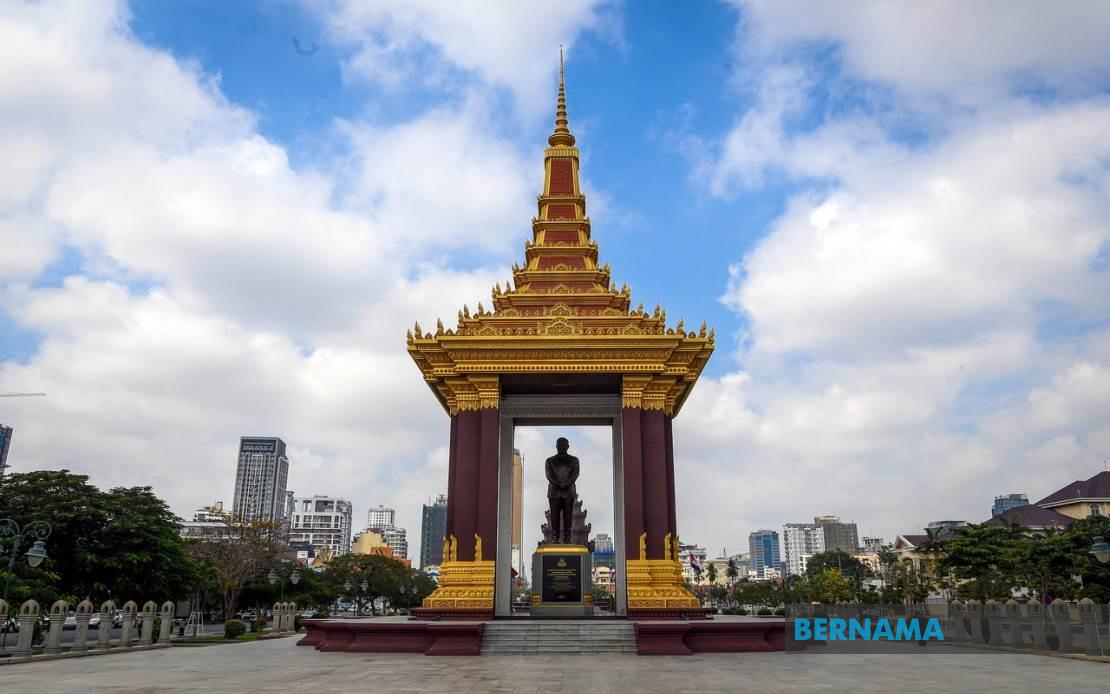
Cambodia has positioned itself as an active participant in the emerging architecture of global artificial intelligence governance, becoming a founding signatory to the Agreement on the Establishment of the World Artificial Intelligence Cooperation Organisation at ceremonies held in Shanghai. The move reflects Phnom Penh's determination to engage meaningfully in international discussions shaping how AI technology develops and integrates across economies, rather than remaining a passive observer of technological trends set elsewhere. For a nation navigating the complexities of digital transformation alongside traditional economic sectors, joining this governance framework signals an intention to have voice in discussions that will ultimately affect how Cambodian businesses, government, and citizens interact with AI systems. The accord matters particularly for Southeast Asian nations seeking to balance the promise of AI-driven productivity gains against legitimate concerns about job displacement and the concentration of technological power in wealthy nations.
Even as Cambodia builds diplomatic bridges around artificial intelligence, Chinese Premier Li Qiang was in Phnom Penh reinforcing the bilateral relationship at the highest levels. During official talks with Prime Minister Hun Manet, Li Qiang characterised China's bond with Cambodia using the loaded term "ironclad friendship," language that underscores both the strategic depth and historical continuity of their partnership. These periodic reaffirmations serve multiple purposes simultaneously: they reassure Cambodia that its alignment with Beijing remains valued, they signal to regional and international observers the stability of Chinese-Cambodian ties, and they create diplomatic occasions for addressing specific bilateral matters. For Malaysian readers observing regional alignments, such engagements illustrate how smaller Southeast Asian nations maintain relationships with major powers through regular high-level contact and rhetorical reinforcement of friendship.
Indonesia's commitment to environmental transformation gained concrete expression through President Prabowo Subianto's announcement of an ambitious ethanol production programme. The target of constructing up to 50 new ethanol plants nationwide forms a critical pillar of the government's E20 fuel mandate, which requires petrol to contain at least 20 percent bioethanol blended content. This strategy addresses multiple policy objectives simultaneously: it supports domestic agricultural producers by creating industrial demand for their outputs, it promises to reduce Indonesia's dependence on imported petroleum products, and it allows the government to present environmental credentials by promoting renewable fuel adoption. The scale of the expansion—potentially doubling existing capacity—suggests officials believe both economic and technical feasibility exist for such rapid expansion of the biofuel sector. Indonesia's agricultural base and existing sugar-cane cultivation give the nation comparative advantages in bioethanol production that should be leveraged for both export revenue and domestic consumption.
Complementing its biofuel agenda, Jakarta also announced plans for a national electric motorcycle, targeting the substantial portion of Indonesia's population relying on two-wheeled transport. The initiative reflects how policymakers are approaching environmental goals through vehicles suited to actual usage patterns and purchasing power rather than imposing technology unsuitable to local contexts. For a nation where millions depend on motorcycles and scooters for daily mobility, developing affordable electric alternatives addresses transportation electrification in ways that resonate with actual consumers. The emphasis on strengthening the domestic automotive industry through this project indicates a recognition that EV transition represents both environmental necessity and economic opportunity, provided that manufacturing capacity remains within Indonesia rather than being outsourced entirely to foreign suppliers.
Myanmar's government has articulated an Integrated Coastal Management strategy grounded in what policymakers describe as green, blue, and circular economy principles. This framework attempts to simultaneously protect coastal ecosystems, which provide both environmental services and livelihood foundations, while enabling economic activity that improves conditions for communities dependent on coastal resources. Myanmar's extensive coastline along the Andaman Sea and Gulf of Martaban makes coastal management policy particularly consequential, as these regions contain fisheries, ports, and growing aquaculture sectors. A strategy that treats coastal zones holistically—balancing conservation with sustainable development—acknowledges the reality that Myanmar's poorest populations often depend most directly on healthy coastal environments. Implementation success will depend on mechanisms for ensuring local communities share benefits from any development while bearing minimal costs from environmental degradation.
Supporting rural economic expansion, Myanmar's MSME Development Fund announced plans to extend credit to farmers and small enterprises seeking to develop the cotton industry, including financing for cotton-seed oil extraction equipment and yarn-making machinery. Cotton processing offers potential value-addition opportunities that could retain more economic benefit within Myanmar rather than exporting raw materials. Farmers expanding cultivation capacity and investing in processing infrastructure require accessible credit, and government-backed financing programmes can address gaps in commercial lending where banks view agricultural credit as unduly risky. The cotton sector's labour intensity also means investment in this sector creates employment in regions where alternative opportunities remain limited.
In the Philippines, the weather bureau reported expectations of generally fair conditions nationwide with isolated showers resulting from the southwest monsoon interacting with localised thunderstorm development. Such forecasting shapes daily life for millions across the archipelago and remains critical information for agricultural planning, construction scheduling, and public safety. Meanwhile, the Philippine Basketball Association continued its Season 50 Governors' Cup competition, with Blackwater and Converge securing victories to maintain co-leadership in their respective divisions. While sports reporting might seem peripheral to policy analysis, basketball's cultural significance in the Philippines means major competitions receive intense public attention and media coverage that reflects broader social engagement.
Singapore's Central Narcotics Bureau reported that an islandwide anti-drug operation during July yielded the arrest of 100 suspected drug offenders and the seizure of narcotics valued at more than S$34,000. The operation illustrates the sustained enforcement effort required to combat drug trafficking even in an exceptionally well-resourced city-state with sophisticated law enforcement infrastructure. Prime Minister Lawrence Wong meanwhile emphasised the role of mother tongue languages in maintaining cultural connection among Singapore's diverse population, arguing that linguistic preservation connects citizens to historical roots and inherited values. The government's commitment to supporting mother tongue education, despite the practical challenges of mastering multiple languages in an English-dominant economy, reflects a policy choice prioritising cultural transmission over pure economic efficiency.
In Thailand, a Grade 3 pupil named Pavin Pattanavekin secured two world number-one awards in coding along with additional recognition in mathematics and science at an international competition held in Rome. The achievement illustrates how Southeast Asian students compete successfully at elite levels in technical fields, challenging any presumption that innovation and exceptional capability remain concentrated in developed nations. Meanwhile, Bangkok's Commerce Ministry discovered that its proposed 40-baht khao kaeng (curry rice) subsidy scheme faced complications in implementation. Many vendors across Thai markets were already operating at that price point without government support, revealing that market forces and competition had compressed margins below what policymakers anticipated. The initiative illustrates the difficulty of designing social support schemes when market realities have already adjusted faster than government programmes can be deployed.
These varied developments across Southeast Asia during mid-July 2026 reflect diverse approaches to common challenges facing the region: how to manage technological transformation, transition to sustainable energy systems, support vulnerable populations, and compete in an increasingly complex global economy. Each nation pursues distinct policy pathways reflecting its particular economic structure, political system, and development stage, yet underlying concerns about environmental sustainability, technological capability, and inclusive growth emerge repeatedly across the region's agenda.

