The financial services landscape across Southeast Asia is undergoing a fundamental shift as commercial banks recognise the commercial viability of sustainability-focused lending. What was once viewed as a niche market segment confined to specialised green projects has evolved into a mainstream banking function, driven by genuine consumer appetite for lower-carbon investments and strengthened by supportive government policies. This transition reflects not merely corporate environmental consciousness but rather a hard-headed commercial calculation by major financial institutions that sustainable finance represents the future direction of regional markets.
The impetus for this transformation is particularly visible in the transportation sector, where electric vehicle adoption is reshaping consumer behaviour and financing needs across the region. Malaysia's electric car sales doubled during 2025 according to International Energy Agency figures, while Indonesia experienced even more dramatic growth with sales more than doubling year-on-year. These figures represent far more than statistical curiosities—they signal a decisive shift in how millions of consumers across the region are approaching transport decisions. For banking institutions, this explosive growth in EV uptake has created both urgent demand and compelling business opportunity.
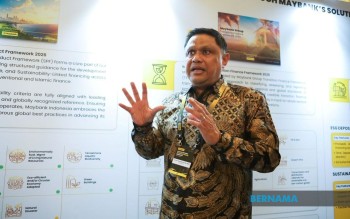
Maybank Group's strategic expansion of its sustainable finance commitment exemplifies how major regional banks are positioning themselves within this evolving landscape. The banking group has committed to mobilising RM300 billion across ASEAN between 2026 and 2030, a substantial increase from its previous five-year target. What distinguishes this commitment is not merely its size but the trajectory of its realisation. According to Datuk Shahril Azuar Jimin, the group's chief sustainability officer, implementation is tracking ahead of schedule despite the programme being less than six months into its launch phase. This momentum reflects genuine market demand rather than aspirational corporate messaging.
The credibility of Maybank's expanded commitment gains weight when examined against its previous performance. Between 2021 and 2025, the banking group mobilised RM176 billion in sustainable finance, substantially exceeding its original RM80 billion target announced in 2020. This two-fold overachievement demolishes a persistent myth that has long constrained sustainable finance expansion: the notion of insufficient liquidity. As Shahril articulated to journalists in Jakarta, financial institutions possess abundant capital ready to deploy toward sustainability projects. The genuine constraint has never been availability of funds but rather properly structured financing mechanisms and client awareness of available options.
Malaysia's residential renewable energy landscape demonstrates how policy frameworks are creating conditions for accelerated sustainable finance deployment. The Energy Transition and Water Transformation Ministry expanded the residential Net Energy Metering (NEM) Rakyat programme by 100 megawatts in May 2025 following complete subscription of the existing allocation. This expansion has enabled substantially more households to install rooftop solar photovoltaic systems, directly generating financing demand that banks are well-positioned to serve. The interaction between supportive policy architecture and financial services capacity determines the pace at which consumers can actualise their sustainability preferences.
The conceptual scope of sustainable finance has expanded beyond the traditional confines of strictly environmental projects, reflecting the multifaceted nature of transitioning complex economies toward lower-carbon models. Maybank's Sustainable Product Framework now encompasses transition finance for carbon-intensive industries undertaking decarbonisation, dedicated electric vehicle financing, green residential mortgages, social finance targeting community development, and green bond issuances. This architectural complexity distinguishes contemporary sustainable finance from earlier iterations that treated environmental lending as a discrete category separate from mainstream banking operations. Rather, sustainability considerations now permeate multiple product lines and customer segments.
This structural transformation has fundamentally altered the skill requirements and professional positioning of banking relationship managers. These professionals can no longer function as mere transaction facilitators; they must evolve into advisors capable of guiding corporate and individual clients through climate risk assessment and sustainability implications of proposed projects. Such a transition demands substantial investment in human capital development. Maybank has accordingly invested heavily in capacity-building programmes and sustainability certifications for relationship managers, recognising that sophisticated sustainable finance deployment depends ultimately on frontline staff capability to translate complex climate and sustainability concepts into client-relevant advice.
Indonesia exemplifies how sustainable finance expansion extends beyond wealthier customer segments to encompass mass-market consumer needs. Maybank Indonesia mobilised approximately Rp17 trillion in sustainable financing during the 2021-2025 period, establishing a substantial base from which to scale operations. Maria Triffany Fransiska, head of sustainability at Maybank Indonesia, notes that transportation has emerged as the strongest sustainable financing segment as electric vehicle demand accelerates across the archipelago. Equally significant, the bank's portfolio increasingly encompasses affordable housing financing and electric two-wheeler loans targeting lower-income communities—products that integrate sustainability considerations with fundamental economic accessibility.
The expansion of sustainable finance into everyday consumer products represents perhaps the most economically significant development within this sector transformation. Rather than remaining confined to large-scale infrastructure projects accessible only to major corporations, sustainable finance increasingly serves ordinary households and small entrepreneurs seeking to transition toward lower-carbon lifestyles. This democratisation of sustainable finance access has profound implications for regional climate outcomes, as it multiplies the number of economic actors capable of making sustainability-aligned choices. The availability of appropriate financing mechanisms effectively removes a critical barrier that previously prevented widespread adoption of sustainable technologies among mass-market consumers.
Banks are additionally expanding their sustainable finance ecosystems beyond traditional lending products toward deposit and investment instruments aligned with environmental and social governance principles. Maybank Indonesia became the first entity within the banking group to introduce ESG deposit products, with Malaysian market entry anticipated imminently. These instruments enable individual savers to align their capital deployment with sustainability objectives while earning returns, further broadening the constituency benefiting from and participating in the sustainable finance transition. Such product diversification demonstrates how banks are constructing integrated sustainability-oriented financial ecosystems rather than treating green finance as an isolated operational function.
The trajectory of sustainable finance expansion across Southeast Asia carries implications extending well beyond individual banking institution strategies. As major regional financial institutions commit substantial capital to sustainable projects and products, they effectively signal to the broader investment community that sustainability-focused opportunities represent legitimate, long-term capital deployment strategies. This institutional validation reduces perceived risk associated with green investments and encourages other financial players to develop comparable capabilities and commitments. The resulting competitive dynamics should accelerate sustainable finance development across the region, with expanded product offerings, competitive pricing improvements, and geographic distribution extending services to increasingly remote areas and customer segments previously underserved by sustainability-focused financial providers.

