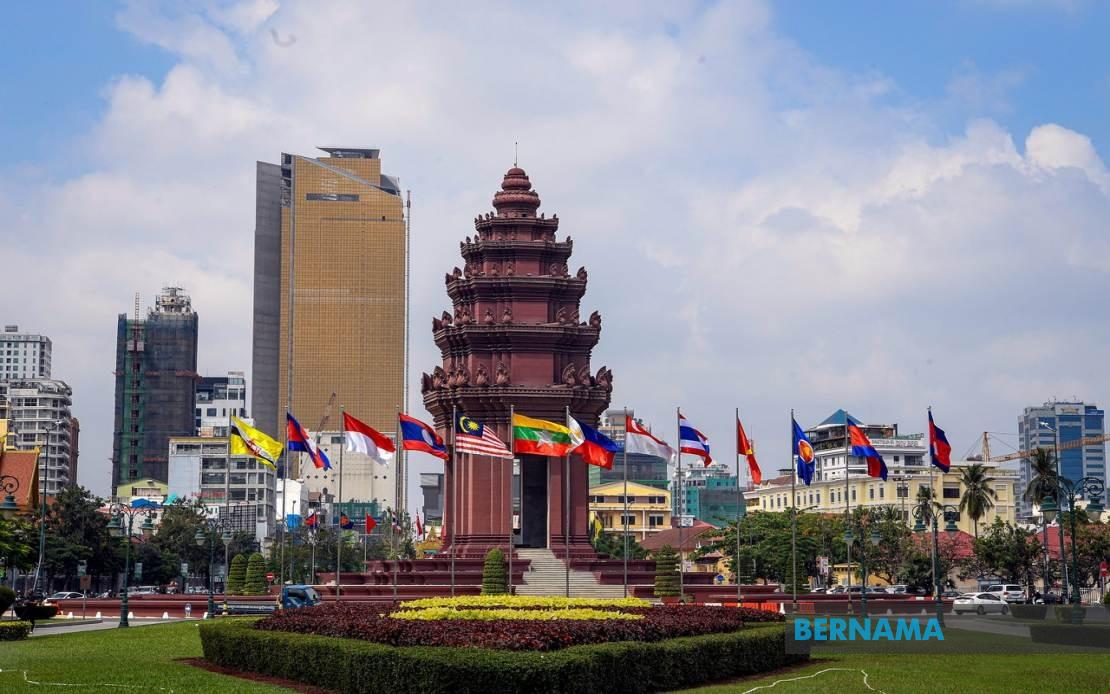
A broad sweep of developmental and governance initiatives has unfolded across Southeast Asia, marking steady progress in regional infrastructure, international partnerships, and law enforcement priorities. The week has seen significant announcements spanning Cambodia's administrative modernisation, Indonesia's transport sector expansion, Myanmar's energy and aviation advancement, and heightened investigative action across the region's authorities. These developments underscore the region's continued focus on leveraging cross-border cooperation and domestic reform to address long-standing economic and governance challenges.
Cambodia has moved to consolidate ties with India through two strategic projects implemented under the Mekong-Ganga Cooperation framework, with a particular emphasis on supporting rural communities in Kratie Province. The memoranda of understanding signal New Delhi's renewed commitment to the region and reflect Cambodia's broader strategy of diversifying partnerships beyond its immediate neighbours. For the Mekong region, such cooperation frameworks have historically proven valuable in facilitating knowledge transfer and institutional capacity-building, particularly in agricultural modernisation and infrastructure development. The timing of the announcement also underscores Cambodia's intent to strengthen developmental corridors that can complement its Belt and Road participation while maintaining strategic flexibility with major democratic powers.
Simultaneously, Cambodia's Civil Service Ministry has announced comprehensive modernisation plans centred on digital transformation and human capital development. The initiative recognises that effective public service delivery fundamentally depends on institutional capacity and workforce quality, challenges that many Southeast Asian states continue to grapple with. By emphasising digitalisation and professional standards, the Cambodian government is attempting to replicate models that have achieved measurable success in jurisdictions such as Singapore and South Korea. Such administrative reform efforts remain critical for maintaining legitimacy and service standards as Southeast Asian populations increasingly expect efficient, transparent governance.
In Indonesia, Transportation Minister Dudy Purwagandhi has endorsed expansion plans for Lt. Col. Wisnu Airfield in Buleleng District, northern Bali, positioning it as a pressure-relief hub for the congested Ngurah Rai International Airport. The initiative addresses a pressing infrastructure bottleneck that has constrained tourism growth and regional connectivity. Northern Bali's development as a secondary air transport hub could redistribute visitor flows and economic activity away from the southern coast, potentially supporting environmental sustainability and community-level tourism benefits. This expansion reflects broader Indonesian efforts to develop secondary cities and spread economic activity more evenly across archipelago regions.
Complicated by allegations of high-level corruption, Indonesia's National Police have formally designated former Junior Attorney General for Special Crimes Febrie Adriansyah as a suspect in a graft and money laundering investigation. The case has drawn international attention and raises questions about institutional integrity within prosecutorial structures. Such investigations, while demonstrating commitment to accountability, also highlight vulnerabilities within the judicial and law enforcement apparatus that remain persistent concerns for investors and civil society observers evaluating governance quality in the region.
Myanmar has inaugurated the Anisakan Airport in Mandalay Region, a facility intended to strengthen domestic connectivity and create new pathways for agricultural product distribution and investor access to northern regions. The airport represents infrastructure investment in areas historically marginalised from major commercial networks, though questions remain about operational sustainability and integration with the national transportation system. Parallel to aviation expansion, the country has also launched the 15-megawatt Shwemyoh solar power plant in Naypyidaw, with planned phases reaching 70 megawatts total capacity. These energy and transport investments signal Myanmar's continuing commitment to infrastructure development despite ongoing political challenges.
The Philippines faces multiple concurrent issues, with the southwest monsoon affecting Luzon and the Visayas regions even after Tropical Storm Inday departed the Philippine Area of Responsibility. Weather patterns across the archipelago continue to demand substantial preparedness resources and coordination between national and local authorities. More politically, prosecutors in Vice President Sara Z. Duterte's impeachment trial before the Senate have indicated that foundational evidence has been established during the proceedings' initial week. The high-stakes trial represents a significant constitutional moment for the Philippines, with implications for executive accountability and institutional checks on presidential power.
Singapore has emerged as a focal point for digital privacy considerations, with WhatsApp reserving high-profile usernames belonging to government officials and public figures ahead of its username feature rollout. The move protects officials' digital identities in an era of increasing online personalisation but also highlights broader questions about privacy, identity protection, and digital governance standards across the region. Meanwhile, Singapore's Housing and Development Board has processed 845 income ceiling waivers for executive condominium applicants over the past five years, illustrating ongoing challenges in housing affordability despite significant state intervention in the property sector. The data suggests continued pressure on middle-income households navigating Singapore's tightly controlled housing market.
Thailand's authorities have intensified investigations into transnational crime networks, with police issuing an arrest warrant for an alleged female ringleader accused of orchestrating heroin smuggling across Southeast Asia and into Australia using concealment methods including elephant-print bags and complicit air crew. The investigation underscores Thailand's persistent role as a transit hub for narcotics despite substantial law enforcement resources directed toward suppression. The Department of Special Investigation has simultaneously expanded inquiries into nominee networks facilitating foreign-owned property and tourism ventures, with raids across Koh Samui and Koh Phangan revealing one address linked to over 100 registered companies. These enforcement actions target long-standing vulnerabilities in Thailand's property regulations and corporate transparency standards that have enabled foreign nationals to circumvent ownership restrictions.
Collectively, these developments illustrate the diverse challenge landscape confronting Southeast Asian governance and development. From infrastructure modernisation and international cooperation to law enforcement against transnational crime, the region continues pursuing parallel pathways of economic integration and institutional strengthening. The initiatives reflect both genuine developmental momentum and persistent vulnerabilities—corruption, regulatory capture, and inadequate capacity in key institutions—that constrain progress toward sustainable and inclusive growth. For Malaysian observers and policymakers, these regional trends offer cautionary lessons regarding the importance of institutional integrity, balanced infrastructure investment, and proactive governance reforms that anticipate rather than react to emerging challenges.

