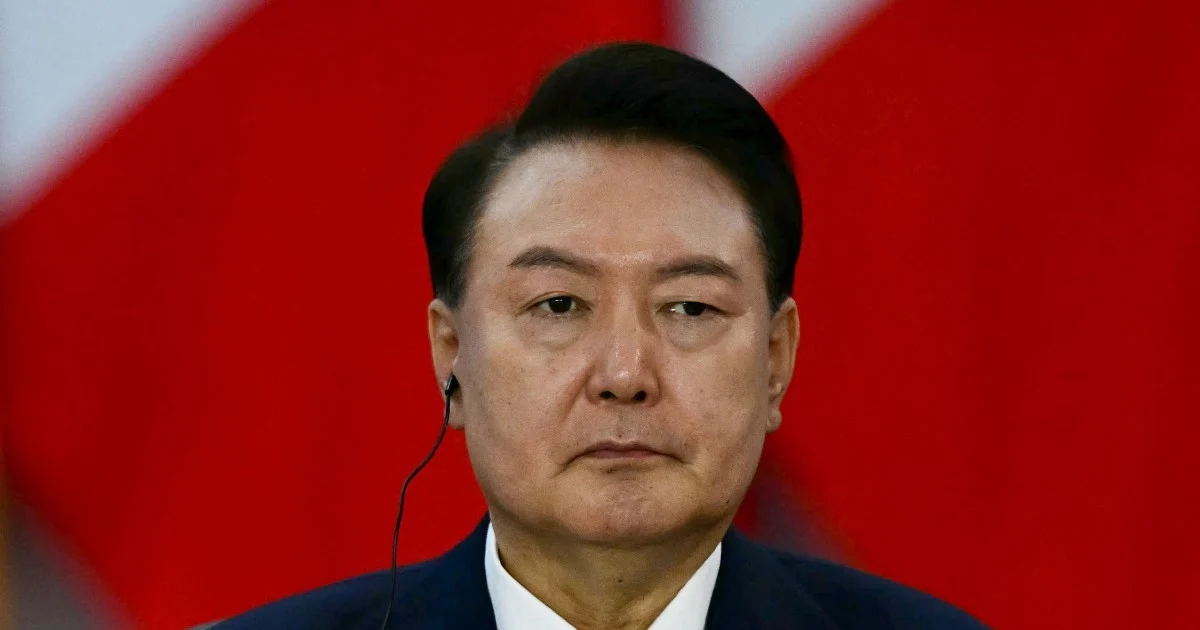
South Korea's Constitutional Court is preparing to deliver what may become one of the most consequential judicial decisions in the country's recent history on Thursday, when it pronounces judgment in the case against former president Yoon Suk Yeol. The verdict will determine whether the embattled ex-leader bears criminal responsibility for orchestrating a martial law declaration that convulsed the nation and the complex legal and political fallout that ensued. The case stands as a defining moment for South Korea's democratic institutions and the rule of law, with implications that will resonate throughout the region as a major democracy grapples with leadership accountability and constitutional boundaries.
The constitutional crisis that precipitated this landmark trial erupted when Yoon Suk Yeol issued his extraordinary martial law proclamation, an act that shocked the nation and triggered weeks of political turbulence. The declaration unleashed a dramatic sequence of events that gripped South Korean society, with security forces responding to the announcement in ways that sparked fierce public reaction and raised urgent questions about the limits of executive power. The chaos and disorder that accompanied the initial imposition of martial law created the conditions for the broader legal inquiry now culminating in the Constitutional Court's judgment.
The prosecution's case centres on allegations that Yoon Suk Yeol engaged in fundamental breaches of constitutional duty, specifically by implementing martial law without legitimate constitutional justification or proper legislative authority. The investigation and subsequent charges suggest prosecutors view the former president's actions not as a legitimate exercise of emergency powers but rather as an extraordinary overreach that violated core democratic principles. This framing reflects a prosecutorial theory that distinguishes between lawful emergency governance and what amounts to an attempt to suppress democratic processes through military-backed measures.
What distinguishes this case from previous instances of presidential accountability in South Korea is its foundation in constitutional rather than purely criminal allegations. The Constitutional Court's role differs fundamentally from that of criminal courts, focusing specifically on whether actions constitute impeachable offences under the constitution itself. This procedural distinction carries profound implications, as a conviction by the Constitutional Court would represent a judgment that a sitting president violated the fundamental law governing the nation's operations and legitimacy.
For Malaysian observers, the unfolding case offers instructive lessons about constitutional safeguards and judicial independence within democratic systems. South Korea's ability to bring a former head of state to account through constitutional proceedings—despite the extraordinary power and prestige such figures typically command—demonstrates how institutional checks can function even in circumstances that might otherwise invite political manipulation or protection. The proceedings also highlight the stakes when executive power threatens constitutional structures, a concern relevant across diverse political contexts.
The broader context surrounding this judgment involves not merely questions of individual accountability but also the integrity of South Korea's constitutional order. The decision will shape how future presidents understand the boundaries of emergency powers and the extent to which courts will scrutinise claims of national necessity. It will also influence public confidence in whether the judiciary genuinely operates independently or yields to political pressures when cases involve the most powerful figures in society.
Yoon Suk Yeol's political trajectory from electoral success to constitutional crisis represents a dramatic reversal that has fractured South Korean politics. His supporters contend that his actions reflected legitimate concerns about governance and stability, while opponents view the martial law declaration as a dangerous authoritarian impulse that required decisive judicial intervention. This polarisation extends beyond partisan disagreement into fundamental questions about presidential authority and democratic limitations, making the Constitutional Court's resolution particularly significant.
The international dimension of this case should not be overlooked. South Korea's demonstration that even former presidents face legal consequences for constitutional violations sends signals about the strength of democratic governance in one of Asia's most significant economies. For regional observers, the case underscores whether advanced democracies can maintain institutional integrity when confronting powerful political figures, a question with relevance far beyond the Korean peninsula.
The timing and nature of the Constitutional Court's ruling will have immediate political ramifications within South Korea. The judgment will either validate or reject the entire prosecutorial and investigative framework that has dominated South Korean politics for months. Either outcome will shape the political landscape heading forward, influencing how subsequent administrations approach questions of presidential power and institutional relationships.
As Thursday's verdict approaches, South Korean society awaits clarity on whether constitutional protections and judicial independence will prevail over the exceptional status traditionally accorded to national leaders. The Constitutional Court's decision will ultimately reflect whether the rule of law in South Korea operates uniformly or bends under pressure from political prominence and power. For a nation that has evolved from authoritarian governance to consolidated democracy, this judgment represents a critical test of institutional maturity and constitutional resilience. The case demonstrates whether South Korea's judiciary can fulfil its role as guardian of constitutional boundaries without fear or favour, establishing precedents that will influence presidential accountability for generations.

