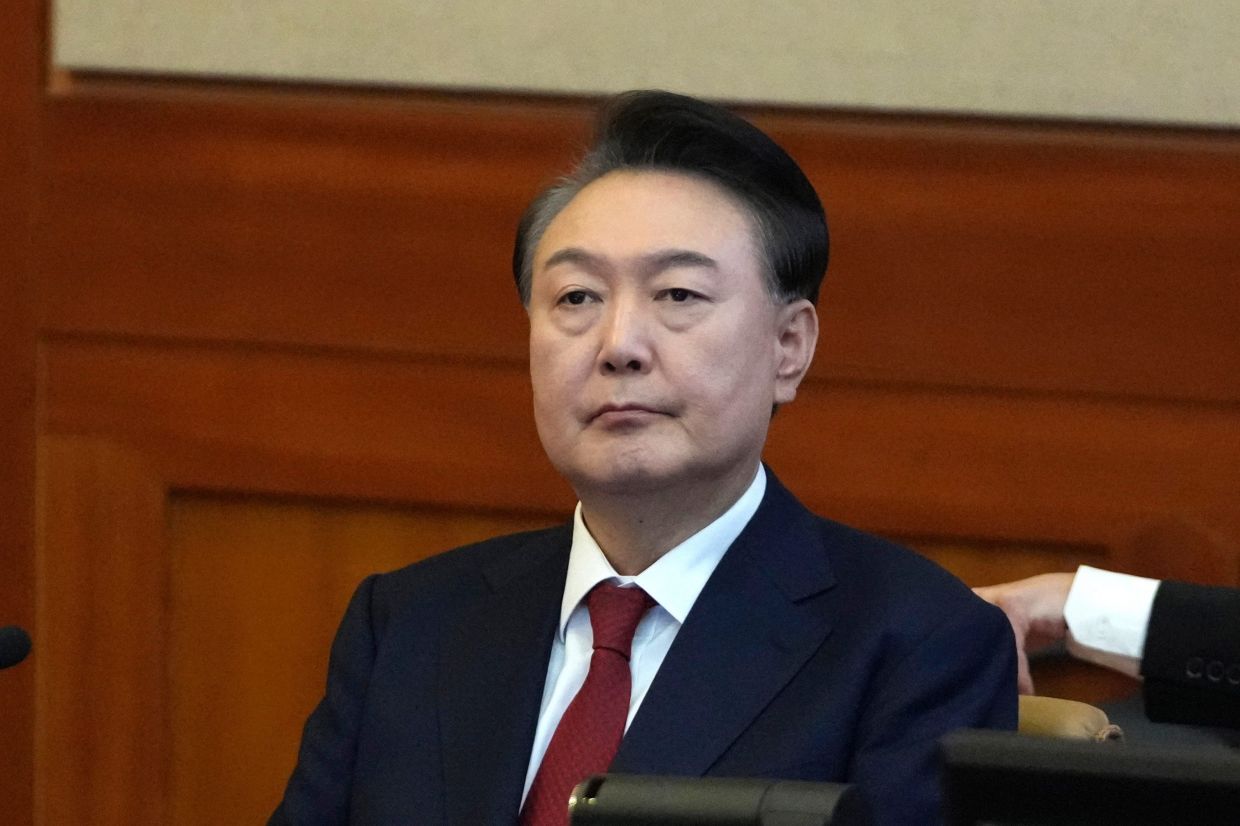
South Korea's Supreme Court has delivered a definitive verdict on the political turmoil that engulfed the nation when ex-president Yoon Suk Yeol attempted to impose martial law. On Thursday, July 9, the country's highest judicial authority upheld his seven-year prison sentence, a decision that marks the end of appellate proceedings in one of his most serious criminal cases. The ruling represents a dramatic fall from grace for Yoon, who was forced from office in April 2025 following the ill-fated martial law declaration that lasted merely six hours before lawmakers voted to nullify it.
The Supreme Court's affirmation came after a lower court initially sentenced Yoon to five years in January, a verdict that an appeals court subsequently raised to seven years in April while adding a guilty verdict on one additional charge relating to a misleading press release distributed to foreign media. Prosecutors had originally sought a decade-long sentence, while Yoon's legal team mounted appeals arguing the convictions were unfounded. With this final ruling, the ex-president has exhausted his ordinary legal remedies in this particular case, though his lawyers have indicated they intend to mount a constitutional challenge and file formal complaints against the decision.
The charges against Yoon extended beyond simply declaring martial law. Prosecutors established that he had deliberately obstructed cabinet deliberations by summoning only a select group of ministers to a pre-martial law meeting, effectively sidelining potential opposition. The court found evidence that Yoon orchestrated the creation and subsequent destruction of a forged martial law decree bearing fabricated signatures purportedly from the prime minister. Additionally, officials acting under Yoon's orders prepared and distributed misleading statements to international media outlets, and an army commander received instructions to erase records from secure military communication devices—actions designed to obscure evidence of the declaration's preparation and execution.
The December 2024 late-night televised address announcing the suspension of civilian rule plunged South Korea into uncharted political waters. Within hours, lawmakers convened in emergency session and voted overwhelmingly to overturn the declaration, a constitutional process that prevented Yoon from fully implementing his authoritarian vision. However, the attempted power grab triggered widespread public demonstrations, roiled financial markets as investors fled uncertainty, and caught major allies including the United States completely off-guard. The episode exposed deep fractures within South Korean politics and revealed how quickly democratic institutions can come under assault when top executives attempt to consolidate power through extraordinary measures.
Yoon's defiant stance throughout these proceedings has remained consistent. He has insisted that the martial law declaration was undertaken "solely for the sake of the nation" and maintains that his actions were necessary to combat what he characterised as "anti-state forces" and threats emanating from North Korea. This narrative—that extraordinary measures were justified by extraordinary circumstances—has resonated with his political base even as it has been thoroughly rejected by the courts. The ex-president's insistence that his motives were patriotic rather than self-serving reflects the deep ideological divisions that continue to characterise South Korean politics, where competing visions of national security and democratic governance remain fiercely contested.
What makes Yoon's legal predicament even more severe is that the seven-year sentence represents only one of multiple criminal convictions he faces. In a separate case, a court sentenced him to 30 years imprisonment for dispatching drones into North Korean territory in what prosecutors characterised as an attempt to artificially manufacture a security crisis that would provide justification for his subsequent martial law gambit. This additional conviction, combined with his ongoing detention and appeal of a life sentence for leading an insurrection through the martial law declaration itself, creates a cascading legal catastrophe that threatens to consume the remainder of his life. The cumulative weight of these sentences reveals the depth of judicial finding that Yoon systematically abused presidential authority across multiple spheres.
The political consequences of Yoon's downfall have already reshaped South Korea's governance landscape. His ouster triggered presidential elections that brought Lee Jae Myung of the centre-left Democratic Party to power, marking a significant shift in the nation's political trajectory. The transition represents not merely a change in personnel but a fundamental rejection by voters of Yoon's authoritarian instincts and his vision of executive power. For Malaysia and other Southeast Asian democracies, the South Korean case offers important lessons about the fragility of democratic institutions when concentrated in a single executive authority and the critical importance of maintaining robust parliamentary oversight and an independent judiciary.
Yoon's legal team has expressed what they characterise as "deep regret" over the Supreme Court's decision, alleging that the justices reached their conclusions "without sufficient deliberation." This rhetoric mirrors similar complaints from other fallen leaders who view judicial review as an impediment to their political aspirations rather than as a legitimate check on executive power. The defence team's planned constitutional challenge represents a final attempt to overturn the convictions, though such appeals rarely succeed when the underlying facts are as thoroughly established as they are in this case. The contrast between Yoon's claims of insufficient deliberation and the extensive evidentiary record compiled across multiple court proceedings suggests a fundamental disagreement about what constitutes adequate judicial review.
For the broader Southeast Asian region, the South Korean Supreme Court's unequivocal affirmation of Yoon's conviction carries significant symbolic weight. It demonstrates that even in a technologically advanced democracy with strong institutions, the temptation to concentrate power and override constitutional constraints remains a persistent threat that requires constant vigilance. The systematic dismantling of Yoon's legal defences—from the lower court through the appeals process to the Supreme Court—shows that judicial independence can prevail when institutional pressures align properly. However, the case also illustrates how perilously close South Korea came to authoritarian collapse, a cautionary tale for any nation where executive power has grown disproportionately large relative to other branches of government.
The finality of the Supreme Court's ruling does not necessarily signal the end of Yoon's legal troubles or his attempts to overturn convictions through other mechanisms. Constitutional courts in various democracies have occasionally intervened in cases where they perceive violations of fundamental rights, though such interventions remain rare and controversial. Yoon's lawyers have signalled their intention to pursue this path, suggesting that South Korea's constitutional disputes surrounding his case may continue reverberating through the legal system for years to come. Meanwhile, the ex-president remains detained, his political influence confined to his most devoted supporters, and his historical legacy shaped definitively by the judicial determination that he abused presidential authority in ways that threatened the democratic order itself.

