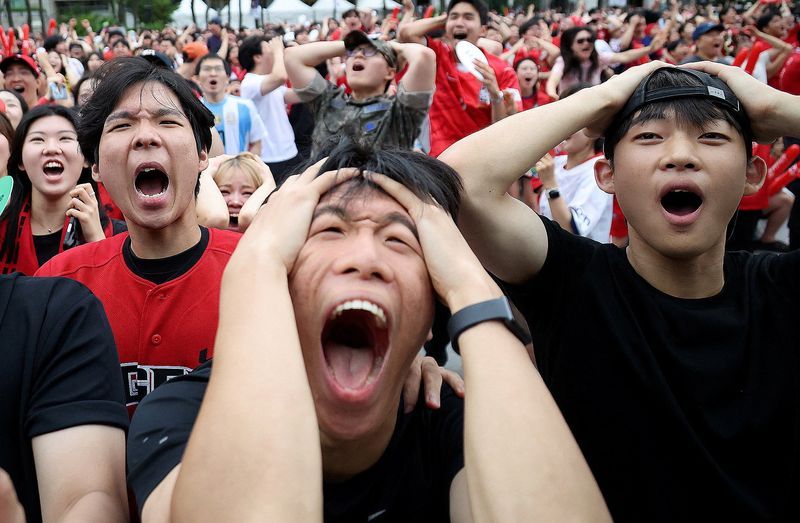
South Korea's President Lee Jae Myung has triggered a major political and sporting controversy by publicly condemning the national football team's premature exit from the World Cup and demanding a formal investigation by the sports ministry. The dramatic rebuke, posted on social media platform X on Sunday, represents an unusually forceful intervention by a sitting head of state into sporting affairs, signalling the depth of public frustration with a result that has shocked the nation.
The South Korean team's elimination came after consecutive defeats to Mexico and South Africa that left them finishing third in Group A, missing out on advancement to the knockout round despite widespread expectations that they would comfortably progress from what was perceived as a relatively favourable draw. This unexpected setback has proven particularly stinging for a football-obsessed country that invests heavily in developing its playing talent and places significant cultural value on international sporting success.
President Lee's intervention centred squarely on governance failures rather than tactical shortcomings, framing the defeat as symptomatic of deeper institutional problems within sports administration. In his statement, he articulated a fundamental critique of how appointment decisions are made within national sporting bodies, arguing that when loyalty and personal connections supersede merit and capability in leadership selection, poor outcomes become inevitable. This framing transforms what might otherwise be dismissed as sporting misfortune into a broader commentary on accountability and public sector management.
The immediate target of presidential criticism is coach Hong Myung-bo, whose reappointment as national team manager in 2024 had already drawn scrutiny from Korean media outlets suspicious of the selection process. Multiple news organisations and commentators questioned whether Hong's appointment reflected genuine confidence in his qualifications or whether other considerations had influenced the decision. Hong has consistently denied allegations of favouritism, but the presidential intervention has substantially amplified these doubts and shifted them from media speculation to official concern.
President Lee's rhetoric about separating public interest from private gain speaks to widespread concerns in South Korea about how power and influence operate within sports institutions. He specifically highlighted the fundamental governance problem whereby those responsible for making appointment decisions face insufficient oversight, making it nearly impossible for the public or elected representatives to hold them meaningfully accountable. This critique suggests systemic vulnerabilities extending beyond the football association itself.
Public anger has manifested itself through multiple channels in the fortnight following the elimination. A petition calling for Hong's dismissal posted on the national assembly's official website rapidly accumulated the necessary signatures required to trigger a formal initial review process. Meanwhile, social media has circulated images of small businesses and restaurants displaying notices explicitly prohibiting Hong from entering their premises, an unusual form of public shunning that reflects the intensity of popular feeling about the coaching appointment.
The political dimensions of this sporting controversy deserve careful analysis, particularly given Lee's explicit call for the Ministry of Culture, Sports and Tourism to conduct a comprehensive investigation. This represents a significant escalation beyond typical post-tournament assessments, suggesting that Seoul views the matter as involving potential breaches of administrative procedure or governance standards rather than simply disappointing results on the pitch. The ministry investigation framework signals that systemic accountability, not merely sporting performance, has become the governing concern.
For regional observers, South Korea's football governance crisis carries instructive lessons about how appointment processes in publicly-funded sporting organisations should operate. The controversy illustrates the risks that emerge when selection decisions lack transparency or rigorous oversight mechanisms, ultimately damaging institutional credibility and public trust. In Malaysia and across Southeast Asia, where sporting administration frequently encounters similar challenges regarding transparency and merit-based selection, the South Korean case study offers cautionary perspectives on allowing political or personal considerations to influence the appointment of key sporting figures.
The scope of the presidential intervention also reflects how deeply entrenched football is within South Korean national identity and political discourse. Unlike many nations where sporting failures remain confined to sporting circles, Seoul's political establishment clearly views the World Cup exit as indicative of broader governance failures deserving presidential attention. This cross-sector accountability reflects a particular political culture where sporting outcomes become legitimate subjects for official scrutiny when they reflect deeper administrative problems.
President Lee's demand for prevention measures and systemic improvements suggests that the investigation will likely produce recommendations extending beyond the immediate football context. These might encompass broader reforms to how sports ministry appointments function, increased transparency requirements, or external oversight mechanisms. Such institutional reforms, should they proceed, could substantially reshape South Korean sports administration in coming years.
The practical consequences for Hong Myung-bo remain uncertain, though the presidential condemnation significantly increases pressure on sports ministry officials to demonstrate responsiveness to public sentiment. Whether the investigation ultimately supports his continued leadership or recommends replacement, the controversy has already fundamentally damaged his credibility and positioned sports governance reform prominently on Seoul's policy agenda. For South Korean football itself, these institutional questions now overshadow the purely tactical dimensions of the World Cup disappointment.

