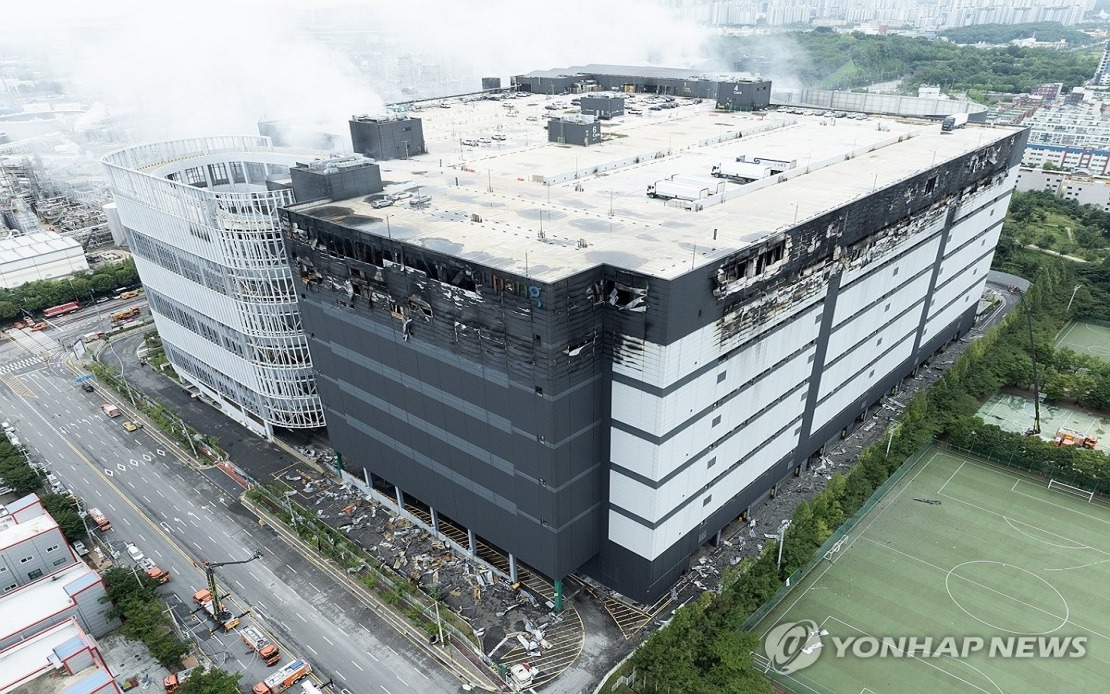
A catastrophic fire at a Coupang logistics facility in Incheon, located just west of Seoul, has finally been brought under initial control after burning for nearly three days, marking the end of one of South Korea's most significant industrial incidents in recent years. The blaze was declared under control at 8 p.m. on Monday by the Incheon firefighting headquarters, nearly 61 hours after it first ignited on Saturday, according to reports from the Yonhap News Agency and local fire authorities.
The scale of the emergency response underscores the severity of the situation and the challenges posed by modern warehouse infrastructure. A national mobilisation order was issued on Saturday morning, ultimately deploying 812 firefighters and 231 pieces of equipment to combat the inferno. This extraordinary concentration of resources reflects both the hazards inherent in massive logistics hubs and South Korea's capacity to mount coordinated disaster responses across regional boundaries. For Malaysian readers familiar with the rapid growth of e-commerce logistics facilities across Southeast Asia, the incident serves as a sobering reminder of the fire risks associated with high-density warehousing operations.
The warehouse's structural design and contents presented formidable obstacles to suppression efforts throughout the weekend and early Monday. The complex layout of the building, combined with enormous quantities of combustible materials stored throughout the facility, created conditions where flames could spread rapidly and reignite in unexpected locations. These challenges are common across modern fulfillment centres, whether in Seoul, Kuala Lumpur, or Bangkok, where efficient storage solutions often prioritise density over fire compartmentalisation. Firefighters found themselves battling not simply the initial blaze but also secondary fires that erupted as the structure's integrity weakened under extreme heat.
A turning point in the firefighting campaign came on Monday, when rainfall provided natural assistance to the firefighting teams. This weather intervention helped cool the structure and reduce airborne embers that could spread flames to neighbouring buildings. The combination of sustained human effort and favourable meteorological conditions finally allowed crews to transition from desperate containment to measured control. For regional emergency management professionals, the incident highlights both the unpredictability of large-scale fires and the critical importance of weather forecasting in disaster response planning.
The human toll of the disaster became immediately apparent as local authorities took precautionary measures to protect residents in the vicinity. On late Sunday evening, the Incheon municipal government issued an evacuation order affecting all areas within 116 metres of the warehouse's ramp zone, a radius that captured many residential and institutional buildings in the surrounding neighbourhood. By Monday morning, 178 residents had sought temporary shelter at nearby schools, representing families displaced from their homes due to the hazardous conditions.
The evacuation's impact on local institutions illustrated the broad disruption caused by industrial emergencies in densely populated areas. On Monday, local authorities took the precautionary step of ordering all daycare centres and elementary schools in the affected zone to close for the day. This decision resulted in the shutdown of one elementary school and fourteen daycare centres, affecting hundreds of families who suddenly lacked childcare and educational facilities. Such collateral damage—though invisible in terms of physical destruction—carries significant economic and social consequences for working parents and communities.
For Southeast Asian policymakers and industrial planners, the Incheon incident offers crucial lessons about urban logistics development. South Korea, like Malaysia and other regional economies, has experienced explosive growth in e-commerce and third-party logistics operations over the past decade. Facilities operated by companies such as Coupang, which dominates South Korea's same-day delivery market, have become integral to modern consumer economies but simultaneously represent concentrated fire risks. The vulnerability exposed in Incheon—where a single warehouse fire displaced hundreds and required nearly 900 personnel to contain—suggests that regulatory frameworks governing warehouse construction, fire suppression infrastructure, and emergency response protocols warrant serious regional examination.
The incident also demonstrates the interconnected nature of modern supply chains and disaster preparedness. Coupang operates throughout South Korea and has expanded into neighbouring markets, meaning disruptions at any single facility can ripple across the broader commercial ecosystem. For Malaysian logistics operators and e-commerce platforms that increasingly rely on warehouse automation and high-density storage, the Incheon fire underscores the importance of redundancy, dispersed facility networks, and rigorous fire safety standards that exceed minimum regulatory requirements.
Firefighting authorities will likely conduct extensive investigations to determine the blaze's origin and identify contributing factors that allowed it to burn so intensely for such an extended period. Such investigations typically examine electrical systems, chemical storage protocols, fire suppression equipment functionality, and emergency response procedures. The findings will inform not only Korean regulations but also serve as instructive case studies for warehouse operators throughout Asia-Pacific, where regulatory standards vary considerably across jurisdictions.
The declaration of initial control represents a milestone rather than a final resolution. Extended mop-up operations will continue for days, with crews ensuring that no smouldering materials remain capable of reigniting. Structural engineers will need to assess the building's integrity before any determination can be made about salvage or demolition. Environmental authorities will monitor potential contamination from fire suppressants and burnt materials. For the 178 evacuees sheltering at local schools, return to their homes remains uncertain, adding psychological stress to the trauma of displacement.
The broader implications extend beyond South Korea's borders. Malaysia's own logistics sector has experienced rapid expansion, particularly in the Klang Valley and around Kuala Lumpur International Airport, where multiple major warehouses serve regional distribution networks. The Incheon incident provides a cautionary tale about the necessity of stringent building codes, mandatory sprinkler systems throughout warehouse spaces, compartmentalisation standards, and regular safety audits. As Malaysian authorities continue encouraging investment in logistics infrastructure to support the country's positioning as a regional supply chain hub, learning from South Korea's industrial emergency becomes increasingly relevant.
The South Korean government's rapid and comprehensive response—deploying resources at a national level, coordinating across municipal boundaries, and prioritising resident safety through swift evacuation orders—demonstrates organisational capacity that reflects decades of disaster management development. Yet even with such substantial resources, the fire burned for 61 hours before reaching initial control, illustrating the formidable challenges posed by modern industrial fires. For Southeast Asian emergency management authorities, the message is clear: no amount of firefighting resources can substitute for prevention, early detection, and robust structural fire safety measures embedded in warehouse design from the outset.

