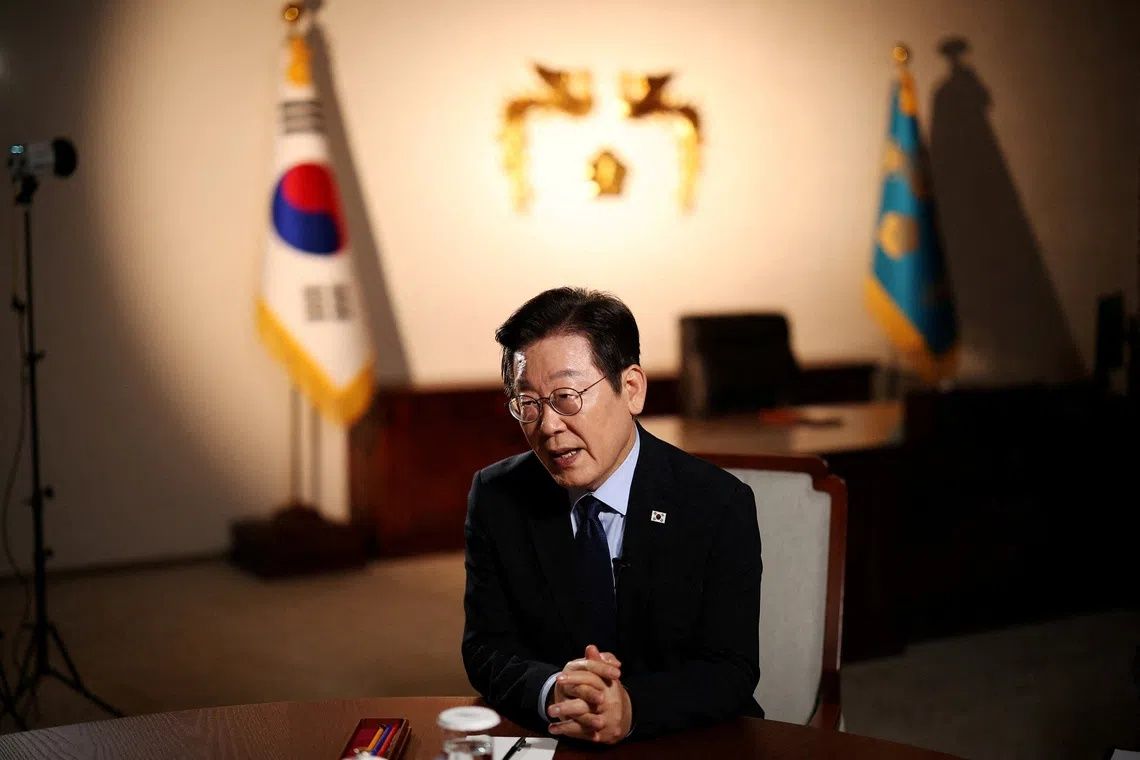
South Korean President Lee Jae Myung has thrown his weight behind a significant constitutional overhaul that would reshape the nation's executive framework, according to statements released by the presidential Blue House on Friday. The proposed reform would replace the current single five-year presidential term with a four-year model permitting candidates to seek immediate re-election, fundamentally altering how power rotates through Seoul's highest office. The initiative also aims to redistribute authority away from the presidency towards the legislative branch, addressing longstanding concerns about the concentration of executive power.
The timing of this constitutional push carries particular significance for South Korea's political landscape, where the presidency has historically wielded tremendous discretionary authority. Lee's backing suggests that even the sitting president recognises the need for structural constraints on executive power—a notable acknowledgment from someone currently occupying that position. The proposed framework represents a deliberate attempt to recalibrate the balance between branches of government, potentially reshaping how future administrations conduct business and limiting the scope for what critics have termed the country's "imperial presidency."
According to the Blue House official cited by Yonhap news agency, the four-year renewable model possesses the broadest appeal among the South Korean electorate compared to alternative constitutional designs. This framing suggests that extensive public consultation or polling may have informed the decision to champion this particular structure over other reform proposals. The emphasis on public acceptance is strategically important in South Korea, where constitutional amendments require extraordinary legislative majorities and benefit considerably from popular legitimacy.
Lee's stance on redistributing power away from the presidency warrants careful examination, particularly given that he currently enjoys the considerable prerogatives of the office. By openly acknowledging concerns about excessive presidential concentration, he positions himself as a reformer willing to voluntarily constrain future executive authority—though naturally his support benefits from the fact that the four-year renewable model would afford him the possibility of extended tenure. This dual characteristic makes the proposal simultaneously self-serving and ostensibly principled.
The constitutional amendment process in South Korea presents formidable procedural hurdles that will ultimately determine whether this proposal advances beyond discussion stage. Any revision requires the affirmative votes of at least 200 members of the National Assembly, a two-thirds supermajority that demands substantial cross-party cooperation. The Blue House official's explicit statement that reform "should be discussed and pursued in the National Assembly" represents a deferral of initiative to lawmakers, acknowledging that any constitutional change must emerge from genuine legislative consensus rather than executive decree.
Historically, South Korea's constitutional amendments have rarely succeeded without broad political agreement, as the supermajority requirement effectively grants opposition parties veto power over substantive reforms. The emphasis on "political consensus" in the official statement underscores this reality—no single faction can unilaterally rewrite the nation's governing document. This structural constraint actually enhances the legitimacy of any reform that does succeed, but it also means that Lee's proposal faces uncertain prospects despite his current presidential platform.
The shift from five-year single terms to four-year renewable terms would represent a significant philosophical change in how South Korea manages executive succession. The current model, inherited partly from constitutional traditions emphasising limit on power accumulation, prevents any president from serving beyond a single mandate. The proposed system would introduce the possibility of consecutive terms, something that could appeal to voters who support a particular president but faces opposition from those concerned about entrenched power structures. The trade-off between electoral continuity and power diffusion remains contested among constitutional scholars.
For Malaysia and other Southeast Asian democracies, South Korea's constitutional debate carries instructive lessons about the perpetual tension between executive effectiveness and power distribution. Many nations in the region grapple with similar questions about how presidential or monarchical systems should balance authority concentration with democratic accountability. South Korea's openness to revisiting these fundamental questions through legitimate constitutional processes—however contested the outcomes—demonstrates an institutional commitment to formal amendment over informal power accumulation.
The reference to strengthening parliamentary powers specifically addresses a central concern in contemporary democracy: the tendency for chief executives to dominate legislative processes even within ostensibly separated power systems. By channelling more authority toward the National Assembly alongside the presidential term restructuring, the proposal suggests that merely shortening executive tenure without redistributing substantive powers would represent incomplete reform. This two-pronged approach—limiting presidential duration while expanding parliamentary scope—reflects sophisticated thinking about institutional design.
South Korea's National Assembly now faces the challenge of determining whether this constitutional proposal merits serious negotiation among political parties. The requirements for 200 supporting votes and genuine consensus mean that opposition parties possess considerable leverage in any future discussions. Cross-party working groups would likely emerge to explore specific provisions, testing whether fundamental agreement exists on the philosophical questions underlying the proposed restructuring. The parliamentary phase will ultimately prove more determinative than any presidential endorsement.
Regional observers watching South Korea's constitutional trajectory should note that formal democratic institutions continue functioning as frameworks for managing power transitions and structural reforms. Unlike systems where such fundamental questions are resolved through extra-constitutional means, South Korea channels these disputes through specified amendment procedures. Whether Lee's proposal ultimately succeeds or fails, the mechanism through which South Koreans address it reflects institutional stability that many developing democracies continue building toward.

