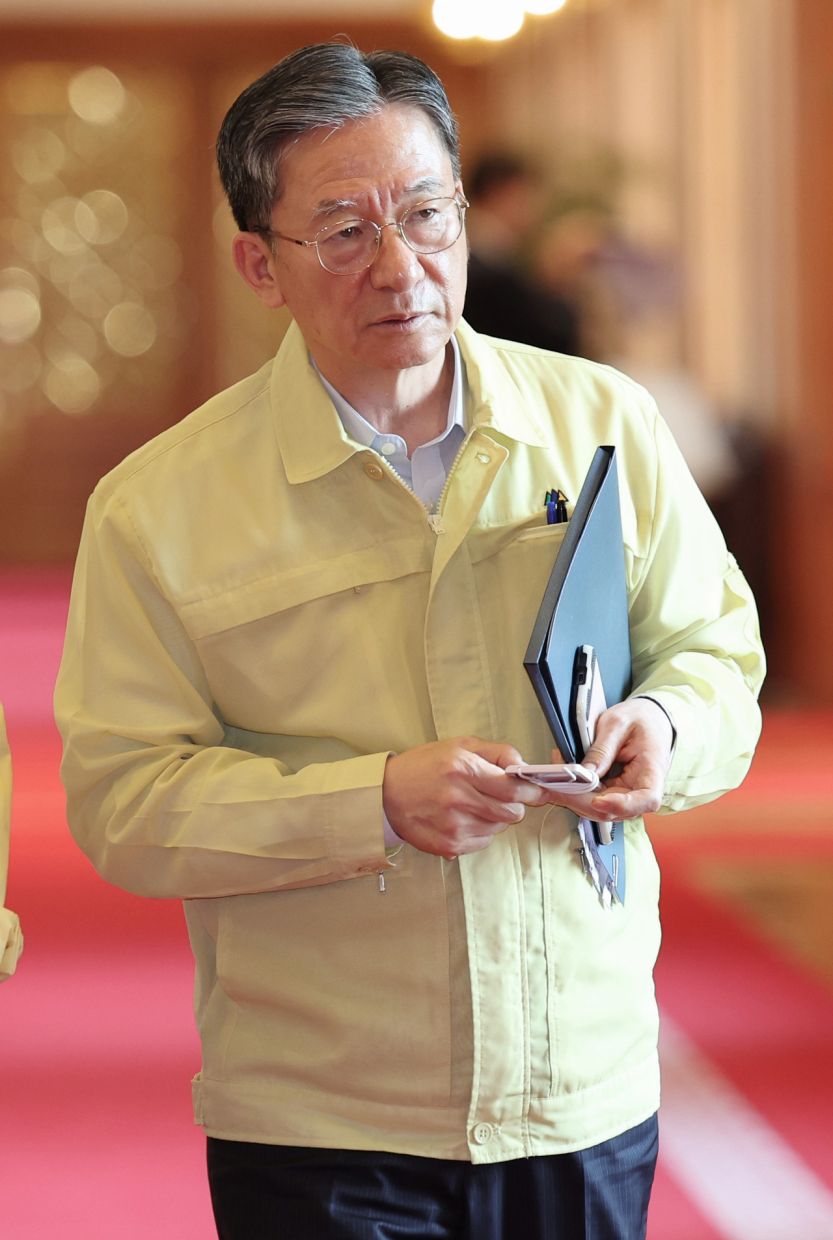
South Korea's Justice Minister Jung Sung-ho stepped down on Tuesday afternoon, marking another shift in leadership as the country navigates a contentious overhaul of its criminal justice system. His departure follows mounting tensions between the Ministry of Justice and the ruling Democratic Party over the scope and powers that prosecutors should maintain under an incoming legal framework set to reshape investigative procedures nationwide.
At the heart of the dispute lies a fundamental disagreement about prosecutorial authority. Jung had voiced reservations about eliminating prosecutors' ability to conduct supplementary investigations—a power that allows them to request further inquiry when they determine that a police investigation lacks sufficient depth or completeness. The ruling Democratic Party, however, has pursued an opposing agenda, seeking to impose a clear functional divide between investigative units, primarily police, and prosecutorial bodies responsible for charging decisions and courtroom representation.
The proposed separation reflects a broader trend in democracies worldwide to limit prosecutorial power and reduce the risk of abuse through concentrated authority. This architectural change carries particular weight in South Korea, where the prosecution has historically wielded considerable influence over criminal justice outcomes. By restricting prosecutors to a review-and-charge function rather than allowing them to independently investigate, policymakers argue the system becomes more balanced and resistant to political manipulation.
Under current law, prosecutors enjoy considerable discretion when evaluating police work. If they believe an investigation is incomplete or investigative leads remain unexplored, they can send cases back or undertake their own supplementary investigations to fill gaps. This mechanism has been justified as a quality-control measure, yet critics argue it enables prosecutors to bypass police hierarchy and pursue investigations according to their own institutional preferences and priorities.
When the revised Criminal Procedure Act formally takes effect on October 2, this prosecutorial prerogative will disappear. The new system will confine prosecutors to assessing the investigative materials already gathered, determining whether sufficient evidence exists to warrant charges, and litigating cases through the court system. Police will retain primary investigative responsibility, fundamentally rebalancing how criminal cases flow through South Korea's justice apparatus.
Jung's announced reasons for resignation centred on personal health concerns, framing his departure as motivated by physical wellbeing rather than political disagreement. However, his public remarks also touched on a desire for the reformed criminal justice system to transition under fresh leadership, suggesting his ideological misalignment with Democratic Party priorities influenced his calculation. This framing allowed Jung to maintain dignity while effectively ceding ground to legislative momentum he opposed.
The timing of Jung's exit reflects the urgency surrounding implementation of the Criminal Procedure Act revisions. With the October 2 effective date approaching, continuity in the Justice Ministry becomes strategically important. The government faces complex technical and operational challenges in retooling prosecutorial workflows, retraining personnel, and recalibrating interagency relationships between prosecutors and police.
Vice Justice Minister Lee Jin-soo will assume the acting role vacated by Jung's resignation, pending formal acceptance of the resignation by the relevant authorities. Lee's appointment signals whether the government intends to maintain institutional resistance to the prosecutor reform agenda or shift toward cooperative implementation. His background and prior statements on prosecutorial reform will shape how smoothly the October 2 transition unfolds operationally.
For Malaysia and the broader Southeast Asian region, South Korea's prosecutorial restructuring offers instructive parallels and contrasts. Many Southeast Asian jurisdictions grapple with similar questions about prosecutorial independence, investigative authority, and the appropriate balance between different law enforcement agencies. Countries like Malaysia, where the Attorney General's Chambers holds both prosecutorial and policy advisory functions, may observe how South Korea manages this institutional separation and whether it enhances public confidence in criminal justice outcomes.
The Democratic Party's push reflects international best practices emphasizing independence and checks on prosecutorial discretion. Yet implementation challenges in South Korea—including resistance from institutional actors who benefited under the old system—illustrate why such reforms rarely proceed smoothly. Lee's leadership will test whether prosecutorial culture can adapt to a more limited role or whether informal resistance undermines statutory change.
Beyond the immediate Korean context, this episode demonstrates how substantive institutional reform requires alignment among political leadership, bureaucratic actors, and legislative majorities. Jung's departure, while framed diplomatically, represents a collision between executive resistance and legislative reform momentum. His successor faces pressure to either endorse the Democratic Party vision or maintain subtle opposition while publicly cooperating with implementation.

