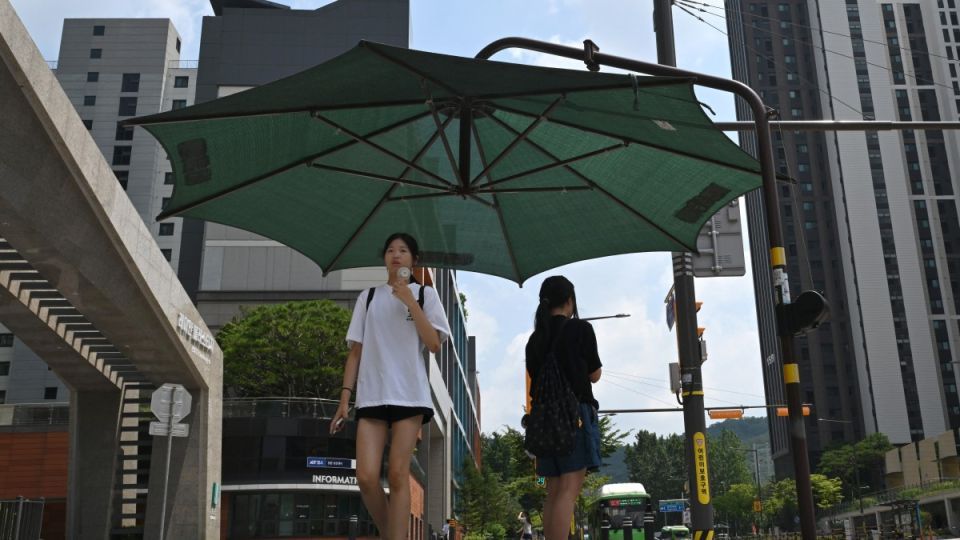
South Korea's unprecedented heatwave is forcing a reckoning with workplace safety, as major corporations invest heavily in cooling infrastructure and flexible schedules while the most vulnerable workers remain dangerously exposed. The nation has experienced record-breaking temperatures this year, with Yangsan in South Gyeongsang Province reaching 42.5 degrees Celsius and Seoul enduring extended heatwave warnings. These extreme conditions have galvanised the country's largest employers to adopt comprehensive heat-mitigation strategies, yet the response has crystallised a troubling reality: protection correlates directly with company size and resources, leaving precarious workers increasingly at risk.
The scale of heat-related workplace harm underscores the urgency. Data compiled by Rep. Kim Wi-sang of the ruling People Power Party shows that the Korea Workers' Compensation and Welfare Service has recognised 195 heat-related occupational accidents between 2022 and June 2024, resulting in 20 deaths. Alarmingly, 13 cases had already been formally documented by the end of June, before the customary July-August peak when temperatures typically soar. This acceleration suggests the summer of 2024 may yield even grimmer statistics, prompting lawmakers and employers alike to reassess existing protections.
Legal accountability has begun shifting corporate behaviour, particularly following a watershed moment last year when a district court convicted a construction firm under the Serious Accidents Punishment Act for a subcontractor employee's heatstroke death. This landmark ruling—the first such conviction involving heat-related fatality—signalled that companies could face criminal liability rather than merely civil penalties. Construction firms, which account for a disproportionate burden of industrial deaths, have consequently become laboratories for innovative heat management, treating workplace temperature as a measurable occupational hazard requiring systematic intervention.
Large construction and heavy industrial firms have deployed increasingly sophisticated responses. Hyundai Engineering & Construction operates incentive programmes encouraging workers to utilise designated cooling areas, while Lotte E&C has installed Internet of Things monitoring systems across approximately 80 construction sites, measuring perceived temperature readings every five minutes and automatically flagging heat risk across five graduated severity levels. Daewoo E&C has introduced a no-penalty sick leave system allowing workers to cease labour when experiencing physical distress, removing the financial disincentive that normally coerces workers into dangerous conditions. These measures reflect a recognition that heat protection requires both technological investment and cultural restructuring of workplace norms.
Specialised protection has been extended to particularly vulnerable cohorts. Hyundai E&C has distributed multilingual emergency reporting guides in 22 languages and supplied cooling vests equipped with integrated fans alongside oral rehydration solutions to workers identified as exceptionally susceptible to heat illness. Kumho E&C has partnered with beverage manufacturer Lotte Chilsung to furnish construction sites with bottled water, sports drinks, cooling towels and portable shelters through September, recognising that hydration and shade access represent foundational heat protection measures. These interventions acknowledge that migrant workers—often linguistically isolated and unfamiliar with Korean occupational safety systems—require proactive, tangible support.
Heavy industries incapable of halting production during summer implement rigidly structured work-and-rest schedules calibrated to perceived temperature thresholds. Posco, whose blast furnaces operate continuously, mandates 15-minute rest intervals following every 45 minutes of labour when perceived temperature exceeds 35 degrees Celsius, and 10-minute breaks after 50-minute work periods when temperatures exceed 31 degrees. Hyundai Steel enforces minimum 10-minute hourly rest at 31 degrees rising to 15 minutes at 35 degrees. These prescribed ratios treat heat exposure as a measurable production constraint equivalent to equipment maintenance, thereby legitimising rest as operational necessity rather than workforce indulgence.
Shipbuilding, another sector with significant heat exposure, has restructured summer schedules wholesale. Hanwha Ocean has doubled its standard morning and afternoon breaks from 10 to 20 minutes through August and extends lunch periods by 30 minutes when temperatures reach 28 degrees, escalating to one-hour extensions above 31.5 degrees. HD Hyundai Heavy Industries has lengthened lunch breaks from 60 to 90 minutes through August while operating over 270 cooling facilities across its shipyards, supplementing these with cooling vests, ice water and electrolyte supplements. Samsung Heavy Industries has established a dedicated task force coordinating heat-response measures and deploying portable cooling equipment, while SK hynix and Coupang have similarly expanded air conditioning and ventilation across their respective logistics operations.
Yet this protective infrastructure remains starkly unequal. The 195 recognised heat-related accidents since 2022 reveal the geography of vulnerability: more than half occurred at workplaces employing fewer than 50 workers, and 42 incidents happened at businesses with fewer than five employees. Small enterprises typically lack dedicated safety personnel, cannot justify capital investment in cooling systems, and possess limited flexibility in restructuring work schedules without sacrificing productivity. Labour experts and lawmakers acknowledge that smaller workplaces function within structural constraints that render heat mitigation substantially more difficult, irrespective of management willingness. This disparity has created a two-tier system where corporate employees benefit from industrial-scale cooling and rest protocols while workers at smaller sites endure unmodified exposure.
Migrant workers engaged in agriculture and outdoor labour face the most severe exposure. Last month, a Thai seasonal worker died while labouring in a field in Haenam, South Jeolla Province, followed by the death of a Vietnamese national working outdoors on a farm in Goesan, North Chungcheong Province. These deaths underscore that many of the nation's most dangerous work environments—agricultural fields, outdoor construction, manual labour—operate entirely outside the protective frameworks established by large corporate employers. Seasonal migrants frequently lack formal employment relationships conferring occupational safety protections and often work under cash arrangements precluding compensation eligibility. Their deaths represent not anomalies but predictable consequences of a system where protection concentrates among the nation's largest employers.
Rep. Kim has called for governmental intervention, urging authorities to transcend the current focus on large workplaces by substantially strengthening inspections and practical protections targeting seasonal migrant workers and employees at small outdoor worksites. His position reflects growing recognition that market mechanisms alone will not extend heat protection across occupational tiers. Without regulatory mandate, smaller employers will continue viewing heat mitigation as discretionary cost rather than mandatory safeguard, perpetuating disparities that concentrate safety among privileged workforces. South Korea's heat crisis thus poses a fundamental question about occupational equity: whether protection becomes a privilege allocated by employer size, or whether government establishes universal standards ensuring that all workers—regardless of firm size, employment status or citizenship—receive equivalent defence against extreme heat.

