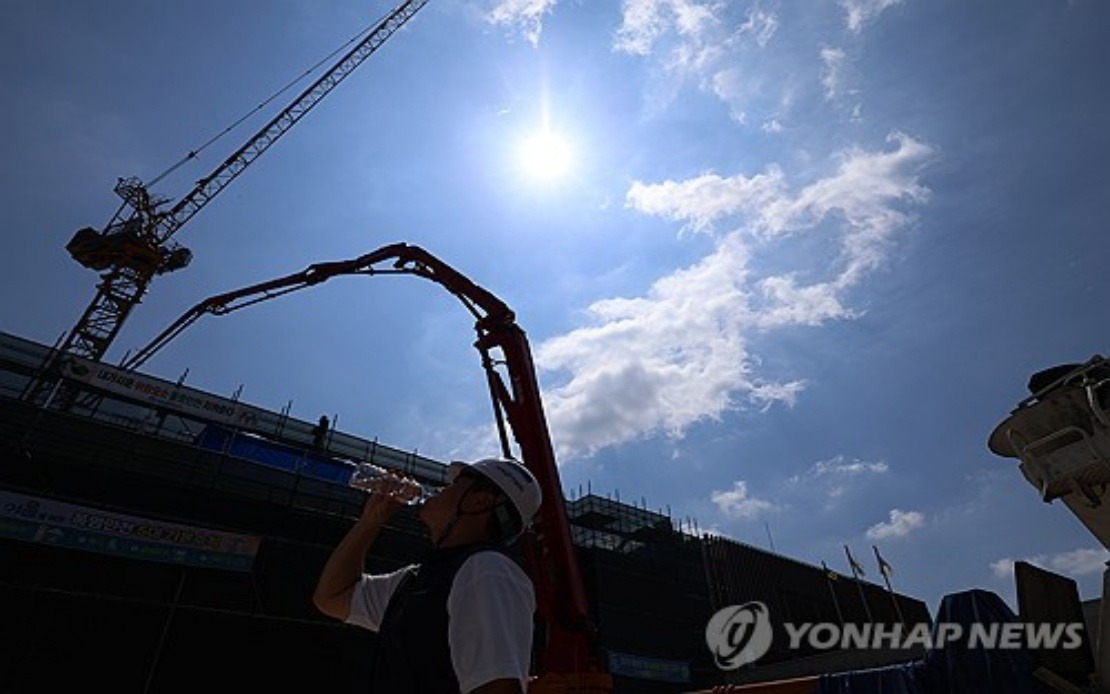
South Korea's meteorological authorities have dramatically escalated heat alert coverage across the Greater Seoul region, with the Korea Meteorological Administration placing nearly half of the capital area under its most critical warning level on Wednesday. The expansion means that 20 of the 46 land weather advisory zones in the greater metropolitan region are now operating at maximum alert status, a striking indication of how widespread the extreme conditions have become. These top-tier warnings activated at 11 am across southern Incheon and nine municipalities and districts in Gyeonggi Province, including Gwangmyeong, Yeoncheon and Hwaseong, reflecting an escalating crisis that threatens millions of people in the country's most densely populated zone.
For the first time since the heat alert system was formally introduced on June 1, the entirety of Seoul itself fell under the highest warning classification on Tuesday. This unprecedented step underscores the intensity of the current weather pattern and represents a significant milestone in the country's modern meteorological history. The warnings have now extended beyond the immediate capital region, reaching Cheongyang in South Chungcheong Province—marking a crucial geographical expansion that signals the heat wave is no longer confined to the Seoul metropolitan area but spreading into central regions previously less affected by such extreme conditions.
The KMA's serious heat wave warning triggers when apparent temperatures—which account for humidity and wind chill effects—reach 38 degrees Celsius or above, or when daily maximum temperatures climb to 39 degrees Celsius or higher, provided the highest apparent temperature has already exceeded 35 degrees Celsius for two or more consecutive days. These thresholds reflect the agency's effort to capture not merely the thermometer reading but the actual physiological stress that extreme heat imposes on human populations. Understanding these technical criteria matters for Southeast Asian readers, as many nations in the region face similar humidity-temperature combinations that create dangerous conditions for outdoor workers, the elderly, and vulnerable populations.
The actual temperatures recorded across South Korea have shattered historical records in ways that demand serious attention. The southeastern city of Yangsan registered 42.5 degrees Celsius, establishing the highest temperature documented since South Korea began maintaining systematic weather records in 1904. This represents not merely a record for a single year or decade but an unprecedented extreme in over a century of meteorological data. Such milestones carry profound implications for climate adaptation planning across East Asia and should prompt serious consideration among neighbouring countries about their own preparedness for similar events.
Beyond the raw temperature figures, the human toll has been immediate and devastating. South Korea's Disease Control and Prevention Agency has documented 2,221 hospitalisations directly attributed to heat-related illnesses between May 15 and Monday of the reporting week. Equally alarming, 19 deaths have been confirmed as heat-related during this same period, representing a substantial loss of life that extends beyond statistics to represent families and communities devastated by preventable tragedy. The clustering of health crises during this four-month window suggests that the country's health infrastructure, while among the most advanced in Asia, continues to struggle when confronted with such concentrated thermal stress across entire urban populations.
The mechanisms driving this extreme heat pattern warrant closer examination for regional policymakers. High-pressure atmospheric systems have settled over the Korean peninsula with unusual persistence, trapping hot air and preventing the circulation patterns that normally bring relief. Climate scientists increasingly attribute such events to shifting jet stream patterns associated with broader global warming trends, meaning that future summers may similarly bring extended periods of dangerous heat unless significant emissions reductions occur. For Malaysia and other Southeast Asian nations already accustomed to tropical heat, the South Korean experience demonstrates that even populations with substantial air conditioning infrastructure and modern healthcare systems face serious challenges when temperatures and humidity combine in extreme configurations.
The geographic distribution of these warnings reveals important vulnerabilities within the greater Seoul metropolitan region. Suburban and satellite cities in Gyeonggi Province and Incheon, which house millions of workers and residents, often lack the density of cooling centres and air-conditioned public spaces available in central Seoul. Many residents in these peripheral areas work in construction, agriculture, or outdoor services—occupations that cannot simply shift to air-conditioned environments. The expansion of warnings to include these districts suggests that authorities are increasingly concerned about heat casualties among these less-protected populations, a concern that resonates across Southeast Asia where similar occupational and geographic disparities in heat vulnerability exist.
The timing of this crisis during the summer months compounds existing stresses on South Korea's energy infrastructure and economy. Peak air-conditioning demand during heat waves can strain electricity grids, potentially forcing rolling blackouts that paradoxically increase vulnerability precisely when cooling is most essential. Manufacturing sectors dependent on temperature-sensitive processes face operational challenges, and the broader economy experiences productivity losses as workers struggle to function safely in extreme conditions. These cascading effects demonstrate how weather extremes have become economic and political issues, not merely environmental ones, a lesson particularly relevant for Southeast Asian manufacturing hubs that face similar risk profiles.
Public health authorities across the region should note South Korea's response protocols and outcomes as potential models or cautionary tales. The KMA's tiered alert system, while sophisticated, evidently could not fully prevent the serious health consequences documented. This suggests that warning systems alone—no matter how technically advanced—require complementary infrastructure investments, public education campaigns, and workplace safety regulations specifically designed to protect populations during extreme heat. Malaysia's tropical climate means that such preparation should receive sustained policy attention rather than episodic crisis response.
Looking beyond the immediate crisis, these record-breaking temperatures force uncomfortable conversations about the long-term habitability of densely populated regions in East Asia. If 42.5 degrees Celsius becomes a new baseline rather than an exceptional outlier, urban planning, building codes, and occupational safety standards may require fundamental restructuring. South Korea, as a wealthy nation with substantial technical capacity, possesses resources to adapt that poorer or more densely populated regions may lack, making this moment a crucial window for developing transferable solutions that could benefit the broader region.
The expansion of heat warnings to encompass nearly half of the Greater Seoul area represents a threshold moment in South Korea's relationship with extreme weather. While the country has sophisticated monitoring and alert systems, the scale and intensity of current conditions demonstrate that technological sophistication alone cannot eliminate the dangers posed by sustained extreme heat. For Malaysia and other Southeast Asian nations with even less established heat-alert infrastructure, the South Korean experience should prompt urgent action to develop comprehensive, multi-layered approaches to heat protection before climate-driven temperature extremes become the seasonal norm rather than unprecedented crises.

