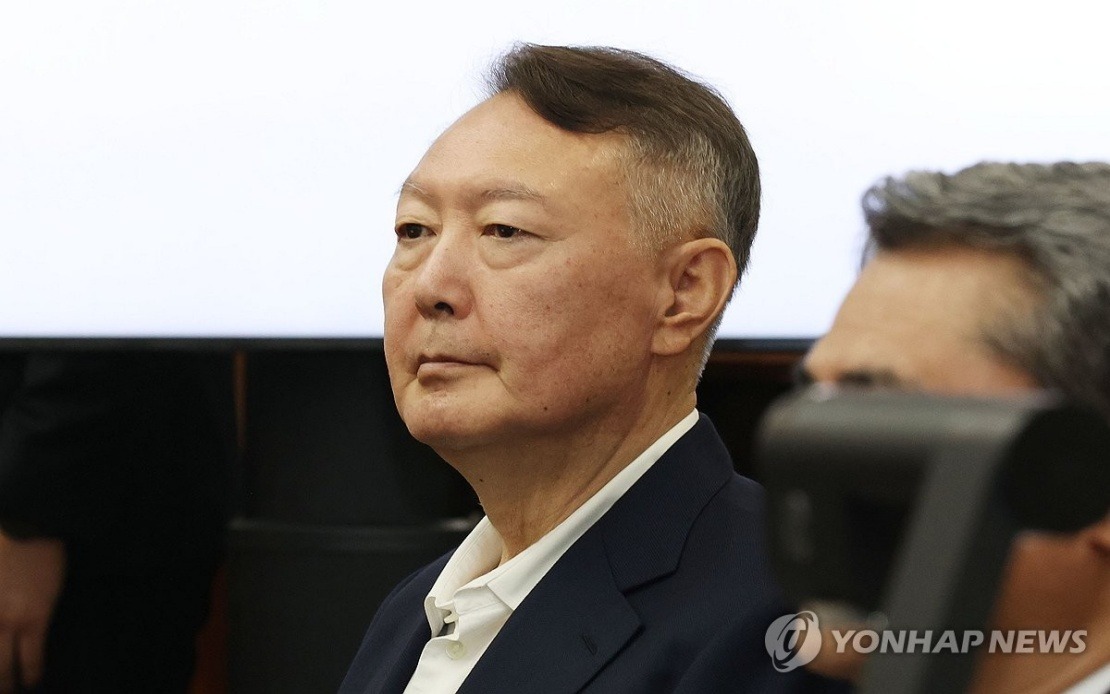
South Korea's ex-President Yoon Suk Yeol received a two-year prison sentence from Seoul Central District Court on Monday for illegally accepting political funds through the provision of complimentary opinion polls. The conviction marks another judicial setback for the jailed former leader, who is simultaneously facing multiple criminal trials stemming from his controversial 2024 martial law declaration attempt.
The court determined that Yoon improperly received 14 opinion surveys at no cost from political operative Myung Tae-kyun between April 2021 and March 2022, with the total value of 58 polls in question estimated at approximately 270 million won (roughly US$180,100). Rather than accepting the full indictment scope, the judges recognised only a portion of the alleged transactions, resulting in a forfeiture order for 13.96 million won alongside the custodial sentence. Prosecutors had originally sought a four-year prison term, making the court's decision a moderate reduction from their initial demand.
The case centres on an alleged quid pro quo arrangement in which Yoon purportedly promised to support former National Assembly member Kim Young-sun's candidacy for the conservative People Power Party in parliamentary by-elections scheduled for June 2022. According to the court's findings, this political commitment formed the implicit exchange underpinning Myung's provision of the free opinion polls. The arrangement, if proven, would constitute a violation of South Korea's strict Political Funds Act, which prohibits candidates and political figures from accepting unauthorised financial or material contributions.
Myung Tae-kyun, the self-described power broker at the centre of the scheme, was separately sentenced to 18 months in prison on related charges. His role as an intermediary providing polling data to the former president without compensation raises questions about the informal networks of influence that operate within South Korean political circles. Such behind-the-scenes arrangements have long been a contentious feature of the country's political culture, prompting periodic reforms aimed at transparency and accountability.
The ruling stands in sharp contrast to a separate verdict involving Yoon's wife, former first lady Kim Keon Hee, who was acquitted of identical charges in April by Seoul High Court. That appellate panel reasoned that the couple could not reasonably be considered as profiting from the opinion polls, noting that Myung had distributed similar surveys to numerous other recipients. The prosecution has since filed an appeal challenging Kim's acquittal, arguing that the legal standard applied was insufficiently rigorous. This divergence between the former president's conviction and his spouse's exoneration highlights the complexity and sometimes inconsistent application of campaign finance regulations in high-profile cases.
For Malaysian observers and Southeast Asian political analysts, the Yoon case illustrates the intensifying scrutiny that even former heads of state face in South Korea's mature democratic system. Unlike in certain regional contexts where former leaders have secured immunity through constitutional provisions or political settlements, South Korea's judicial framework permits and indeed compels the prosecution of sitting and former presidents. This reflects a broader commitment to equal application of the law, though critics argue it can also become a tool for partisan reckoning between competing political factions.
The opinion poll funding mechanism employed in this case represents a creative though ultimately futile attempt to circumvent campaign finance restrictions. By disguising political contributions as market research services, Myung and Yoon allegedly sought to obscure what was effectively an in-kind political donation. The court's willingness to penetrate this arrangement and classify it as an illegal political fund demonstrates judicial attentiveness to substantive reality rather than mere formal characterisation—a principle increasingly important as political actors devise novel methods to evade transparency requirements.
Yoon's mounting legal jeopardy extends considerably beyond this opinion poll conviction. In February, he was sentenced to life imprisonment on charges of leading an insurrection through his abortive imposition of martial law on December 3, 2024. That more severe conviction followed his dramatic attempt to suspend constitutional governance, an episode that shocked the global community and triggered protracted constitutional and judicial proceedings. The combination of the insurrection conviction and the campaign finance conviction suggests a systematic pattern of legal exposure that will likely preoccupy Yoon's defence team for years.
The prosecution's decision to pursue these campaign finance charges alongside the far graver insurrection allegations reflects a comprehensive approach to investigating Yoon's conduct both as a serving president and as a candidate seeking election. By establishing a record of campaign finance violations during the period when Yoon was mobilising support for his presidential run, prosecutors have constructed a narrative of institutional norm-breaking that preceded and perhaps informed his later constitutional transgressions. Whether such an incremental approach to accountability strengthens or complicates the legal case against him remains a subject of ongoing debate among Korean legal scholars.
The judicial proceedings underscore broader questions about democratic resilience and the rule of law in established Asian democracies. South Korea has demonstrated capacity to investigate, indict, and convict former presidents on serious charges—a standard that distinguishes it from many regional peers. Yet the trials have also revealed fissures in legal consistency, prosecutorial strategy, and the boundary between legitimate accountability and what opponents characterise as victor's justice. These tensions resonate across Southeast Asia, where questions of how democracies balance electoral competition with institutional stability remain perpetually contested.

