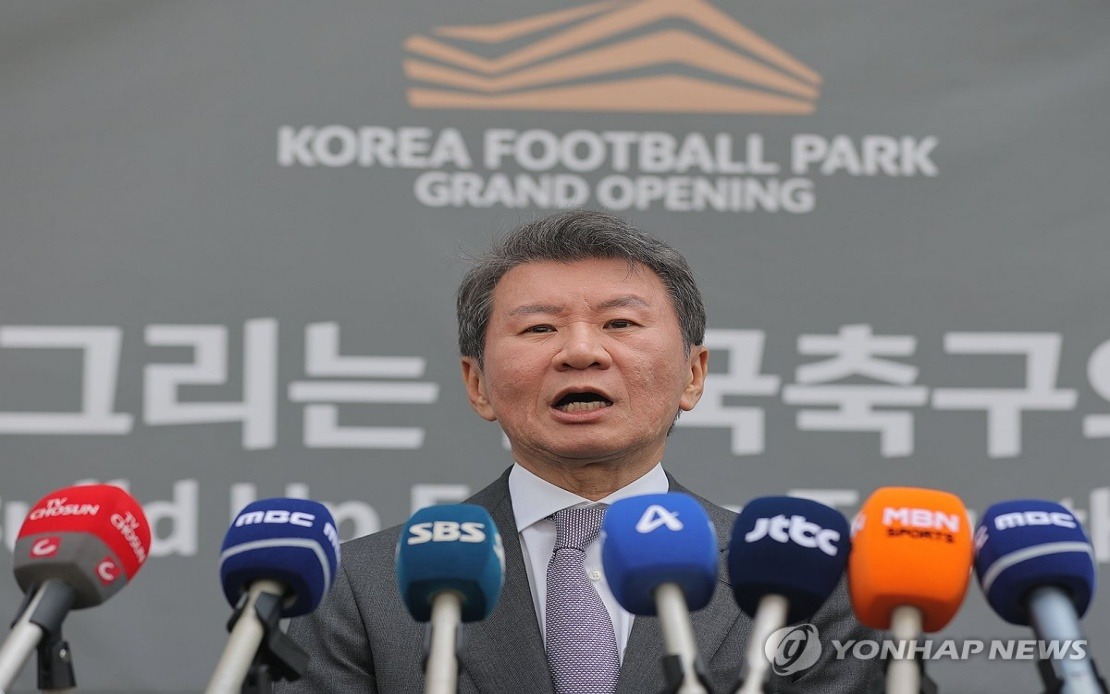
Chung Mong-gyu has stepped down as president of the Korea Football Association, delivering his formal resignation letter on Monday after chairing what would prove his final executive session at Korea Football Park in Cheonan, located roughly 90 kilometres south of Seoul. The departure marks an abrupt end to his tenure, coming just days after the South Korean national team's unexpected elimination during the group phase of the ongoing FIFA World Cup competition.
The football chief's exit accelerates a timeline he had previously announced. While Chung indicated in late May that he would relinquish his position once the tournament concluded on July 20 by South Korean reckoning, the team's premature exit prompted him to advance his departure by approximately two weeks. This telescoped timeline reflects the severity of the fallout from a performance that has disappointed supporters across the nation and intensified pressure on leadership structures within Korean football governance.
Under the stewardship of coach Hong Myung-bo, South Korea accumulated just three points through one victory and two defeats, finishing third in Group A and narrowly missing qualification as one of eight best-performing third-place teams advancing to the knockout rounds. The elimination triggered an immediate resignation from Hong himself, who departed his coaching position as soon as mathematical elimination became certain. This cascade of departures at both executive and technical levels underscores the magnitude of the disappointment felt throughout Korean football institutions.
Chung's position had been deteriorating for months prior to the World Cup campaign, stemming from controversies surrounding his hiring of Hong as national team manager in July 2024. Critics contended that the appointment process lacked transparency and operated with insufficient public accountability. The government's Ministry of Culture, Sports and Tourism initiated a comprehensive examination of KFA operations that year, ultimately concluding that Chung and other senior association officials warranted disciplinary measures for what investigators identified as procedural irregularities across multiple administrative domains.
These governance concerns have placed the KFA at odds with its governmental overseers. The ministry is pursuing an additional audit specifically targeting the association's handling of the World Cup campaign, while the two entities remain entangled in legal proceedings. The convergence of poor on-field results with administrative scrutiny has created an untenable position for Chung, leaving resignation as the most viable course of action.
KFA protocols stipulate that one of the association's four vice presidents will serve as interim leader pending a formal election process. Under ordinary circumstances, when an incumbent has more than one year remaining in their mandate, successor elections must conclude within 60 days. Chung's tenure contained nearly three years of remaining service, triggering this compressed electoral timeline. The association's voting structure draws from an electoral college encompassing regional football association directors, K League club executives, players, coaches and officiating personnel, with the previous year's election drawing participation from 183 of 192 eligible voters.
However, governmental pressure is mounting to reform these established procedures. Culture, Sports and Tourism Minister Chae Hwi-young has openly questioned whether existing electoral mechanisms adequately reflect public sentiment following the World Cup disappointment, suggesting that the KFA must demonstrate responsiveness to citizens' widespread disillusionment or face challenges to its current governance framework. This implicit threat signals potential intervention if the association proceeds with business-as-usual processes.
The Korean Sport and Olympic Committee, the nation's paramount sports authority overseeing member associations, holds regulatory jurisdiction over KFA electoral rules and will consider substantive modifications at a scheduled July 16 general meeting. Preliminary discussions focus on potentially lengthening the standard 60-day election window and potentially implementing direct voting by members rather than the current electoral college mechanism. These modifications would represent a significant democratization of presidential selection, reflecting broader governance accountability trends affecting sports bodies across Asia and internationally.
In his resignation statement, Chung expressed gratitude for supporter backing whilst acknowledging periods when his stewardship disappointed the football community. He reiterated his commitment to Korean football's advancement and success throughout his tenure, accepting personal responsibility for institutional shortcomings whilst crediting players and fans for achievements. Despite the controversial circumstances surrounding his departure, Chung projected confidence that Korean football possesses resilience to overcome current adversity and ultimately restore the programme to competitive prominence, drawing on historical precedent of the national team's recovery from previous crises.
The implications of this leadership transition extend beyond immediate administrative succession. Korean football now confronts dual imperatives: restoring competitive credibility through improved national team performance and addressing systemic governance concerns that have eroded public confidence in institutional administration. For Southeast Asian observers monitoring East Asian football developments, the episode illustrates how international tournament disappointments trigger institutional accountability pressures across the region's major football nations. The KFA's forthcoming electoral reform process will signal whether Asian sports bodies can effectively modernize governance structures whilst maintaining operational effectiveness during leadership transitions.

