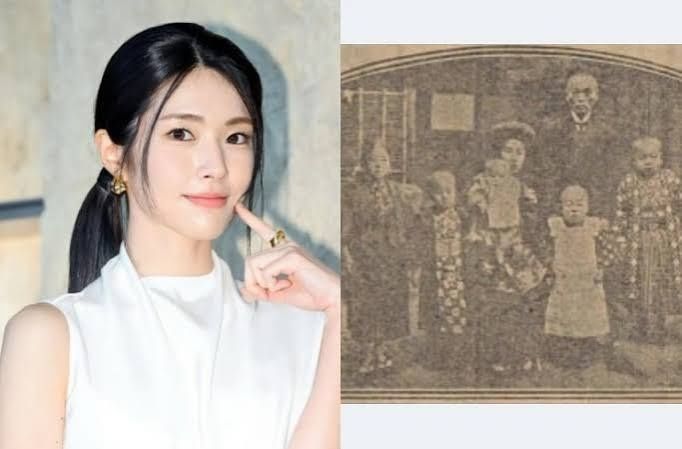
The disclosure of actress Ahn Ha-young's family connections to the Japanese colonial period has ignited a broader societal moment across South Korea, with millions turning to genealogy platforms to examine their own ancestral records. The controversy, which erupted in mid-August, has transformed what might have been a private family matter into a national conversation about historical accountability and the legacies that families inherit from Korea's complex past under Japanese rule from 1910 to 1945.
A prominent South Korean genealogy website, known locally as a resource for citizens seeking to understand their family origins and connections to historical figures, suddenly found itself overwhelmed with unprecedented demand. The surge in traffic proved so severe that the platform's infrastructure collapsed under the weight of concurrent users, rendering the site inaccessible for extended periods during the evening of August 12 and continuing to experience intermittent outages throughout August 13. This technical failure itself became newsworthy, signalling the depth of public curiosity about family histories and ancestral connections during a period of heightened historical consciousness.
The genealogy platform maintains comprehensive records spanning 287 distinct family lineages across South Korea, documenting their origins, historical development, and contemporary population distribution. These detailed records have become invaluable to citizens seeking to understand where their families stood during pivotal moments in Korean history. The database serves as both a genealogical tool and an informal historical archive, allowing ordinary Koreans to trace connections between their own ancestry and the nation's turbulent past.
Ahn Ha-young's situation centred on her great-grandfather, Ahn Sang-ho, whom she had publicly described during a television appearance as a pioneering physician who established Seoul's first Western-style medical clinic and provided medical care to Emperor Gojong, the late nineteenth and early twentieth-century Korean monarch who reigned from 1852 until his death in 1919. This narrative of familial achievement and national service—a doctor bringing modern medicine to Korea while treating the nation's highest figure—represented exactly the kind of honourable ancestry that most families would celebrate. However, the disclosure that Ahn Sang-ho may have maintained connections to pro-Japanese collaborators during the occupation complicated this straightforward narrative of patriotic service.
When online communities began circulating allegations that Ahn Sang-ho had ties to individuals and networks that collaborated with Japanese colonial authorities, the actress's agency initially responded by denying these claims outright. This defensive stance, however, proved counterproductive. Rather than quieting speculation, the denial prompted intensified investigative interest, with internet users mobilising to search historical records, genealogical databases, and archival materials in pursuit of verifiable information about Ahn Sang-ho's wartime associations and activities.
The accumulating pressure of public scrutiny ultimately led Ahn Ha-young to issue a public apology on August 12, acknowledging that she had lacked awareness of the full historical context surrounding her family's past. The actress expressed regret at having spoken proudly about her ancestry without understanding its complicated dimensions. This reversal represented a significant moment in contemporary South Korean public discourse, illustrating how inherited family narratives can suddenly become subject to intense historical scrutiny when they touch upon the colonial legacy—a period that remains deeply sensitive in Korean national consciousness.
The timing of this controversy amplified its cultural resonance across South Korea. The incident unfolded merely days before August 15, Liberation Day, the national holiday commemorating Korea's emancipation from Japanese colonial rule in 1945. This proximity transformed what might otherwise have been a discrete celebrity scandal into a broader reflection on how Koreans understand and reckon with the colonial period as a national historical experience. Many citizens found themselves contemplating their own family histories and wondering whether their ancestors had similarly navigated the moral complexities of the occupation.
The genealogy website's server crashes thus represented more than a technical problem—they became a metaphor for the intensity of national soul-searching. Millions of Koreans simultaneously sought to understand their familial connections to the colonial era, suggesting that Ahn Ha-young's experience had triggered wider anxieties and curiosities about inherited historical legacies. The rush to access genealogical records indicated that many citizens recognised the relevance of this moment to their own family narratives.
For Malaysian and Southeast Asian observers, the South Korean episode offers important lessons about how national historical trauma continues to shape contemporary society. Korea's experiences under Japanese colonialism remain a defining reference point for national identity and political discourse, nearly eighty years after liberation. The intensity with which South Koreans engaged with questions about ancestral collaboration illustrates how deeply embedded colonial history remains in contemporary consciousness, shaping family relationships, public reputations, and national conversations. This episode underscores the enduring power of historical accountability in East Asian societies, where questions about wartime behaviour and collaboration retain significant moral weight across generations.

