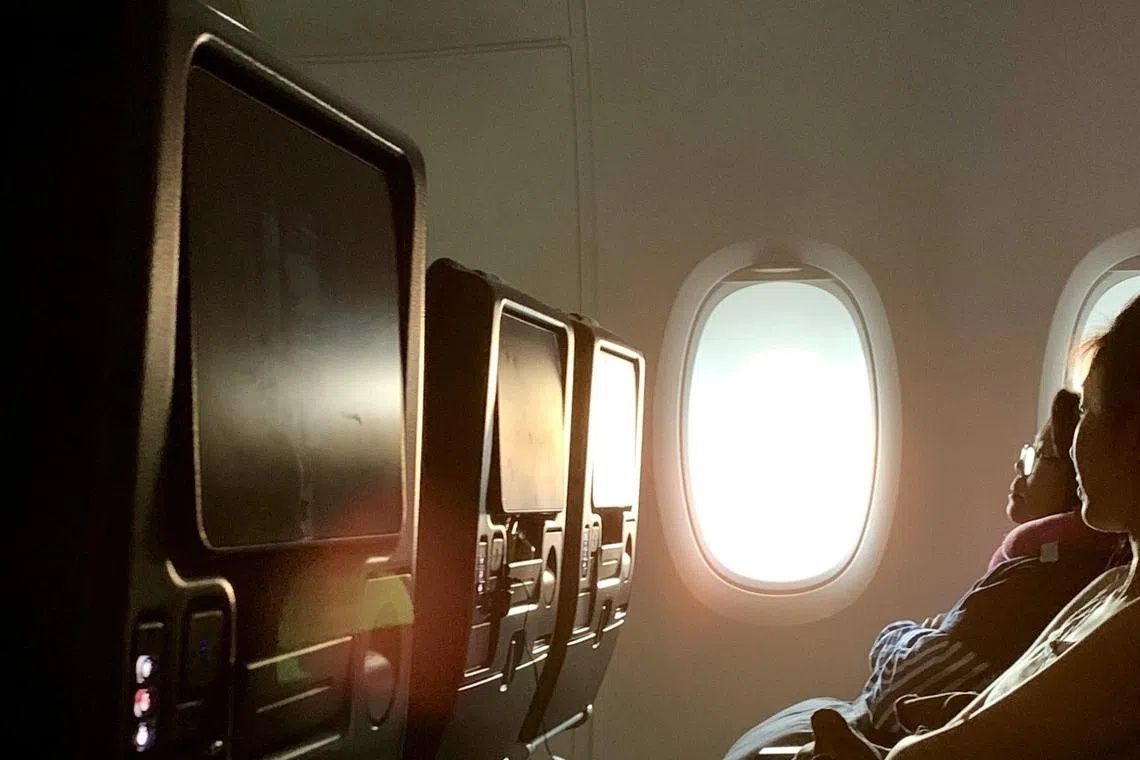
A middle school student in South Korea has escalated concerns about inappropriate in-flight entertainment by filing an official petition with the government, seeking mandatory protective measures after reportedly being exposed to violent and sexually explicit movie scenes whilst travelling with family. The complaint, lodged through the Petition 24 platform run by the Ministry of the Interior and Safety, underscores growing anxiety among parents and young passengers about content screening standards on commercial aircraft and the adequacy of current industry safeguards.
According to the petition, the teenager was unable to avoid watching disturbing material on the individual seatback monitor during the flight, describing the experience as unavoidable despite attempts to look away. The situation affected not only the petitioner but also a younger sibling in elementary school, raising fresh questions about the rights of families to a protected viewing environment in shared public spaces. The incident occurred without any clear indication of what film triggered the complaint, though the specifics of the case point to a wider systematic issue rather than an isolated incident of poor editorial judgment.
The petitioner has proposed a straightforward technological solution: mandatory privacy screens on all individual seatback entertainment monitors. This approach would allow passengers to block content from public view, preventing unwilling exposure whilst respecting the viewing choices of adults. The suggestion reflects growing acknowledgment that in-flight cabins, unlike movie theatres, are shared environments where children and adults occupy adjacent spaces with limited ability to control what appears on neighbouring screens. Such a measure would represent a meaningful shift in how airlines balance commercial interests against protective standards.
South Korean law already establishes a framework for safeguarding young people from harmful media. Both the Child Welfare Act and the Youth Protection Act mandate that children and teenagers be protected from exposure to age-inappropriate content, yet enforcement mechanisms in the aviation context appear inadequate. The petitioner's citation of these existing statutes suggests a disconnect between legislative intent and practical implementation, particularly in transportation settings where traditional content regulation mechanisms do not easily apply.
Currently, South Korea's two dominant carriers—Korean Air and Asiana Airlines—maintain policies prohibiting the screening of content rated for viewers aged 19 and above. Airlines routinely deploy edited versions of films with graphic scenes removed or substantially altered to reduce offensive material. Despite these precautions, the recent petition indicates that these measures may not fully address parental and young passenger concerns about residual adult content or the cumulative impact of violent imagery deemed acceptable for teen audiences.
Precedent exists for even major airlines reconsidering their content libraries when concerns arise. In 2020, both Korean Air and Asiana Airlines removed the critically acclaimed film Parasite from their in-flight playlists, despite its 15-plus rating in South Korea. The decision to withdraw a culturally significant and internationally recognized film demonstrates that carrier policies can shift when child protection debates gain sufficient public attention. However, the fact that such action was necessary at all indicates systemic gaps in content vetting procedures.
The petition filing reflects a broader regional and global conversation about child safety in shared commercial spaces. Malaysia and other Southeast Asian nations have similarly grappled with regulating in-flight entertainment, with varying approaches to balancing commercial freedom and protective standards. The South Korean case may establish a precedent that influences policies across the region, particularly as budget airlines expand services and in-flight entertainment options proliferate.
From an operational perspective, airlines face genuine complexity in implementing blanket content restrictions. Commercial air travel connects diverse populations across borders, each with different cultural norms and regulatory frameworks regarding appropriate content. Yet this diversity does not eliminate the responsibility to protect younger passengers. Technology-based solutions like privacy screens represent a compromise approach that respects adult autonomy whilst acknowledging the special vulnerability of children in confined, family-shared environments.
The petition's path through South Korea's government channels will likely influence industry practice beyond individual carrier policies. If the government formally supports stronger protective measures, airlines may face regulatory pressure or incentive-based encouragement to upgrade their systems. Such developments could establish new service standards that spread throughout the region and internationally, particularly if major carriers adopt privacy screen technology or expanded content filtering.
Ultimately, this incident reflects evolving expectations about corporate responsibility in protecting vulnerable populations within commercial spaces. Whilst airlines have implemented some safeguards, the teenage petitioner's experience suggests these measures remain insufficient. The challenge now lies in developing practical, cost-effective solutions that maintain reasonable business operations whilst genuinely shielding children from inappropriate material during air travel—a balance that requires cooperation between industry stakeholders, regulators, and passenger advocacy groups across the region.

