South Korean authorities have opened a formal investigation into a police officer who attempted to board a civilian aircraft while carrying live ammunition, marking a rare breach of the nation's stringent firearms regulations. The Jeju Seobu Police Station confirmed on July 3 that the officer, stationed with the Gyeonggi province police force and in his 30s, was intercepted at Jeju Airport on June 28 as he prepared to board a flight to Gimpo Airport. The discovery of the ammunition during routine security screening has prompted scrutiny into how the officer obtained and transported the rounds, as well as broader questions about compliance with weapons protocols across South Korea's police ranks.
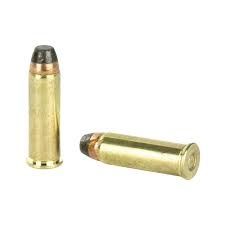
The officer was found to be carrying two bullets designated for a .38-calibre pistol, the standard-issue sidearm distributed to most South Korean police personnel. Notably, he was not in possession of the firearm itself at the time of the security breach, a detail that raises further questions about the circumstances surrounding the ammunition. When airport security personnel at Gimpo screened his luggage two days earlier, on June 26, during his initial journey to Jeju, no ammunition was detected. This timeline discrepancy suggests the rounds entered his possession sometime between his arrival on the island and his attempted departure, narrowing the window for investigators examining how protocol violations occurred.
A forensic analysis conducted by South Korea's National Forensic Service confirmed the ammunition's specifications and compatibility with police-standard weaponry. This technical verification provides investigators with concrete evidence regarding the type of contraband involved and helps establish the seriousness of the breach. The identification of the bullets as police-issue munitions is particularly significant, as it underscores that the officer was not dealing with unauthorized or black-market ammunition, but rather with armament specifically regulated by the state security apparatus. This detail complicates the investigation's narrative, as it suggests the rounds either originated from official channels or were diverted from them.
During questioning, the officer provided an explanation that authorities are now scrutinizing. He claimed he received the bullets from a former colleague who had recently retired from the force. This account has become central to investigators' efforts to understand the chain of custody for the ammunition and whether proper decommissioning procedures were followed when the retired officer left service. In South Korea's tightly regulated security environment, the informal transfer of weapons or ammunition between officers, even among retiring colleagues, would represent a significant procedural violation. Authorities must now trace whether the retired officer properly surrendered all military-grade materials as required by law, or whether he retained items that were subsequently passed on to the officer in question.
South Korea maintains among the world's most restrictive civilian gun ownership regulations, and law enforcement personnel operate under equally rigorous protocols for weapons storage and accountability. Police officers are explicitly required to keep their assigned firearms and related ammunition secured in the armory facilities maintained at their respective police stations. These centralized storage systems exist to prevent exactly the kind of incident that occurred at Jeju Airport, where an officer carried ammunition beyond the controlled environment of an official facility. The regulation reflects decades of policy designed to minimize the risk of weapons falling into unauthorized hands or being transported through unsecured spaces, including commercial transportation hubs.
The violation the officer faces invokes the Act governing the safety management of guns, swords and explosives, a comprehensive statute designed to enforce strict compliance across all sectors handling potentially dangerous materials. For law enforcement personnel, the expectations are particularly high, as officers are entrusted with weapons specifically because they meet elevated standards of responsibility and accountability. The formal investigation represents an acknowledgment that these standards may have been compromised in this instance, and that a comprehensive review of how the breach occurred is necessary. The case also suggests potential training gaps or enforcement lapses within the Gyeonggi province police force if an officer felt comfortable carrying ammunition outside official channels.
The discovery at Jeju Airport, one of South Korea's busiest transportation hubs, highlights the effectiveness of existing security screening protocols. Airport security personnel successfully identified contraband that the officer had managed to conceal or inadvertently overlook during his own packing and departure preparation. This interception prevented a potentially serious incident involving weapons material aboard a civilian aircraft, demonstrating that despite occasional individual lapses, the broader security infrastructure functions as intended. Nevertheless, the incident raises uncomfortable questions about whether law enforcement personnel receive adequate training on regulations they are expected to enforce and exemplify for the general public.
For Malaysian and regional observers, the case offers instructive parallels regarding the importance of consistent enforcement of weapons regulations across government agencies. While circumstances and regulatory frameworks differ across Southeast Asia, the fundamental tension between officer convenience and public safety considerations remains constant. South Korea's response demonstrates how quickly authorities mobilize formal investigative procedures when firearms protocols are breached, even when no weapon itself was involved and no direct harm resulted. The nation's approach reflects a philosophy that ammunition regulations deserve the same rigorous attention as firearm regulations, since separated bullets pose risks if they reach unauthorized users or are introduced into civilian spaces.
The incident also underscores the challenges that mid-ranking officers and civil servants in any nation face when navigating between rigid institutional requirements and personal convenience. For a police officer in his 30s, the decision to transport ammunition outside official channels represented either a deliberate judgment that the risk was minimal or a lapse in attention to protocols so routine they may have seemed burdensome. Investigators will likely explore whether cultural attitudes within the Gyeonggi force regarding ammunition handling contributed to the breach, or whether the officer acted in isolation. The outcomes of this investigation may influence refresher training and internal compliance measures across South Korea's police agencies.
Looking forward, the case demonstrates how even highly developed security states encounter periodic challenges in enforcement, particularly when the people entrusted with weapons are themselves the subjects of investigation. South Korean authorities will need to determine whether the officer's account regarding his retired colleague is accurate, whether the transfer of ammunition followed any pattern, and what remedial steps are necessary to prevent recurrence. The incident, while isolated, represents exactly the kind of systemic vulnerability that weapons safety regulations are designed to prevent. How comprehensively authorities address these underlying questions will signal to police personnel across the nation the seriousness with which firearms and ammunition protocols are enforced, regardless of the officer's rank or tenure.

