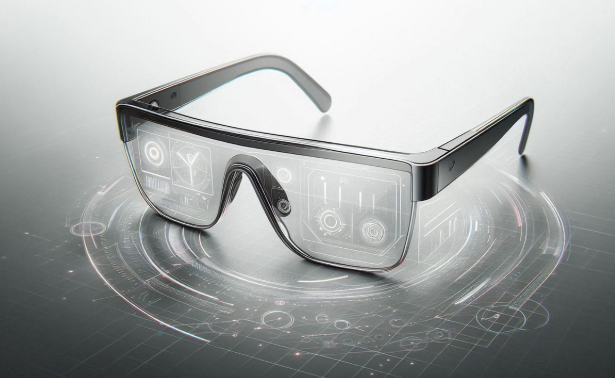
South Korean law enforcement has taken its first formal action against examination fraud involving artificial intelligence-enabled eyewear, signalling a new frontier in academic dishonesty that authorities across the region may soon confront. The Gwangju District Prosecutors' Office indicted a man in his 40s last month on charges of breaching the National Technical Qualification Act after he was discovered attempting to use sophisticated AI glasses during a fire protection facilities engineer certification examination. The case represents not merely an isolated incident of rule-breaking but the emergence of a technological vulnerability in testing systems that could undermine the integrity of credential-based advancement across professional sectors.
The scheme unravelled in May when an examination supervisor at the Gwangju test centre observed an unusual optical reflection emanating from the suspect's spectacles, prompting closer scrutiny. What distinguished this detection from routine oversight was the supervisor's ability to recognise an anomaly—the telltale glint of electronic circuitry—suggesting that test centre protocols, at least in this instance, retained human vigilance as a final safeguard. During subsequent questioning, the defendant disclosed that he had personally developed the application software embedded in the glasses and sought to validate whether the system could reliably transmit correct answers in real examination conditions. This admission transformed what might have appeared as a spontaneous act of desperation into a calculated experiment in circumventing institutional controls.
The Gwangju case was merely the most visible manifestation of a broader pattern that has crystallised over recent weeks. Two additional men in their 20s were apprehended using comparable AI-integrated spectacles at national technical qualification examination sites in Seoul and Mokpo during the same May period, suggesting either a coordinated network or an alarming convergence of independent actors recognising the same exploitable gap. Beyond credentials certification, the technology has infiltrated English proficiency testing, with at least three individuals detected using AI glasses to cheat on TOEIC examinations—two captured in May and another in June. The multiplication of cases across different examination types and geographic locations indicates that this is not a fringe phenomenon but a nascent trend that requires urgent institutional response.
For Malaysian and Southeast Asian readers, the South Korean experience carries immediate relevance. Professional certification and English language proficiency examinations form the backbone of career advancement and international mobility in this region. The TOEIC examination, specifically, represents a gateway credential for employment in multinational corporations and government service throughout Southeast Asia. If AI-glasses cheating becomes widespread, the currency of such certifications could be substantially devalued, creating cascading consequences for hiring practices, educational institution rankings, and the labour market credibility of examination-passing graduates. Employers would face amplified uncertainty when evaluating candidate credentials, potentially shifting hiring emphasis away from examination scores and toward other, less standardised assessment methods.
The technological capability underlying these devices merits closer examination to understand the scope of the vulnerability. Modern AI glasses equipped with real-time image recognition and language processing can theoretically capture examination questions through integrated cameras, transmit them wirelessly to cloud-based analytical engines, and display answers directly within the wearer's field of vision—all within seconds. The sophistication required is no longer theoretical; consumer-grade augmented reality eyewear combined with accessible machine learning APIs has made such systems technically feasible and cost-effective. The defendant's own statement that he developed the application himself underscores that creating such tools does not require exceptional technical expertise or enormous resources. This democratisation of cheating technology fundamentally alters the threat landscape facing examination administrators.
In response to the escalating threat, Korean examination administrators convened an emergency meeting on July 10 involving officials from multiple agencies overseeing national qualifications. The gathering reflected the severity with which authorities now regard this phenomenon and the recognition that ad-hoc responses would prove insufficient. Two principal countermeasures emerged from deliberations: the explicit codification of AI glasses and related recording devices as prohibited examination equipment, and the implementation of substantially harsher penalties for detected cheating. The first measure addresses immediate prevention through clear rule-setting, while the second employs deterrence theory by elevating the consequences of violation. However, both approaches presume that prohibited items can be reliably detected at examination entry points—a assumption complicated by the fact that modern glasses increasingly incorporate advanced materials indistinguishable from ordinary spectacles to the naked eye.
The distinction between legitimate assistive eyewear for vision correction and AI-enabled cheating devices presents a practical enforcement challenge that transcends simple rule promulgation. Optical examination stations at major testing centres could theoretically employ advanced scanning technology to identify electronic components, but such measures would substantially complicate examination logistics and raise privacy concerns regarding biometric data collection. The Gwangju supervisor's detection of telltale light reflection represents essentially a low-tech solution dependent on individual vigilance—labour-intensive and potentially inconsistent across thousands of annual examination sessions and hundreds of test centres. Strengthening sanctions addresses the supply side of cheating but cannot fully address the demand side, where individual candidates facing intense professional or academic pressure weigh the risk of severe penalty against the perceived benefit of guaranteed examination success.
The regulatory trajectory established in South Korea will likely influence enforcement practices across East and Southeast Asia, where examination culture and credentialing systems share comparable characteristics and institutional frameworks. Examination boards in Malaysia, Singapore, and other ASEAN nations may anticipate that smuggling AI glasses will eventually move from theoretical possibility to actual incidents if technological accessibility continues increasing and awareness of these methods spreads. Proactive institutional adaptation—whether through upgraded detection infrastructure, modified examination room protocols, or explicit policy revisions—would position such bodies to respond rapidly should similar incidents emerge domestically. The alternative is reactive scrambling when initial incidents are discovered, inviting public confidence erosion and media scrutiny regarding the adequacy of existing safeguards.
Looking forward, the South Korean case illuminates a fundamental tension in the examination ecosystem. As technology becomes simultaneously more capable and more accessible, the effort required to prevent high-technology cheating escalates disproportionately, particularly for resource-constrained examination administrations. Traditional measures—vigilant proctoring, identity verification, controlled environments—remain necessary but increasingly insufficient against adversaries equipped with sophisticated AI tools. Some examination boards may respond by intensifying proctoring or restricting candidate movement and personal items. Others may shift toward examination formats less susceptible to technological attack—perhaps emphasising practical demonstration over written tests, or employing randomised questioning that renders advance preparation less valuable. The path forward likely involves multiple overlapping strategies rather than any single technological or procedural fix that comprehensively addresses the problem.

