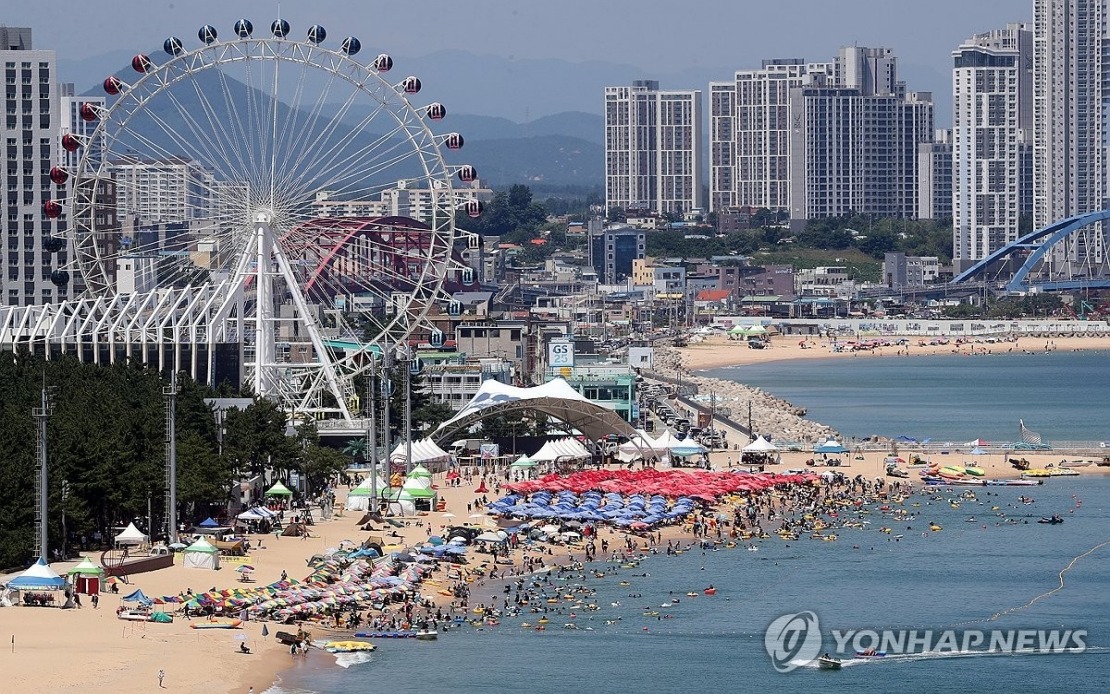
South Korea has entered uncharted meteorological territory as temperatures in the southeastern coastal city of Yangsan climbed to an unprecedented 42.5°C on Sunday, shattering the nation's temperature record dating back more than a century. The Korea Meteorological Administration confirmed the reading occurred at 1:26 p.m. local time, after the thermometer had already breached 42°C just ten minutes earlier at 1:16 p.m. This milestone represents the highest temperature ever documented across the Korean Peninsula since modern weather observation systems were established in 1904, making it a watershed moment for a country increasingly grappling with the physical manifestations of climate change.
The relentless intensification of the heat crisis raises alarm bells for both Korean meteorologists and regional climate analysts. Weather officials have flagged a particularly troubling pattern: each successive day, the temperature threshold of 40°C is being reached earlier in the afternoon across Yangsan, indicating that heat is accumulating faster within the atmospheric column. This progression suggests the potential for even more extreme readings in the coming days, with some experts voicing concern that the mercury could breach 43°C if conditions intensify further. For Malaysian and Southeast Asian observers, this development underscores how extreme weather events once considered rare anomalies are becoming increasingly routine across the region.
Yangsan, situated approximately 310 kilometres southeast of Seoul near South Korea's coast, has become the epicenter of this historic heat event. The city endured its fifth consecutive day of temperatures exceeding the 40°C mark on Sunday, demonstrating the sustained nature of the weather system bearing down on the peninsula. Such persistence is characteristic of high-pressure zones that become trapped over regions, preventing cloud formation and allowing solar radiation to accumulate unimpeded. Similar patterns have affected parts of Southeast Asia in recent years, making this Korean experience particularly relevant to the broader regional climate discussion.
Beyond Yangsan, other southeastern population centers have also experienced extraordinary temperatures. Gyeongju, positioned approximately 240 kilometres southeast of the capital, recorded 40.2°C by mid-afternoon, marking the first occasion this year that the city exceeded the 40°C threshold. This reading carries additional significance as it represents the highest temperature registered in Gyeongju for eight years, since the city recorded 39.8°C in 2018. The broader geographical distribution of extreme heat across multiple urban centers suggests this is not a localized phenomenon but rather a region-wide weather pattern of considerable intensity and spatial extent.
In response to what officials characterize as an extreme meteorological emergency, South Korea's government activated a "Level 2" emergency operation of its national disaster response headquarters beginning at 1 p.m. Sunday. This escalation in alert status signals official recognition that the heat wave has transcended the threshold of routine summer weather management and now constitutes a genuine public health and infrastructure crisis requiring coordinated government response. The activation reflects lessons learned from previous extreme heat episodes that tested the nation's capacity to protect vulnerable populations and maintain essential services during periods of sustained high temperature.
Prime Minister Han Seong-sook issued urgent directives to all government ministries and provincial authorities, establishing clear priorities for the emergency response phase. The immediate focus centers on enhanced safety monitoring for heat-vulnerable demographics, including elderly citizens, those with pre-existing health conditions, and individuals experiencing homelessness or social isolation. Simultaneously, officials emphasized the critical importance of maintaining uninterrupted supplies of electrical power and water, as cooling systems and hydration become essential survival requirements during extreme heat. Previous heat waves in South Korea and other developed economies have demonstrated that infrastructure failures during these periods can rapidly transform a meteorological event into a humanitarian catastrophe.
Public health guidance has emphasized the paramount importance of limiting outdoor exposure during daylight hours when solar intensity reaches its apex. Authorities have issued explicit advisories urging citizens to remain indoors, utilize air conditioning where available, maintain consistent hydration, and defer non-essential outdoor activities. For Malaysia and other Southeast Asian nations with tropical and subtropical climates where residents are accustomed to heat, the South Korean government's cautious stance might seem excessive. However, Korean populations have historically adapted to temperate climate patterns, and sustained temperatures above 40°C remain physiologically dangerous even for heat-accustomed individuals, particularly during periods of physical exertion.
The significance of this heat event extends beyond immediate public safety concerns. From a climate science perspective, South Korea's record-breaking temperature represents further empirical evidence of the poleward expansion of heat extremes across East Asia. Historical climate models have projected that regions at higher latitudes would experience proportionally greater increases in extreme heat frequency as global mean temperatures rise. The fact that a country at 37°N latitude, comparable to southern Spain or northern California, is now regularly approaching 43°C during summer months suggests climate change is progressing at an accelerating pace.
For Southeast Asian policymakers and residents, the Korean heat wave carries sobering implications. While tropical regions have always experienced consistently high temperatures, the trend toward more frequent and intense heat extremes, combined with elevated baseline temperatures, creates compounding stress on human health, agriculture, and energy infrastructure. Nations like Malaysia, Thailand, and Indonesia are already experiencing seasonal heat extremes that rival or exceed what South Korea is currently enduring, and the trajectory suggested by these regional patterns indicates further intensification lies ahead.
The geopolitical and economic dimensions of extreme heat should not be overlooked. South Korea's industrial economy, dependent on stable energy supply and healthy workforce productivity, faces significant risks when sustained extreme heat events force reductions in outdoor work, strain electrical grids, and necessitate heightened healthcare expenditures. Manufacturing exports could face disruption if factories must curtail operations during peak heat periods. Agricultural regions across the peninsula face crop stress and irrigation demands that strain freshwater resources. These economic vulnerabilities mirror challenges confronting Southeast Asian economies that are equally dependent on consistent environmental conditions and continuous infrastructure operation.
Looking forward, the trajectory of this heat event will provide critical data points for climate scientists monitoring whether South Korea and the broader region are experiencing temporary fluctuations within normal variability or whether the climate baseline is fundamentally shifting toward a permanently hotter state. The official observations from Korea Meteorological Administration's 97 long-term observation stations will contribute invaluable information to global climate databases and inform regional climate projections. Whether the mercury subsequently exceeds 43°C as some meteorologists fear will carry symbolic weight in climate discussions, though the more profound question concerns how societies across Asia will adapt to a future in which 42°C+ temperatures are no longer rare occurrences but seasonal certainties.

