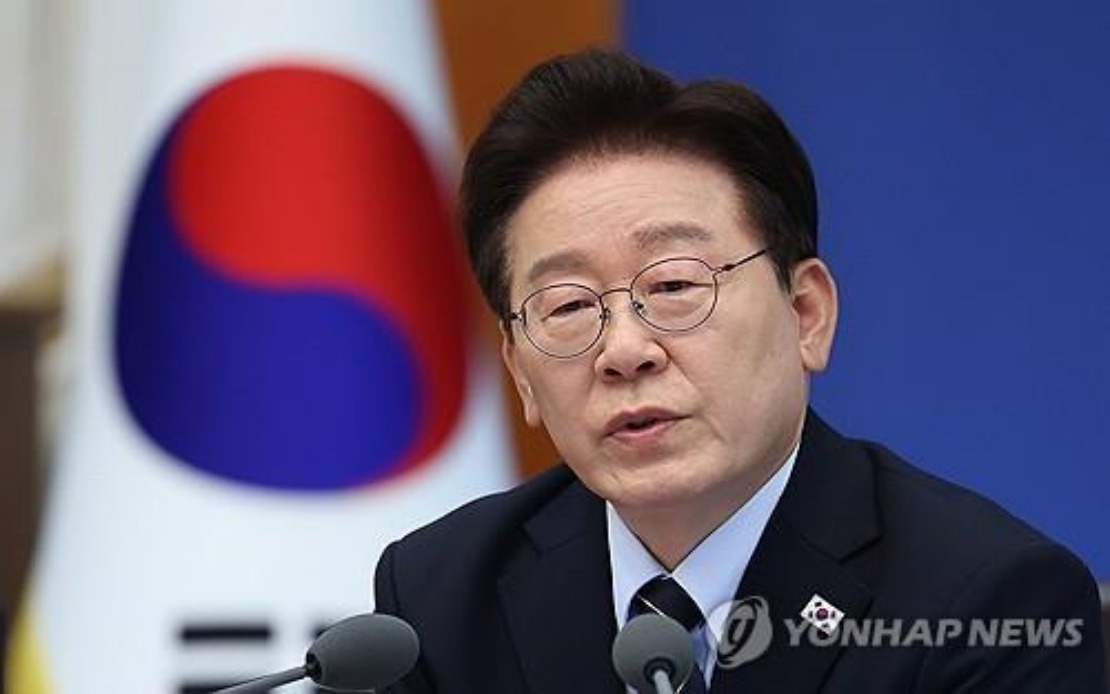
South Korea's President Lee Jae Myung has instructed senior government officials to accelerate defence reforms that would fundamentally reshape the nation's military structure around technological advancement and selective conscription. The directive, issued during a high-level meeting with aides at Cheong Wa Dae, reflects deepening concerns in Seoul about maintaining current defence capabilities amid demographic pressures that threaten the viability of the existing conscription model.
The proposed reforms centre on transforming what Lee described as the country's current "inefficient military structure" into what he termed a "smart, elite and strong military" built on cutting-edge equipment and technological innovation rather than reliance on large numbers of conscripted personnel. This conceptual shift represents a significant departure from South Korea's post-war security model, which has historically depended on mandatory military service for all able-bodied men, typically lasting at least eighteen months. The move signals recognition among Seoul's leadership that demographic realities demand a fundamental rethinking of how the country maintains deterrence against regional threats.
The impetus for these reforms stems from South Korea's persistently low birth rate, which creates a structural impossibility of sustaining the current conscription-dependent system in perpetuity. As the pool of military-age males shrinks over coming decades, maintaining the existing personnel-intensive force structure would become increasingly unsustainable and economically inefficient. Lee acknowledged this reality explicitly, arguing that the country cannot continue to operate under an outdated military framework that conflicts with modern demographic trends and the aspirations of younger generations.
Crucially, the South Korean leader framed these defence reforms not merely as military necessity but as a social compact with young citizens. He emphasized that any transition toward selective conscription must be accompanied by concrete measures ensuring that military service translates into tangible career and educational benefits for those who serve. This reflects recognition that younger South Koreans increasingly view mandatory military service as an impediment to personal advancement and opportunity costs that many countries no longer impose on their citizens. By linking military service to pathways toward employment, education, and wealth accumulation, Seoul aims to reframe conscription as an investment in individual futures rather than a burden on youth.
Lee positioned this reframing as a fundamental government responsibility, stating explicitly that authorities must prevent citizens from perceiving military service as a waste of their productive years or as an uncompensated sacrifice. This language suggests tensions within South Korean society regarding conscription's legitimacy, particularly among demographic groups facing intense competition in education and the job market. The president's emphasis on ensuring good employment outcomes and educational advancement indicates that technological military reforms will require corresponding social policy adjustments to gain public acceptance.
The transformation toward a technology-centric, smaller military aligns with global trends among advanced economies that have either eliminated or substantially reduced conscription as demographic and technological changes have made mass conscription less strategically essential. Countries ranging from the United Kingdom to France to Germany have moved toward all-volunteer or heavily volunteer-based forces, supplemented by selective conscription or reserve systems. For South Korea, facing the specific geopolitical context of potential North Korean threats, any transition must balance these global trends against its unique security environment, making the emphasis on "smart" technology particularly important for maintaining deterrence capacity with fewer personnel.
Beyond defence considerations, Lee devoted significant attention during this same meeting to addressing South Korea's acute housing shortage, another pressing concern that reflects the intersection of demographic decline with policy challenges. The government announced plans to supply more than 230,000 additional homes across the Seoul metropolitan area through accelerated development of public land, selective removal of greenbelt restrictions, and support for private construction projects. Lee attributed the current supply crisis partly to the sharp reduction in building permits and construction starts dating to 2022, creating what he termed a "supply cliff" that extraordinary policy interventions must address.
The parallel attention to both defence and housing policy reveals how South Korea's demographic crisis creates cascading challenges across multiple policy domains simultaneously. Fewer young people entering the military means fewer personnel available for large standing forces, while the same demographic trends depress demand for new housing, paradoxically creating affordability crises when older populations maintain concentrated holdings of existing properties. The government's housing response involves streamlining permit procedures, securing additional land through potential legislative changes, and facilitating private-sector development—a multi-pronged approach mirroring the complexity of the defence transformation.
For Southeast Asian observers and policymakers, South Korea's approach to these interconnected challenges offers instructive lessons about how rapidly aging, low-fertility societies must fundamentally restructure institutions designed for different demographic realities. Malaysia and other ASEAN nations with improving economic prospects but shifting demographic profiles may eventually confront similar questions about the viability of current military conscription models and housing policies. South Korea's willingness to conduct comprehensive institutional reform rather than incremental adjustment suggests that demographic-driven policy change, once initiated, tends toward comprehensive restructuring.
The defence reform framework also carries implications for regional security dynamics. A South Korean military that emphasizes advanced technology and reduced conscription-dependent force structure might operate differently in crisis scenarios compared to the current model, potentially affecting military interoperability arrangements and deterrence calculations affecting broader Northeast and Southeast Asia. If Seoul successfully transitions toward what it terms a "smart" military, the model might influence defence thinking across the region, particularly among developed economies in Southeast Asia considering their own military modernization paths.
Implementing these reforms will require overcoming institutional inertia within South Korea's military establishment and navigating political constituencies with interests in maintaining current conscription structures. Lee's explicit framing of these changes as central to enhancing, rather than diminishing, national defence capacity suggests efforts to present the reforms as security-enhancing modernization rather than reduction. The success of these reforms in gaining parliamentary approval and public acceptance will depend substantially on whether the government can credibly demonstrate that technological superiority and selective, better-integrated conscription can maintain or enhance deterrence while improving life prospects for younger citizens.

