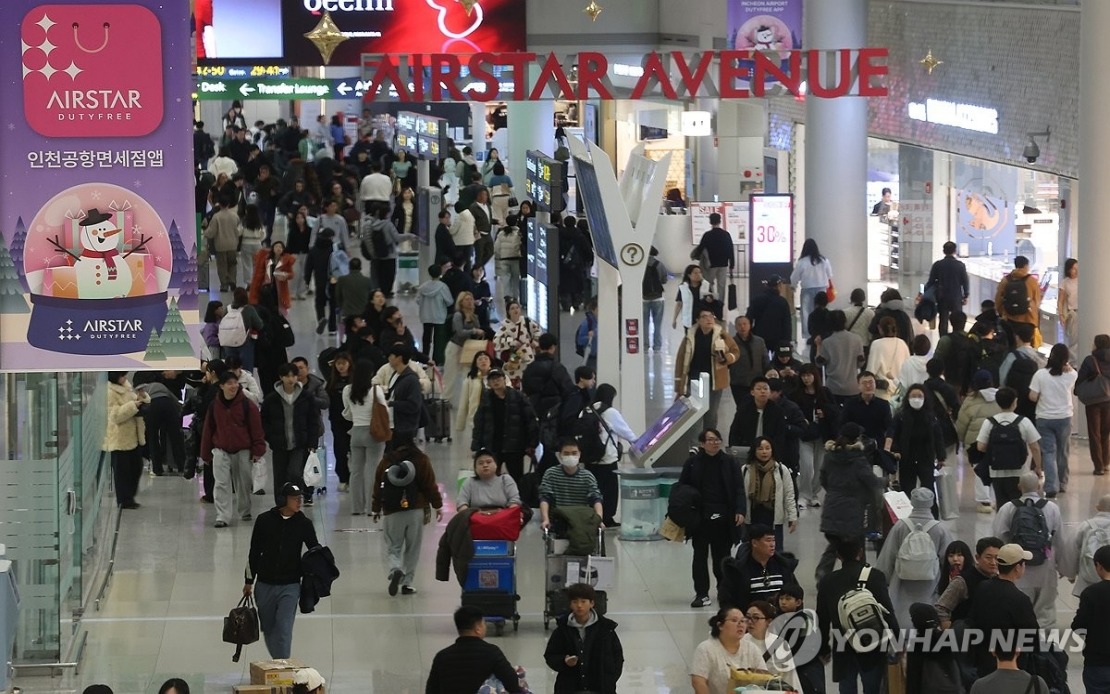
South Korea's tourism sector is experiencing a robust recovery, having crossed the 10 million foreign visitor threshold in mid-June—a significant acceleration compared to the previous year when the same milestone was achieved only in mid-July. This early breakthrough suggests the nation is on track to establish a fresh annual record for international arrivals, marking the first time the country has reached this figure within a single half-year period since tracking began.
The acceleration reflects broader regional patterns in Asian tourism recovery. May alone saw nearly two million arrivals, representing growth of nearly 20 per cent year-on-year, demonstrating sustained momentum even as global travel faces headwinds from geopolitical tensions and rising operational costs. The Ministry of Culture, Sports and Tourism attributes this performance to pent-up demand, improved air connectivity, and successful destination marketing campaigns that have resonated across key source markets.
China remains South Korea's largest source of international visitors, contributing 560,000 arrivals during May alone. Japan follows as the second-largest market with 360,000 visitors, while the United States ranks third with 210,000 travellers. This visitor composition reveals the geographic diversity of South Korea's appeal, spanning East Asia's major economies and extending into North America. The dominance of these three markets underscores the importance of bilateral relationships and cultural connections in driving tourism flows.
One notable development is the geographical diversification of visitor distribution within South Korea itself. Rather than concentrating exclusively in Seoul, tourism infrastructure outside the capital region is absorbing increasing volumes. Regional airport arrivals have climbed steadily, rising from 230,000 in January to 360,000 by May. This shift indicates that secondary cities and provincial destinations—including Busan, Incheon, and Jeju—are successfully attracting international travellers, reducing strain on Seoul's tourism infrastructure and spreading economic benefits throughout the country.
Consumer spending patterns reveal the commercial value of this recovery. International visitors' card expenditures in May, incorporating both in-person transactions and online purchases, reached 2.12 trillion won, equivalent to approximately 1.38 billion US dollars. This represents the first instance since 2018, when official tracking commenced, that monthly spending has exceeded the 2 trillion won threshold. The figure demonstrates that visitors are not merely transiting through the country but actively participating in the consumer economy, supporting retail, hospitality, and entertainment sectors.
Contextually, this surge is remarkable given external economic pressures. Fuel surcharges linked to Middle East geopolitical instability have increased the cost of air travel, potentially discouraging price-sensitive tourists. Nevertheless, arrivals through May expanded 21 per cent year-on-year, indicating that South Korea's value proposition and cultural magnetism remain sufficiently strong to offset fare increases. This resilience suggests the country has developed genuine tourism appeal beyond price-driven competition.
South Korea's government has recognised this momentum and is preparing to leverage it further. Kang Jung-won, head of the tourism policy office at the Ministry of Culture, Sports and Tourism, announced intentions to deepen collaboration with private-sector partners, particularly K-pop entertainment companies and export-oriented businesses. This strategy acknowledges the outsized role of South Korean popular culture—particularly music, television dramas, and fashion—in driving international interest and positioning tourism as an integrated component of broader economic and cultural diplomacy.
For Southeast Asian nations, South Korea's performance offers both lessons and competitive context. The Korean model demonstrates how successful cultural exports can translate into sustained tourism demand. Malaysian destinations, while offering distinct advantages in biodiversity, cultural heritage, and regional connectivity, continue to compete in overlapping source markets, particularly from China and Japan. The demonstration effect of South Korea's K-pop-driven tourism machine suggests that Southeast Asian countries might intensify efforts to develop and export distinctive cultural and entertainment content to international audiences.
The timing of South Korea's recovery also reflects seasonal patterns and regional travel behaviour. The early achievement of the 10 million threshold, occurring during the cooler spring months rather than summer peak season, suggests that visitors are spreading their travel throughout the year rather than concentrating in traditional high seasons. This temporal distribution provides operational advantages, allowing tourism infrastructure and service providers to maintain steadier workloads and potentially improve service quality and workforce stability.
Looking ahead, South Korea's tourism authority has set ambitious targets for the remainder of 2024. If current monthly averages of approximately 1.8 million visitors persist through the remainder of the year, the country could feasibly exceed 20 million annual arrivals—a threshold that would substantially exceed previous records. Achieving such targets would position South Korea as a globally significant tourism destination, competing directly with established hubs in Southeast Asia and globally.
The convergence of cultural appeal, improved transportation infrastructure, government support through strategic marketing partnerships, and geographic diversification of tourism sites has created favourable conditions for South Korea's tourism expansion. Neighbouring regional economies, including Malaysia, will likely monitor these developments closely as benchmarks for their own tourism strategies and as indicators of shifting travel patterns in the broader Asia-Pacific region.