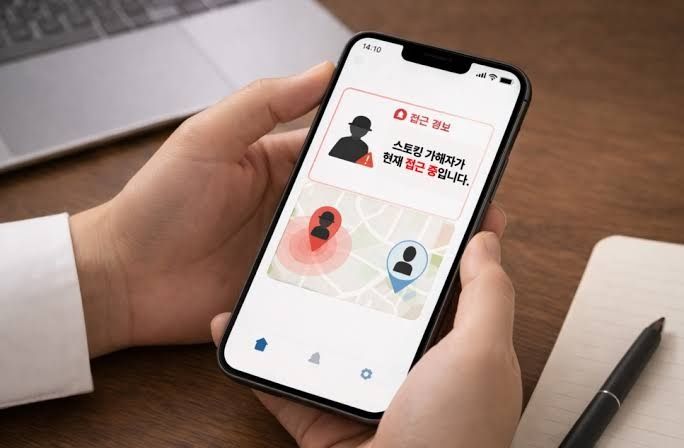
South Korea has taken a major step forward in combating stalking crimes by rolling out a sophisticated mobile application that grants victims direct access to the location and movement patterns of individuals wearing court-ordered electronic ankle monitors. Launched on June 24 by the Ministry of Justice, the system represents a substantial upgrade to the country's approach to protecting those targeted by persistent harassment and threats. The application enables victims to track their stalkers' current positions and directional movements in real time, creating a digital safety net that officials hope will prevent future tragedies and provide vulnerable individuals with the intelligence needed to avoid dangerous encounters.
The introduction of this technology follows mounting public concern about the adequacy of existing victim protection frameworks in South Korea. While emergency alert devices resembling smartwatches have been distributed to at-risk stalking victims for several years, critics argue that these systems have proven insufficient to prevent serious harm. The troubling reality underpinning this policy initiative is stark: between 2021 and August 2025, at least 23 individuals who had received emergency alert devices were either killed or subjected to attempted murder, according to data presented by Representative Lee Gwang-hee of the ruling Democratic Party of Korea. These cases exposed a critical gap in the protective infrastructure and prompted policymakers to explore more comprehensive solutions.
Electronic monitoring of suspected stalkers is itself a relatively recent addition to South Korea's criminal justice toolkit. Beginning in 2024, courts began ordering electronic ankle monitors in certain high-risk stalking cases, supplementing the existing smartwatch alert system that had previously served as the primary tool for victim protection. However, the mere existence of monitoring technology meant little without mechanisms to translate that data into actionable information for victims themselves. The new application bridges this crucial gap by giving those under threat direct visibility into their stalker's whereabouts, fundamentally shifting the dynamic from passive notification to active awareness and prevention.
The rollout of location-sharing technology necessarily raises significant privacy questions, particularly regarding the rights of individuals under monitoring and the potential for misuse of sensitive positional data. Recognising these legitimate concerns, South Korea's Justice Ministry undertook a comprehensive review of regulations governing electronic monitoring practices. In December 2025, the ministry introduced revised guidelines designed to establish clear boundaries around the collection, storage, and sharing of suspect location information. These regulatory adjustments aim to strike a delicate balance between victim safety and the protection of suspects' fundamental rights, ensuring that the surveillance capabilities embedded in the new application operate within clearly defined legal parameters.
The stalking problem in South Korea reflects broader patterns evident across East Asia and globally. Persistent harassment, obsessive tracking, and threatening behaviour have become increasingly common as mobile technology enables perpetrators to maintain constant contact with victims regardless of physical distance. Unlike traditional crimes that occur at specific moments and locations, stalking constitutes an ongoing pattern of intimidation that erodes victims' sense of security and personal autonomy over extended periods. This reality has prompted South Korean legislators and law enforcement to develop more sophisticated and victim-centric responses that harness technology to counteract the very tools that enable predatory behaviour.
Looking ahead, South Korea plans to further reshape its legal framework governing stalking cases through an additional reform scheduled for April 2027. Under the new system, victims will gain the power to petition courts directly for restraining orders against their harassers, bypassing the requirement that law enforcement agencies file such requests on their behalf. This change addresses another structural weakness identified by victim advocates: the sometimes-lengthy delays and bureaucratic hurdles that characterise the current process of obtaining legal protection orders. By empowering victims to initiate restraining order proceedings directly, the system recognises that those targeted by stalkers possess crucial knowledge about their situations and are best positioned to determine when legal intervention is necessary.
The implications of South Korea's evolving approach to stalking extend beyond its borders, offering valuable lessons for other nations grappling with similar challenges. Malaysia and other Southeast Asian countries face comparable issues of persistent harassment and inadequate victim protection, yet most operate with more limited technological infrastructure and legal frameworks than South Korea. The Korean experience demonstrates that effective victim protection requires a multi-layered approach combining electronic monitoring, real-time location sharing, regulatory safeguards, and victim empowerment mechanisms. As these technologies and legal reforms are implemented and refined, South Korea's model may inform policy discussions and legislative initiatives throughout the region.
The application represents a philosophically important shift in how authorities conceptualise victim protection in stalking cases. Rather than positioning victims as passive recipients of emergency alerts triggered only when immediate danger materialises, the new system casts them as active participants in their own safety, providing the information they need to make informed decisions about their movements and activities. This approach acknowledges that victims often possess better intuition about threat levels and dangerous situations than any algorithmic system could generate, and it trusts them with the tools necessary to exercise that judgment. The psychological benefit of knowing a stalker's location and direction of travel should not be underestimated—the sense of agency and control it provides can be therapeutic for individuals living under the shadow of persistent harassment.
Implementing such a system at scale presents substantial operational and technical challenges that extend beyond the software engineering required to build the application itself. Law enforcement agencies must integrate the electronic monitoring infrastructure with the new application platform, ensuring reliable data transmission and system stability under all circumstances. Training police and judicial personnel to operate within the revised regulatory framework is essential, as is public awareness campaigns that help victims understand how to use the application effectively. The success of South Korea's initiative will ultimately be measured not merely by its technical capabilities but by whether it contributes meaningfully to reducing stalking-related violence and increasing victims' sense of safety and empowerment.

