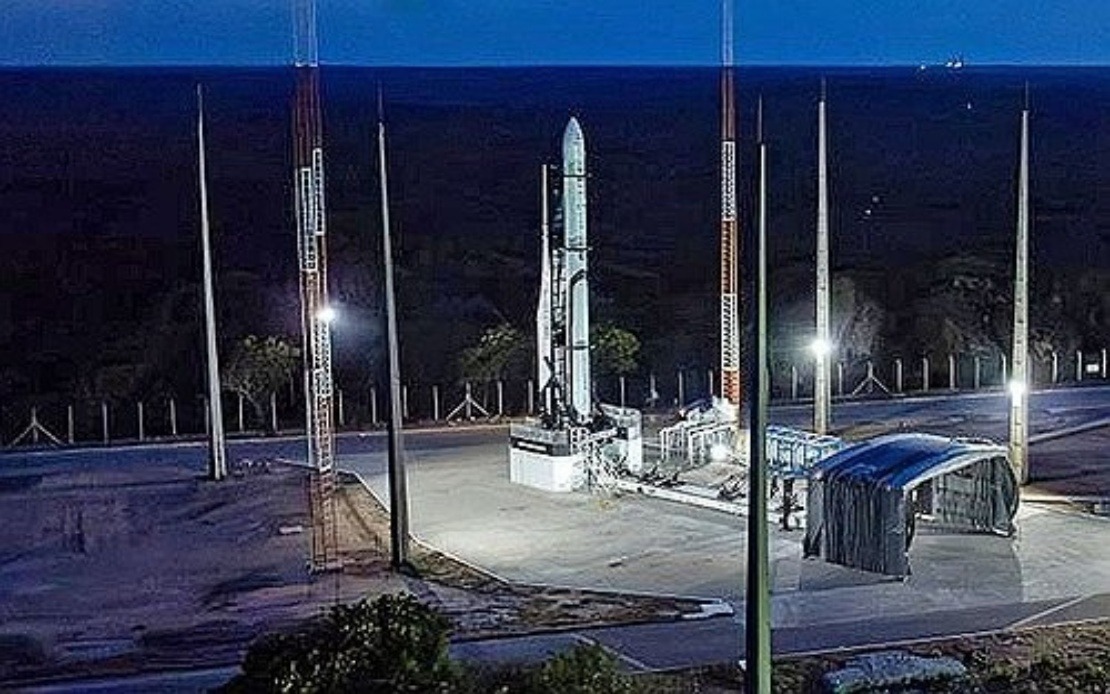
South Korea's ambitious plan to conduct the first full operational test of its domestically developed Mir solid-fuel space rocket has been shelved indefinitely, the defence ministry announced on Tuesday, marking a significant setback for a programme central to the nation's strategic space ambitions. The launch, which had been scheduled for 2 pm from a sea platform off Jeju Island's southern coast, was cancelled after technicians identified unspecified problems during the final stages of pre-flight verification. Officials declined to elaborate on the technical issues that prompted the decision, stating only that safety considerations took precedence over the planned timetable.
The postponement represents more than a minor scheduling adjustment for South Korea's space development roadmap. The Mir rocket represents a qualitative leap in the country's launch capability, as this test flight would have been the first opportunity to verify the vehicle's performance as a fully integrated four-stage system. Previous trials conducted in 2022 and 2023 had only tested partial three-stage configurations under controlled conditions, leaving critical uncertainties about how the complete stack would behave during actual flight. The maiden voyage had been positioned as a crucial validation milestone, and its cancellation suggests either that integration challenges proved more complex than anticipated or that quality assurance processes flagged issues serious enough to warrant investigation before proceeding.
Understanding the significance of this programme requires context about South Korea's broader defence strategy in an increasingly tense regional environment. Since 2021, Seoul has invested substantial resources into developing solid-propellant space launch technology as part of a deliberate diversification of its reconnaissance satellite infrastructure. The solid-fuel approach offers distinct operational advantages over liquid-fuelled alternatives: vehicles can be prepared and stored for extended periods without special handling, enabling rapid deployment when strategic circumstances demand immediate satellite coverage. This capability aligns directly with South Korea's imperative to maintain independent surveillance of North Korean military activities without relying solely on intelligence partnerships, particularly as tensions on the peninsula remain volatile.
The Mir programme operates within a larger, multi-layered space reconnaissance strategy that reflects Seoul's determination to achieve strategic autonomy in intelligence gathering. Separately from the solid-fuel initiative, the South Korean military has successfully deployed five reconnaissance satellites into orbit aboard SpaceX's Falcon 9 rockets, with the most recent launches occurring last year. These larger, more capable satellites form the backbone of current surveillance operations, providing detailed imagery and signals intelligence that inform military planning and strategic decisions. However, officials have concluded that even this accomplished network requires supplementation through a constellation of smaller, more numerous satellites distributed across lower orbital altitudes.
The Mir programme's ultimate objective encompasses a revolutionary expansion of South Korea's space-based reconnaissance footprint over the coming years. Under current planning, Seoul intends to position as many as 60 small observation and surveillance satellites into low-Earth orbit below 500 kilometres altitude by 2030, creating an integrated network that would dramatically increase coverage frequency and resolution across the Korean peninsula and surrounding regions. This aggressive deployment schedule reflects serious concerns about monitoring evolving North Korean military capabilities, including ballistic missile developments and nuclear programme activities that could shift the regional balance of power. By combining a foundation of five larger military satellites with a distributed swarm of smaller platforms, South Korea aims to construct a surveillance system substantially less dependent on American intelligence assets and more responsive to national security priorities.
Solid-fuel rockets occupy a specific and valuable niche within this broader architecture. Their relative simplicity compared to liquid-fuelled systems translates into reduced operational complexity and faster readiness cycles. The technology's maturity across global space programmes provides confidence in the engineering fundamentals, though integrating these components into South Korea's particular design presents novel challenges. The cancellation decision underscores that rushing such a complex undertaking before resolving technical anomalies would introduce unacceptable risk, not merely to equipment but to the strategic programmes that depend on reliable launch capability. The ministry's commitment to announcing a revised launch schedule suggests confidence that problems can be resolved through engineering analysis and corrections, rather than fundamental design flaws.
For regional observers, this postponement carries implications extending beyond Seoul's immediate military needs. South Korea's space development efforts, whether through solid-fuel programmes or partnerships with international launch providers, reflect broader patterns of technological consolidation and strategic competition in Asia. As regional powers increasingly recognise the value of independent space capabilities for surveillance, communications, and positioning, competition in launch vehicle development and satellite manufacturing will intensify. South Korea's approach—combining domestic development with selective international partnerships—represents a pragmatic model that other countries in Southeast Asia and beyond may eventually adopt as space technology becomes more accessible and strategically essential.
The timing of this delay also occurs against a backdrop of sustained international attention to space launch activities in Northeast Asia. China and Russia maintain extensive space programmes with military applications, while Japan has similarly invested in launch vehicle development for independent access to space. Within this competitive environment, South Korea's determination to develop indigenous solid-fuel launch capability reflects not merely technical ambition but geopolitical necessity. The ability to place satellites into orbit without depending on foreign launch providers offers strategic flexibility that becomes increasingly valuable during international tensions or when diplomatic relationships face strain.
Officials have committed to announcing revised launch arrangements once technical assessments conclude and corrective measures are implemented. The absence of specific timing suggests investigators may require substantial investigation periods to understand root causes and verify that solutions are comprehensive rather than superficial. This methodical approach, while frustrating for programme managers eager to demonstrate progress, ultimately strengthens confidence in the system's reliability. Space launch operations carry inherent risks, and rushing to meet arbitrary deadlines creates hazards that could endanger equipment worth billions of won and compromise long-term programme credibility.
For Malaysian observers with interest in regional strategic developments, South Korea's space programme expansion warrants attention as one element within broader Asian military modernisation trends. As Southeast Asian nations increasingly recognise the strategic value of space-based capabilities, they watch closely how more advanced regional powers solve technical challenges and establish institutional competencies. South Korea's transparent communication about programme setbacks, rather than obscuring difficulties, offers a model of professional standards that builds international confidence in the reliability and competence of space operations. The eventual success of the Mir programme will demonstrate that indigenous space launch capability, while technically demanding, remains achievable for determined governments with adequate resources and technical expertise.

