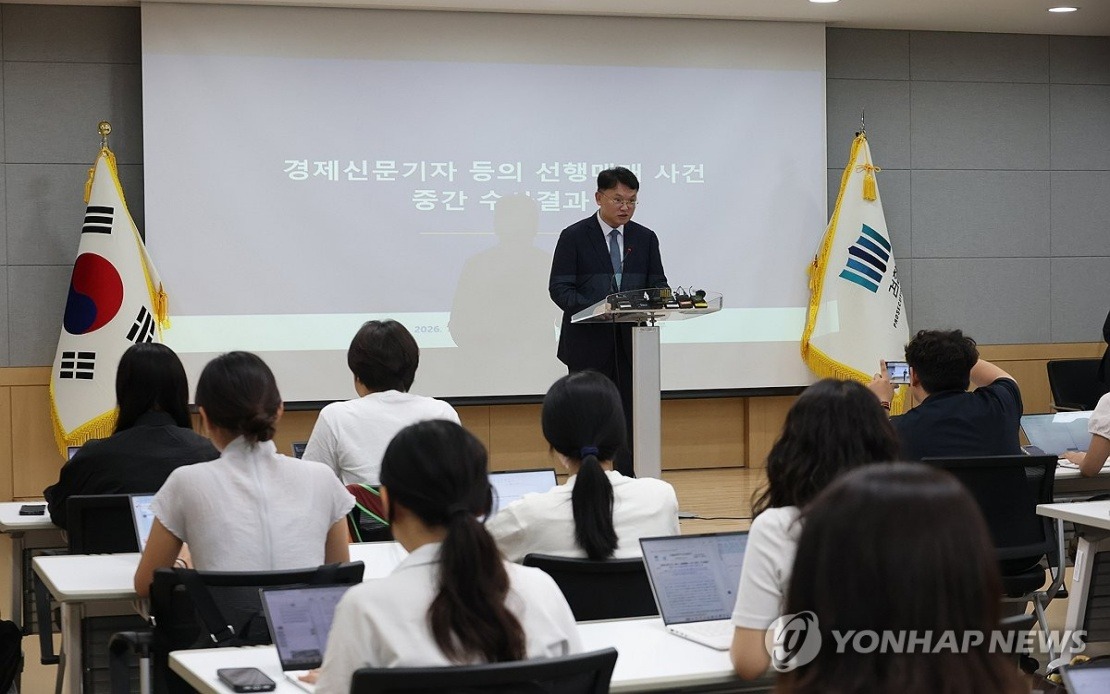
South Korea's prosecution service has taken decisive action against a sophisticated financial crime operation that exploited the power of business journalism to artificially inflate stock prices and generate massive illegal profits. On Wednesday, prosecutors announced the indictment of eight suspects—six reporters from a business daily newspaper, one accountant, and one investor—in connection with a scheme that authorities say netted over 9 billion won, equivalent to US$6.19 million, through coordinated market manipulation between October 2020 and July 2024.
The operation relied on a deceptively simple but highly effective mechanism. The syndicate would identify stocks trading at low volumes or those exhibiting extreme price volatility, then purchase substantial positions in these securities before orchestrating a coordinated media blitz. The participating journalists would then author favourable news articles that artificially boosted investor confidence and drove up share prices. Once the prices had climbed sufficiently, the conspirators would sell their holdings at a profit, leaving unsuspecting investors who had purchased shares based on the positive coverage facing significant losses.
Prosecutors revealed that the primary group involved in the scheme—comprising five journalists, an accountant, and an investor—generated approximately 8.55 billion won in unlawful profits by publishing roughly 1,800 articles over an 8-month period spanning October 2020 to June 2022. The journalists involved in this phase of the operation worked under a financial arrangement whereby each article they published earned them 300,000 won. The scheme proved remarkably lucrative for the individual participants, with three of the five reporters accumulating approximately 150 million won, 160 million won, and 28 million won respectively from their participation in the manipulation strategy.
A sixth journalist operated under a separate arrangement but pursued an identical manipulation strategy independently. This reporter generated roughly 740 million won in illicit gains through the publication of approximately 340 articles between October 2022 and July 2024. Prosecutors characterized his conduct as an abuse of his professional authority and position within the newsroom to generate personal financial advantage at the expense of market integrity and investing public.
The discovery and prosecution of this case carries significant implications for media industry governance and financial market oversight in South Korea. The involvement of professional journalists in orchestrating stock market manipulation represents a particularly egregious breach of public trust, as these individuals occupy positions of responsibility in shaping market information and investor perception. The scheme exploited the fundamental asymmetry between journalists who possess advance knowledge of positive news stories they plan to publish and ordinary retail investors who make trading decisions based on published information they assume reflects genuine market analysis.
For Malaysian investors and market participants, the South Korean case offers instructive lessons about the vulnerability of regional equity markets to similar schemes. While the Malaysian capital market operates under strict regulations enforced by the Securities Commission, the sophistication demonstrated in the Seoul operation underscores the ongoing challenge of detecting coordinated manipulation across multiple actors operating within trusted institutions. The case illustrates how individuals with legitimate professional platforms can weaponize their access to mass media distribution channels to generate personal enrichment while systematically defrauding other market participants.
The prosecution's response signals a hardening of enforcement policy against market manipulation in Asia's fourth-largest economy. Officials announced their intention to pursue all criminal proceeds with confiscation orders, effectively treating the illicit gains as proceeds of crime rather than merely imposing fines that might be dismissed as a cost of doing business. This aggressive asset-recovery approach aims to eliminate the financial incentive structure that enabled the scheme to persist for years without detection.
The structure of the scheme—with payment arrangements formalized on a per-article basis—suggests a level of organizational sophistication that raises questions about potential institutional awareness or negligence within the business daily newsroom. The publication of 1,800 articles promoting specific stocks over eight months would presumably be noticeable to editorial management, though prosecutors have not indicated whether any supervisory editors or publishers face charges. This gap in accountability may reflect investigative limitations or prosecutorial discretion to focus resources on the primary beneficiaries rather than institutional gatekeepers.
South Korea has implemented increasingly stringent financial market regulations in recent years, reflecting the nation's experience with major corporate scandals and market manipulation cases. The aggressive prosecution of media-enabled manipulation aligns with this broader regulatory trend and demonstrates the government's commitment to protecting retail investors and maintaining the integrity of capital markets. For the Southeast Asian region, where business journalism plays an expanding role in driving investment flows, the implications are significant: institutional arrangements that enable journalists to benefit financially from the stocks they cover create inherent conflicts of interest that no amount of professional ethics training can fully eliminate.
The case also highlights the particular vulnerability of smaller-cap or thinly traded stocks to manipulation schemes. These securities typically receive minimal coverage from financial analysts and institutional investors, making them disproportionately susceptible to influence by coordinated positive media coverage. The perpetrators' strategy of targeting low-volume, highly volatile equities rather than blue-chip stocks reflects their understanding of market microstructure and where manipulation techniques prove most effective.
Moving forward, the prosecution pledged to aggressively pursue comparable schemes and fully confiscate all unlawful proceeds, signalling that financial gain through market manipulation would not be tolerated. This enforcement posture carries implications for how business journalists throughout the region approach their coverage of corporate developments and stock market activity. The intersection between legitimate financial journalism and potential conflicts of interest remains an ongoing challenge across Southeast Asia, where investor protection mechanisms are still evolving and market participants often lack the sophisticated analysis tools available in more developed financial centres.

