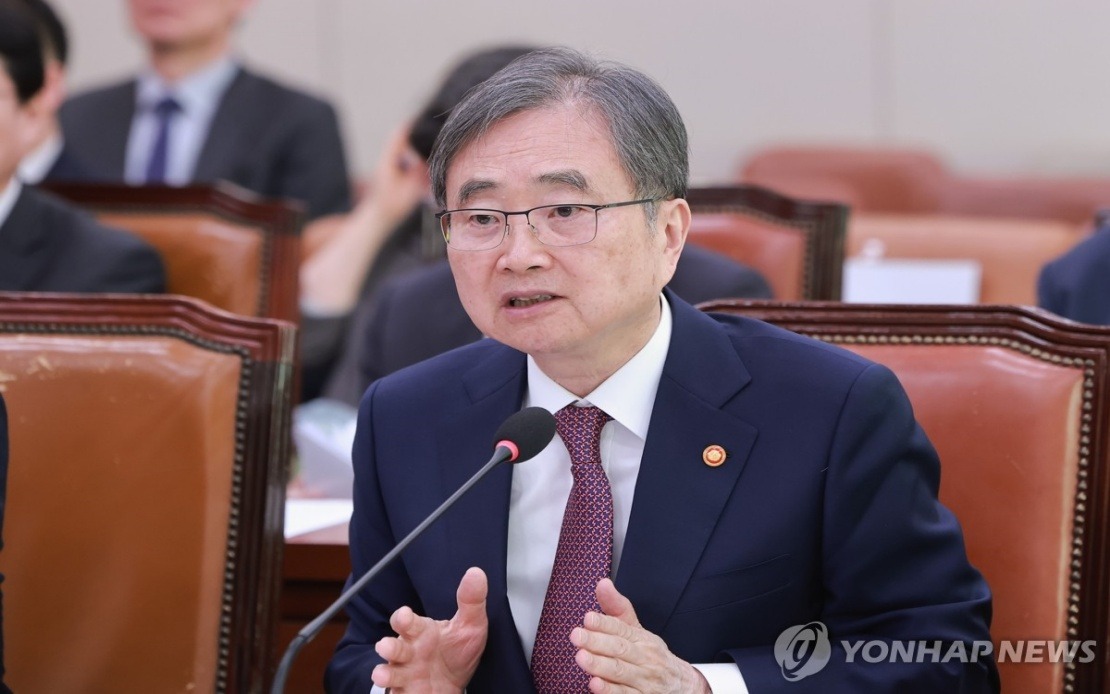
South Korea confronted an unusual diplomatic situation this week when Foreign Minister Cho Hyun learned that the country's joint military exercises with the United States would be dramatically reduced—not through official channels, but via US President Donald Trump's social media announcement. The revelation highlighted a significant breakdown in advance coordination between allied governments, sparking questions about the robustness of communication protocols between Washington and Seoul at a moment of elevated regional tensions.
Cho disclosed to South Korea's parliamentary committee for foreign affairs and unification that the South Korean government, along with US officials, had received no forewarning of Trump's decision to scale back the joint drills. The foreign minister's acknowledgment underscored the surprise nature of the announcement and the absence of bilateral consultation before the policy shift became public. Rather than receiving a diplomatic brief or private notification, Seoul's leadership discovered the change through the same media channels accessible to the broader public.
The reduction in military exercise scope proved substantial. South Korea's Joint Chiefs of Staff confirmed that the Ulchi Freedom Shield (UFS)—a major annual summertime exercise involving field manoeuvres, computer-simulated command post operations, and civil defence drills—would be compressed from its originally scheduled eleven-day duration ending on August 27 to just five days, concluding on August 21. This represented approximately a 55 percent reduction in the planned exercise timeline, a consequential scaling back of bilateral military coordination in a region where deterrence credibility carries significant strategic weight.
Trump's directive to the Pentagon, issued on August 16, instructed military planners to substantially diminish the scope of joint South Korea-US military exercises. The decision appeared to stem from the US president's broader approach to military spending and alliance management, though detailed rationale for the specific reduction remained unclear. Within hours of the announcement, Xavier Brunson, the Commander of the US Forces Korea, visited South Korea's defence ministry building on Tuesday, suggesting that some damage control and clarification effort followed the public announcement.
Defence Minister Ahn Gyu-back attempted to reframe the situation during parliamentary discussions, emphasizing that the reduction represented not a unilateral US decision imposed upon Seoul, but rather a product of ongoing bilateral consultations. His characterization suggested that while the announcement method was unconventional and the advance notice non-existent, subsequent discussions had confirmed mutual agreement on the modified exercise parameters. This framing proved important for South Korea's domestic political consumption, allowing Seoul to claim agency in the decision rather than portraying the country as simply accepting an external diktat.
The lack of advance notification carries implications beyond simple diplomatic courtesy. Military exercises serve multiple strategic purposes in the South Korea-US alliance framework: they test operational interoperability, maintain readiness against North Korean contingencies, and signal deterrent resolve to regional adversaries. When such exercises are significantly modified without prior consultation, it can create uncertainty about allied commitment and potentially invite miscalculation from adversaries who may misinterpret reduced exercise scale as indicating weakened resolve or diminished alliance cohesion.
For Malaysia and other Southeast Asian nations, this episode offers insight into alliance management dynamics between major powers. The incident illustrates how significant military and security decisions can be announced through social media platforms rather than through established diplomatic channels, a trend that has characterized recent US policy announcements. It also demonstrates the vulnerability of allied nations to policy reversals that emerge without consultation, a consideration relevant to any country maintaining security partnerships with Washington.
The Ulchi Freedom Shield exercise encompasses not merely bilateral military coordination but also integrated civil defence components involving South Korean civilian agencies and local governments. Compressing the timeline by more than half required rapid adjustment of pre-positioned logistics, modified scheduling of participating units, and recalibration of civil defence drill coordination. The compressed schedule meant less opportunity for comprehensive training and coordination across the full spectrum of alliance activities.
The broader context involves evolving perceptions of US commitment to alliance relationships and the prioritization of cost reduction over alliance cohesion. Trump's instruction to scale back the exercises aligned with his previous public statements questioning the cost-benefit ratio of maintaining large-scale US military presence and exercises in East Asia. Whether this represented a temporary adjustment or signaled a more fundamental shift in alliance posture remained unclear to Seoul's leadership in the immediate aftermath.
Communication breakdowns at this strategic level can accumulate consequences. When a major ally learns of significant policy changes affecting mutual security arrangements through social media rather than through established diplomatic protocols, it erodes trust in the reliability of consultation mechanisms and creates uncertainty about whether future decisions will likewise bypass official channels. For Seoul, managing this situation required balancing the need to project confidence in continued US security commitment while simultaneously addressing domestic political concerns about being sidelined in decisions fundamentally affecting Korean security.
The incident also reflects broader questions about decision-making velocity in the modern era. Announcements can now reach global audiences instantaneously through social media, compressing the timeline for diplomatic preparation and creating situations where governments must respond to policy announcements that surprise them as much as they surprise the public. This acceleration of communication cycles collides with the deliberate, measured pace traditionally governing alliance consultation and military planning.
Moving forward, the compressed Ulchi Freedom Shield exercise will proceed according to its modified schedule, though questions linger about whether communication protocols between Seoul and Washington will be adjusted to prevent similar surprises. The incident served as a reminder that even longstanding alliances operating within established institutional frameworks remain subject to disruption when key decision-makers choose to bypass traditional channels, a reality with implications for allied nations throughout the region seeking stability in their security arrangements with major powers.

