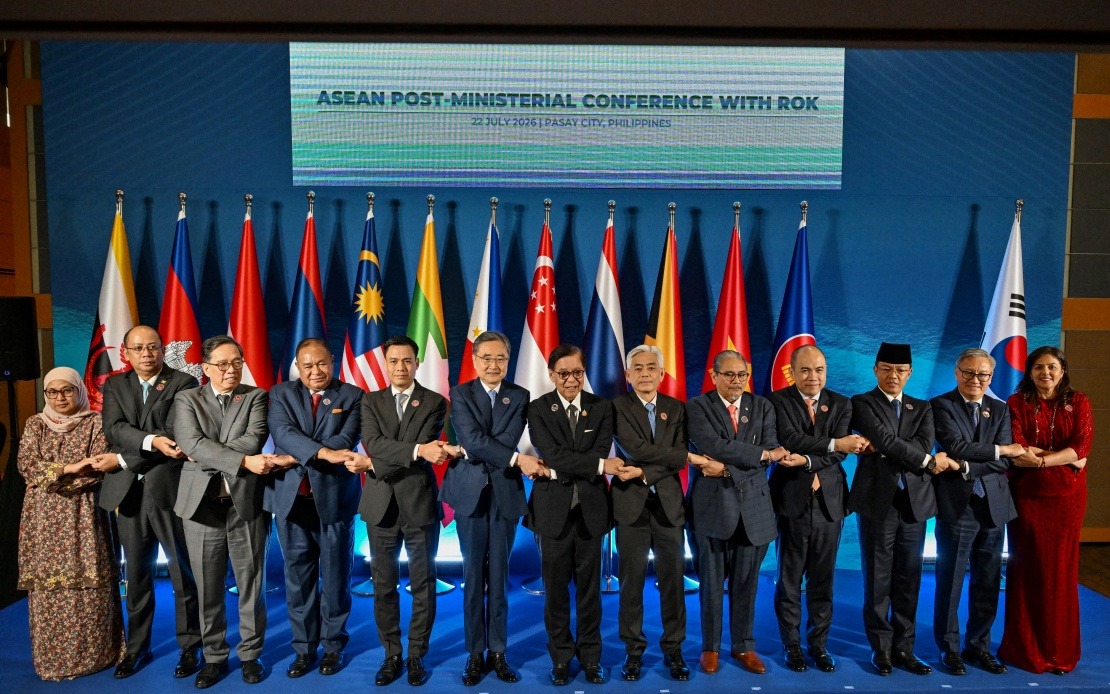
South Korea and ASEAN are moving to substantially broaden their partnership, with Seoul introducing a raft of new collaboration initiatives during high-level ministerial talks in Manila on Wednesday. Foreign Minister Cho Hyun co-chaired the Korea-ASEAN foreign ministers' meeting alongside his Thai counterpart, using the gathering to announce concrete programmes in artificial intelligence and cultural sectors whilst reaffirming both parties' commitment to their Comprehensive Strategic Partnership vision.
The strategic partnership framework itself rests on three foundational pillars that Seoul has prioritised since President Lee Jae Myung unveiled the vision at last year's Korea-ASEAN summit. These pillars—people-centred cooperation, growth and innovation, and peace and stability—provide the structural backbone for expanding bilateral and multilateral engagement across economic, technological and security domains. For ASEAN member states, the partnership represents a crucial anchor point as the region navigates intensifying geopolitical pressures and rapid technological disruption.
Seoul's newly announced Korea-ASEAN AI Partnership Initiative marks a significant strategic investment in the region's digital future. The programme is designed to construct robust artificial intelligence ecosystems across ASEAN, foster collaborative research initiatives and cultivate regional talent capable of meeting the demands of an AI-driven economy. Critically, the initiative emphasises responsible AI deployment through frameworks ensuring safe and ethical use, leveraging Seoul's considerable full-stack AI capabilities developed over years of substantial technology sector investment. This approach allows ASEAN nations, many of which are earlier in their AI adoption journey, to benefit from Korean expertise whilst avoiding potential pitfalls associated with unregulated technology deployment.
Beyond artificial intelligence, South Korea has simultaneously prioritised cooperation in cultural and creative industries, sectors increasingly recognised as significant drivers of economic value and soft power throughout Asia. The new initiatives targeting this domain reflect Seoul's understanding that cultural exchange strengthens people-to-people bonds whilst generating measurable economic returns. The creative industries particularly offer ASEAN nations opportunities for diversified growth, especially for emerging economies seeking alternatives to traditional manufacturing-dependent development models.
Additional cooperation frameworks announced during the meeting extend to combating online scam networks and establishing a joint maritime safety academy. These initiatives address pressing transnational challenges affecting ASEAN communities. Cybercrime and online fraud represent increasingly sophisticated threats to regional stability and economic security, whilst maritime safety remains paramount given ASEAN's heavy reliance on sea-based commerce and transportation. The academy, in particular, would strengthen institutional capacity across the region's maritime sectors, essential given competing interests in vital waterways.
Economic cooperation remains central to the partnership trajectory, with both sides emphasising the need to modernise and expand their existing free trade framework. South Korea and ASEAN originally concluded their goods trade agreement in 2006, followed by separate service and investment accords in 2007 and 2009 respectively. These arrangements have underpinned substantial commercial flows, yet they require updating to address contemporary challenges and opportunities. Last month, both parties commenced formal negotiations to upgrade the FTA, with discussions focusing on critical emerging sectors including the digital economy and critical minerals supply chains—issues of paramount importance as global manufacturing gradually shifts away from China and towards more diversified supply networks.
The scale of Korea-ASEAN trade underscores the economic significance of deepening ties. South Korea exported approximately US$122.5 billion in goods to ASEAN member states during 2025, making the region South Korea's third-largest trading partner globally. This substantial volume reflects deeply integrated supply chains and complementary economic structures, yet also highlights vulnerabilities exposed during recent global disruptions. Enhanced cooperation on supply chain resilience therefore benefits both parties, reducing exposure to geopolitical shocks whilst ensuring more stable, predictable commerce.
ASEAN member states responded positively to Seoul's partnership initiatives, welcoming the comprehensive vision and pledging close cooperation in implementation. This receptiveness reflects ASEAN's strategic interest in diversifying partnerships beyond traditional Western relationships whilst maintaining equitable engagement with major Asian powers. For Southeast Asian nations, South Korean partnership offers technological advancement and economic opportunity without the geopolitical complications sometimes accompanying engagement with larger regional powers.
Foreign Minister Cho additionally addressed peninsula-related matters, outlining Seoul's pursuit of peaceful coexistence with North Korea and requesting ASEAN's sustained diplomatic backing for these efforts. ASEAN member states reciprocated this position, reaffirming support for Seoul's Korean Peninsula policies and emphasising that stability on the peninsula remains integral to broader regional peace and prosperity. This regional consensus around Korean stability matters, even among states without direct involvement, reflects understanding that major power conflicts anywhere in Asia reverberate throughout the region's diplomatic and commercial ecosystems.
During the Manila meetings, Foreign Minister Cho conducted separate bilateral discussions with counterparts from the Philippines and Thailand, alongside broader ASEAN engagement. These multilayered diplomatic interactions—simultaneously engaging ASEAN collectively and individual member states bilaterally—represent the sophisticated approach now required in navigating Southeast Asian geopolitics. Individual ASEAN nations maintain distinct interests, relationships and development priorities, necessitating tailored engagement strategies complementing broader regional frameworks.
The partnership announcements arrive amid broader strategic competition in Southeast Asia, where multiple powers actively court regional favour and investment. South Korea's emphasis on technological cooperation, cultural exchange and maritime safety offers a differentiated value proposition emphasising shared development benefits rather than zero-sum competition. This positioning may prove particularly attractive to ASEAN nations seeking economic advancement and technological capability without compromising strategic autonomy or accepting hierarchical geopolitical arrangements.

