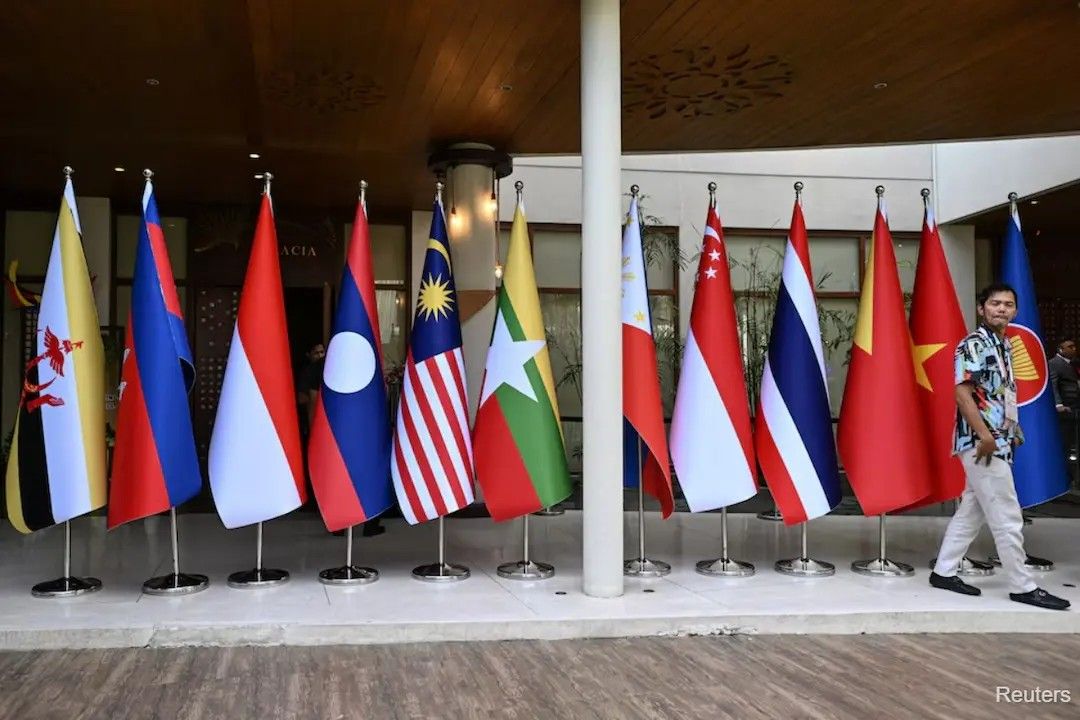
Diplomatic tensions surrounding the South China Sea are set to complicate discussions at this week's ASEAN foreign ministers' gathering in Manila, with the United States directly challenging what it describes as "dangerous" Chinese conduct in one of the world's most strategically important waterways. The arrival of Secretary of State Marco Rubio on Tuesday coincided with fresh warnings from Washington about the implications of Beijing's assertive posture in the contested region, underscoring how deeply divided global powers remain over maritime freedoms and regional influence.
The timing of Rubio's intervention reflects the persistent friction between Washington and Beijing over the South China Sea, a vital shipping corridor through which trillions of dollars in annual trade flows. In a written message published in Philippine media on Tuesday morning, Rubio emphasised the US commitment to safeguarding "freedom of navigation in Southeast Asia," positioning American military and diplomatic presence as essential insurance against what he implied would be Chinese economic coercion and strategic dominance. His warning that regional states could face "serious new threats to their sovereignty, security, and economic future" if the waters fell under the control of a state willing to weaponise trade echoed longstanding Western anxieties about China's growing clout in the Indo-Pacific.
These rhetorical salvos arrive amid genuine escalation on the water. On Monday, personnel from the Philippine and Chinese coast guards engaged in a physical confrontation near Second Thomas Shoal, a disputed feature where Manila maintains a small military presence on a deliberately beached vessel. The Philippines characterised the encounter as an assault by Chinese officials against Filipino sailors, while Beijing countered that the incident stemmed from aggressive Philippine manoeuvres using small inflatable boats approaching Chinese vessels without authorisation. This clash marks the most serious maritime confrontation in months and signals that despite diplomatic overtures, the underlying competition for territorial control and maritime access remains unresolved.
The incident casts fresh doubt on prospects for a long-negotiated Code of Conduct between ASEAN and China, a document that diplomats have pursued for years with minimal tangible results. Analysts have consistently warned that any eventual agreement will likely lack enforceable mechanisms or substantive restrictions on either party's behaviour, rendering it more symbolic than transformative. For Malaysia and other ASEAN states, the failure to establish binding rules governing conduct at sea perpetuates a fundamental asymmetry where China's superior military capabilities and economic leverage allow it to shape regional dynamics largely according to Beijing's preferences.
Rubio has indicated willingness to meet Chinese Foreign Minister Wang Yi during the Manila gathering, suggesting that despite public criticism, behind-the-scenes diplomatic channels remain active. Such bilateral encounters often serve to manage rather than resolve underlying disputes, allowing both sides to articulate positions and perhaps prevent miscalculation from spiralling into broader conflict. For Southeast Asian nations caught between great power competition, these interactions highlight their marginal influence over outcomes that profoundly affect their security and prosperity.
Beyond the South China Sea, regional energy security has emerged as an acute concern demanding ASEAN attention. The Philippines, heavily dependent on fuel imports, declared a national energy emergency in March and has begun diversifying its procurement sources in increasingly unconventional directions, including purchases from Russia. This necessity reflects how geopolitical tensions in distant theatres, particularly the Israel-Iran conflict and its spillover effects on global oil markets, transmit economic consequences to Southeast Asia. The bloc is pursuing ratification of its Framework Agreement on Petroleum Security to enable coordinated fuel-sharing arrangements, though the mechanics of burden-sharing and the adequacy of emergency reserves remain contested.
Myanmar's status within ASEAN represents perhaps the week's most emotionally charged issue. The military junta's February 2021 seizure of power precipitated a catastrophic civil conflict that has killed tens of thousands and displaced millions, placing enormous strain on neighbouring Thailand, which hosts substantial refugee populations and manages a porous border. Thailand's Foreign Minister Sihasak Phuangketkeow has emerged as an advocate for reintegrating Myanmar into full ASEAN participation, arguing that after five years of exclusion, dialogue and engagement offer better prospects than continued isolation. He has suggested that Myanmar's leader Min Aung Hlaing may visit the region in August, signalling Thai willingness to facilitate high-level contacts.
However, the push for Myanmar's reintegration faces significant resistance. Malaysian Foreign Minister Mohamad Hasan publicly stated in May that Malaysia opposes resuming senior-level dialogue while "oppression is still taking place," a reference to the junta's brutal suppression of political opposition and ethnic minorities. This principled stance reflects concerns among certain ASEAN members that normalising relations with an illegitimate government contradicts the bloc's stated commitments to democracy and human rights, however unevenly those principles are applied. The contrast between Thailand's pragmatic engagement approach and Malaysia's more principled stance illustrates how Myanmar's crisis has fractured ASEAN consensus on fundamental issues.
Philippine President Ferdinand Marcos sparked controversy in May when he called for "fine-tuning" ASEAN's five-point peace plan for Myanmar, language that suggested the bloc's existing diplomatic framework required recalibration. The original roadmap, formulated to guide Myanmar's political transition, has achieved virtually nothing substantive over its implementation period, leaving many observers to conclude that ASEAN lacks the leverage or internal cohesion to meaningfully influence the junta's behaviour. This fundamental weakness in ASEAN's capacity to shape member state conduct has profound implications for the bloc's relevance in addressing regional crises.
The week ahead will test whether ASEAN can transcend its endemic divisions and find common ground on multiple fronts simultaneously. The South China Sea crisis, Myanmar's civil war, regional energy insecurity, and broader great power competition all demand attention, yet ASEAN's consensus-based decision-making procedures and the divergent interests of its ten members make substantive outcomes unlikely. For Malaysian policymakers and the broader Southeast Asian audience, the Manila meeting will probably produce diplomatic statements affirming unity while concrete progress remains elusive, reflecting the bloc's enduring structural limitations in addressing challenges that transcend national borders.

