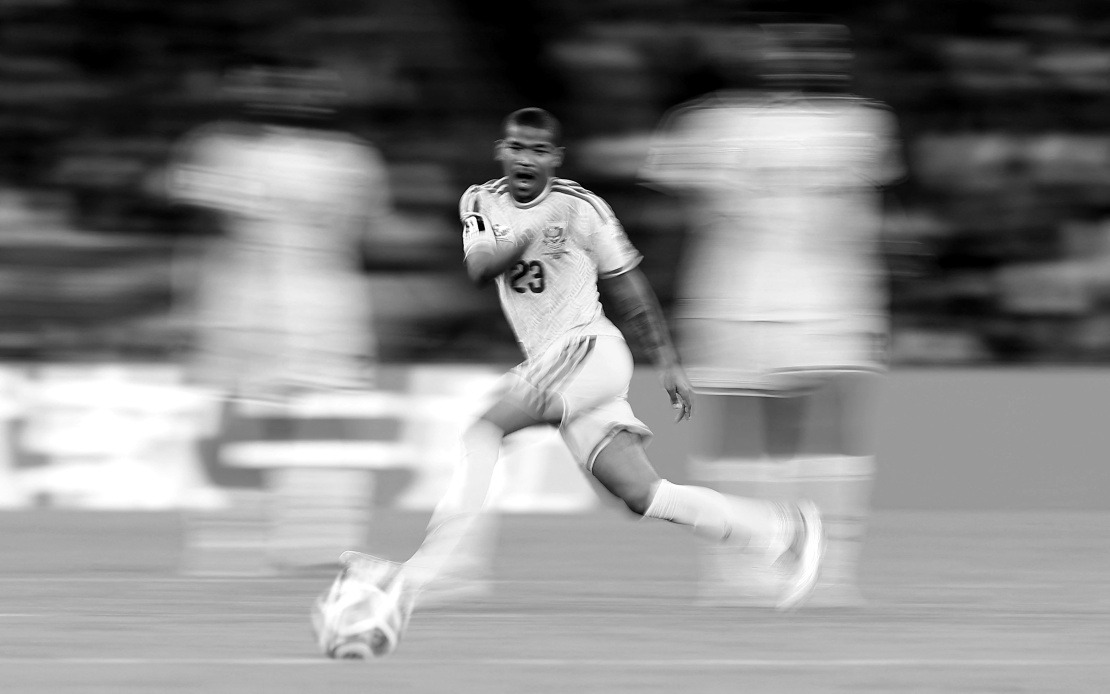
The South African football community is in mourning following the death of Jayden Adams, the 25-year-old midfielder who represented his nation during this year's FIFA World Cup. The Confederation of African Football announced the passing on Saturday, with the young player's body discovered at a residence in Schotschekloof, a central suburb of Cape Town, on Saturday morning. Authorities have commenced an investigation into the circumstances surrounding his death, though the official cause remains unconfirmed at this stage.
Adams had recently joined Mamelodi Sundowns, one of South Africa's most successful domestic clubs, in January 2025. His career trajectory had been marked by achievement at both club and national level, with the midfielder earning recognition as one of the most promising talents in South African football. Beyond his involvement in the recent World Cup campaign, Adams was part of the South African squad that reached the semifinals of the 2023 Africa Cup of Nations, demonstrating his significance within the national setup.
At the World Cup tournament this year, Adams made meaningful contributions to South Africa's historic campaign in the group stage. He appeared in all three of his nation's matches during the preliminary round, playing a role in the team's progression to the knockout phase—a milestone achievement for South African football. The national side subsequently advanced further than ever before in the competition's history before being eliminated by co-host Canada in the round of 32 on June 28.
Adams began his professional playing career at Stellenbosch FC before his recent transfer to Mamelodi Sundowns. During his time at the Johannesburg-based club, he contributed to several significant achievements, including winning domestic league titles and participating in the African Champions League. His development as a footballer had been closely followed by national team selectors, culminating in his senior international debut in 2022.
South Africa's Sports, Arts and Culture Minister Gayton McKenzie issued a statement characterizing Adams as one of the nation's most promising young footballers. McKenzie urged both the media and the general public to refrain from speculation regarding the circumstances of his death, emphasizing the importance of allowing his family and club to receive official information before drawing conclusions. The minister extended formal condolences to Adams' family members, his teammates at Mamelodi Sundowns, and the broader football supporter base.
The loss has reverberated across the international football community. FIFA President Gianni Infantino released a statement expressing his condolences and noting that Adams would be "sorely missed" by the global football fraternity. Such expressions of solidarity from international football's governing bodies underscore the respect Adams had earned among peers and administrators worldwide.
For Malaysian and Southeast Asian observers, Adams' death represents a sobering reminder of the personal challenges that can affect even the most accomplished young athletes. While South African football occupies a prominent position on the continental stage, the circumstances surrounding Adams' passing highlight broader questions about player welfare, mental health support, and the pressures that accompany professional sport at the highest levels. The investigation currently underway will likely provide greater clarity on the factors involved.
Adams' achievements in a relatively short career demonstrate the potential that existed within him. His participation in the World Cup and the Africa Cup of Nations represented the realization of ambitions that many young footballers across Africa aspire toward. His trajectory from Stellenbosch FC to Mamelodi Sundowns and ultimately to international recognition illustrated a pathway that many aspiring players across the continent seek to follow.
The timing of his death, coming relatively soon after the conclusion of the World Cup campaign, may raise questions about the demands placed upon young players during intensive tournament schedules. His involvement in both the recent World Cup and previous continental competition suggests that Adams was operating at an elite level of professional football, where physical and psychological demands are considerable.
As the investigation proceeds, South African football authorities and Mamelodi Sundowns will likely engage in reflection regarding player support systems and welfare protocols. The loss of such a talented young footballer at the peak of his career trajectory will inevitably prompt discussions about how better to safeguard the wellbeing of players navigating the complexities of elite professional sport.

