South Africa has escalated its legal challenge against Israel at the International Court of Justice, submitting a detailed filing that accuses the country of systematically ignoring binding court orders aimed at protecting Palestinian civilians. The submission, filed under Article 11 of the ICJ's internal judicial practice rules, represents a significant procedural escalation in the genocide case that Pretoria initiated nearly two years ago, signalling Pretoria's determination to hold Israel accountable through every available legal mechanism.
The South African Department of International Relations and Cooperation emphasised in its statement that the provisional measures ordered by the ICJ carry full legal weight and are not merely advisory recommendations. This distinction is crucial in international law, as it establishes that Israel's alleged breach constitutes a violation of binding international legal obligations rather than a voluntary commitment. The formal nature of this submission suggests that South Africa views the situation as sufficiently grave to warrant escalation beyond the original case parameters, seeking urgent intervention from the court.
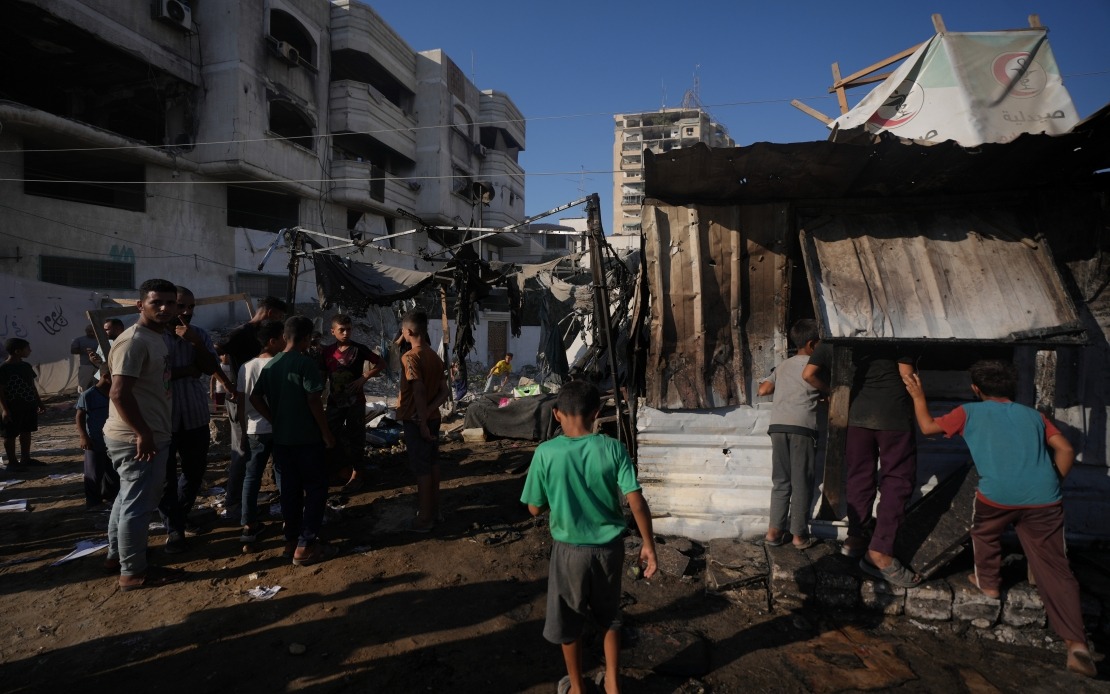
According to South Africa's filing, the consequences of non-compliance have been devastating for Palestinians in Gaza. Survivors continue to experience mounting psychological trauma whilst facing increasingly restricted humanitarian access in what the filing describes as an ever-shrinking geographic area. The filing paints a picture of civilian populations trapped in conditions that deteriorate daily, with limited access to food, water, medical care, and shelter—a situation South Africa attributes directly to Israeli actions despite the existence of court orders requiring preventive measures.
The submission references specific casualty figures resulting from what South Africa characterises as Israeli ceasefire violations that commenced on October 10, 2025. According to the filing, these breaches have resulted in more than 1,300 Palestinian deaths and over 4,330 injuries, with rescue operations still recovering bodies from collapsed buildings and rubble. These statistics underscore the scale of harm that South Africa argues continues despite the ICJ's provisional measures, which were explicitly designed to prevent exactly such outcomes.
South Africa's original complaint, filed on December 29, 2023, invoked the 1948 United Nations Convention on the Prevention and Punishment of the Crime of Genocide, arguing that Israel's conduct violated multiple provisions of this foundational international treaty. The ICJ subsequently issued three separate orders in January, March, and May 2024, each directing Israel to implement comprehensive measures preventing acts that would constitute genocide under international law. The cumulative effect of these orders was meant to establish an ironclad legal framework requiring Israeli compliance.
The broader context reveals the depth of the humanitarian crisis underlying this legal dispute. Palestinian health ministry data indicates that since October 7, 2023, the conflict has resulted in approximately 73,438 Palestinian deaths and 174,447 wounded. These figures have become central to South Africa's argument that Israel's actions, viewed cumulatively and systematically, constitute genocide rather than lawful warfare. The filing uses these statistics to demonstrate that the provisional measures have failed to achieve their protective purpose, suggesting either Israeli non-compliance or the insufficiency of the measures themselves.
South Africa's decision to file this supplementary submission reflects a strategic choice to maintain maximum legal pressure on Israel whilst the main case proceeds toward final judgment. By invoking Article 11 proceedings, South Africa seeks to compel the ICJ to examine whether Israel deserves sanctions for contempt of court—a potentially significant development in international legal practice, where such findings against major powers remain rare. This procedural tactic demonstrates how Pretoria is pursuing multiple legal avenues simultaneously to achieve its policy objectives.
For Southeast Asian observers, this case carries implications extending beyond Israeli-Palestinian relations. It tests the efficacy of international legal institutions in enforcing their own orders against powerful states and establishes precedent for how countries might challenge permanent security council members through available legal mechanisms. The case also reflects broader global divisions over Gaza, with South Africa positioning itself at the forefront of using international law as a tool for challenging Israeli policy.
The filing's emphasis on the provisional measures' binding nature represents a subtle but important legal argument. By stressing that these orders are not recommendations but enforceable legal requirements, South Africa is laying groundwork for potential contempt findings or broader consequences should the ICJ determine non-compliance. This approach transforms the case from a dispute about substantive genocide allegations into a meta-dispute about institutional credibility and the rule of law in international relations.
South Africa has committed to deploying all available legal mechanisms to secure Israel's compliance, indicating that additional filings and procedural moves may follow if the situation persists. This sustained engagement demonstrates Pretoria's conviction that international law provides meaningful avenues for accountability, even against militarily powerful states. The ultimate significance of South Africa's efforts may depend less on immediate outcomes than on whether they influence how the broader international community views its responsibility to enforce ICJ orders and uphold the Genocide Convention's protective commitments.

