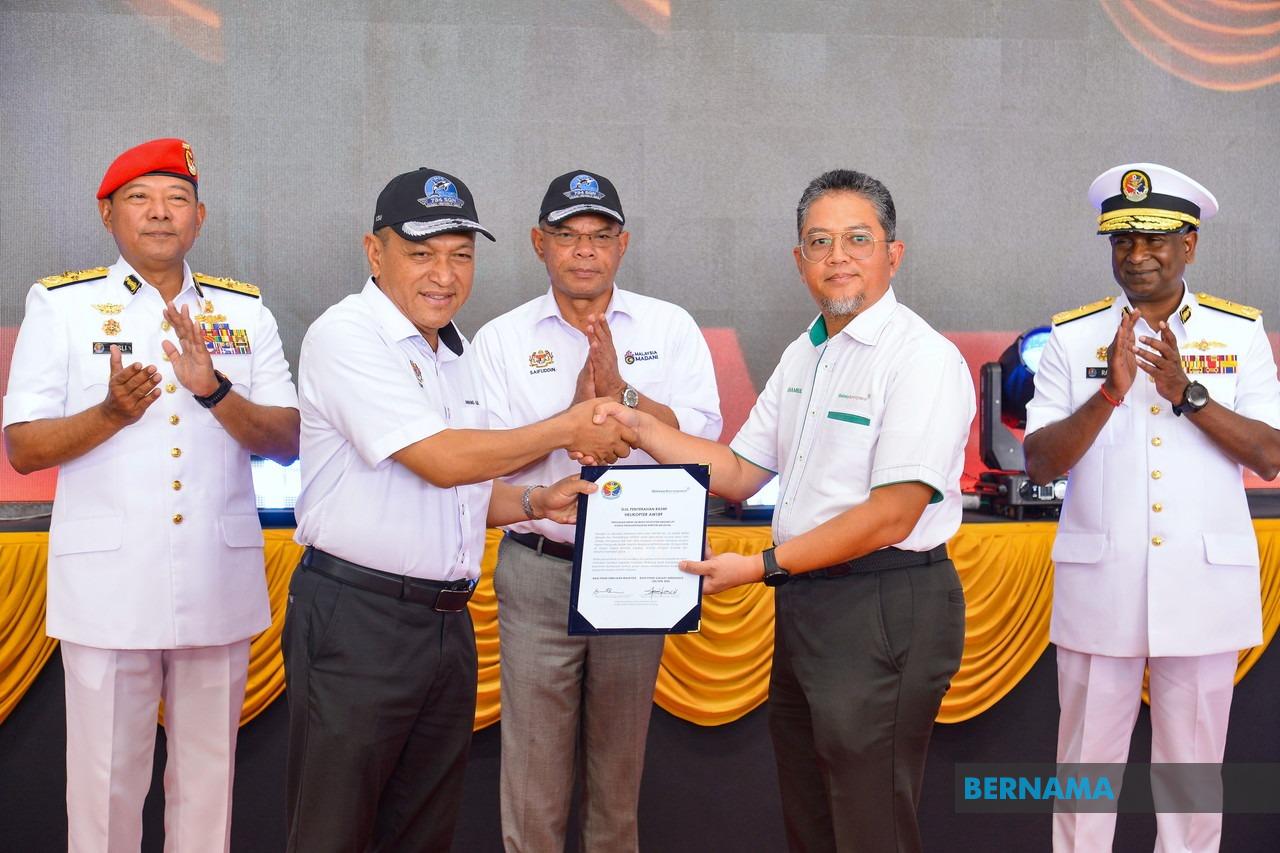
Home Minister Datuk Seri Saifuddin Nasution Ismail has emphasised the urgent need for thorough examination of Malaysia's approach to security legislation and refugee management, signalling that both policy areas demand fresh evaluation rather than continuation of existing frameworks without question. Speaking after chairing a high-level discussion on these interconnected issues, Saifuddin stressed that policymakers must move beyond narrow interpretations and instead adopt a holistic approach that considers evolving security threats, humanitarian obligations, and practical implementation challenges on the ground.
The Security Offences (Special Measures) Act 2012, commonly known as SOSMA, represents Malaysia's primary legislative tool for addressing terrorism and serious national security offences. Introduced just over a decade ago, it superseded the controversial Internal Security Act 1960, which had enabled indefinite detention without trial and faced sustained criticism from human rights advocates. While SOSMA was designed to provide authorities with necessary operational flexibility in combating security threats, the legislation has itself become the subject of growing scrutiny from civil society organisations, legal practitioners, and international observers who question whether its current provisions strike an appropriate balance between security imperatives and individual liberties.
Saifuddin's call for reassessment reflects mounting pressure from multiple quarters questioning SOSMA's continued relevance. Over the past decade, Malaysia's security environment has shifted considerably. The threat landscape has evolved beyond the insurgency concerns that dominated the ISA era, encompassing transnational terrorism networks, cyber threats, and foreign interference. Simultaneously, the act's implementation record has attracted criticism, with allegations that provisions have been applied inconsistently or in ways that may exceed their intended scope. The Home Minister's comments suggest recognition that Malaysia must modernise its security legislation to address twenty-first-century threats while building greater public confidence in the system's fairness and necessity.
The second pillar of Saifuddin's review initiative concerns refugee policy, an issue that has become increasingly contentious across Southeast Asia. Malaysia hosts one of the region's largest refugee populations, though the exact numbers remain contested. The influx has accelerated in recent years, particularly following political upheaval in Myanmar, where the military coup in 2021 triggered displacement affecting hundreds of thousands. These arrivals have strained Malaysia's already limited infrastructure and social services while creating legitimate anxiety among local communities regarding employment competition, housing pressure, and public health management. The situation exemplifies the tension between humanitarian responsibility and the practical constraints facing a developing nation.
Myanmarese refugees represent a particularly complex dimension of this challenge. The majority are Rohingya and members of Myanmar's persecuted ethnic minorities, many of whom face genuine risk of persecution if returned. However, Malaysia is not a signatory to the 1951 Refugee Convention, meaning it has no formal legal obligations under international refugee law and no comprehensive domestic framework for processing asylum claims. This legal ambiguity has created a precarious situation for refugees, who often lack access to education, healthcare, and formal employment, while simultaneously remaining vulnerable to exploitation and trafficking. The absence of clear status determination procedures leaves both refugees and host communities in uncertainty.
National security concerns constitute another dimension of this debate. Malaysian authorities have expressed concern that refugee populations could potentially be infiltrated by individuals with extremist connections or criminal intent. Intelligence assessments have highlighted documented cases of foreign fighters and radical elements attempting to exploit refugee communities for recruitment or funding purposes. These security risks, while not necessarily reflecting the intentions of the vast majority of refugees, create political pressure on policymakers to adopt restrictive approaches. Balancing these legitimate security interests against humanitarian imperatives represents the core challenge that Saifuddin's review process must address.
The Home Minister's emphasis on moving beyond singular perspectives is particularly significant in the Malaysian context, where both security and refugee issues have become politically charged. Conservative voices often prioritise security and national sovereignty concerns, sometimes dismissing humanitarian considerations as naïve or threatening to Malaysia's stability. Progressive advocates, conversely, often emphasise humanitarian obligations and criticise security-focused approaches as discriminatory or disproportionate. Saifuddin's framing suggests an attempt to establish common ground by insisting that coherent policy requires understanding all dimensions simultaneously rather than privileging any single concern.
The practical implications of this review extend beyond abstract policy considerations. For SOSMA specifically, reassessment could yield recommendations ranging from legislative amendments clarifying definitions and operational parameters, to enhanced oversight mechanisms ensuring consistent application, to improved transparency regarding detention practices and legal proceedings. Any reforms would need to maintain operational effectiveness while strengthening procedural safeguards and public accountability. The challenge lies in achieving this balance without creating ambiguity that might undermine security operations or expose enforcement agencies to legal challenge.
Regarding refugees, potential policy directions might include developing formal asylum determination procedures, establishing clearer temporary protection frameworks, or negotiating regional burden-sharing arrangements that distribute responsibility more equitably across Southeast Asian nations. Malaysia might also explore community integration programmes, skills training initiatives, or temporary labour schemes that address both humanitarian needs and host community concerns about economic competition. However, implementing any such measures requires substantial resources and political will, particularly in an environment where public sentiment often leans toward restrictive approaches.
The timing of Saifuddin's initiative appears deliberate. Both issues have simmered in Malaysian public discourse, occasionally erupting into controversy but rarely receiving sustained, high-level policy attention. The Home Minister's decision to initiate structured discussion suggests recognition that current approaches may be unsustainable in the long term. Persistent security incidents or humanitarian crises could force rushed policymaking, whereas proactive review allows for careful deliberation informed by evidence and stakeholder input. For neighbouring Southeast Asian nations grappling with similar challenges, Malaysia's process may provide instructive examples or serve as a catalyst for regional cooperation.
The discussion platform itself represents an important institutional response to complex governance challenges. Effective policymaking on sensitive issues requires bringing together diverse perspectives—security professionals, humanitarian advocates, legal experts, community representatives, and affected populations. Saifuddin's emphasis on such forums reflects understanding that solutions imposed without consultation risk resistance, implementation failures, and perpetuation of underlying problems. Whether this review process will ultimately yield meaningful policy changes remains uncertain, but the initial commitment to comprehensive, multi-perspective scrutiny signals potential movement on two issues that have remained largely static despite changing circumstances.

