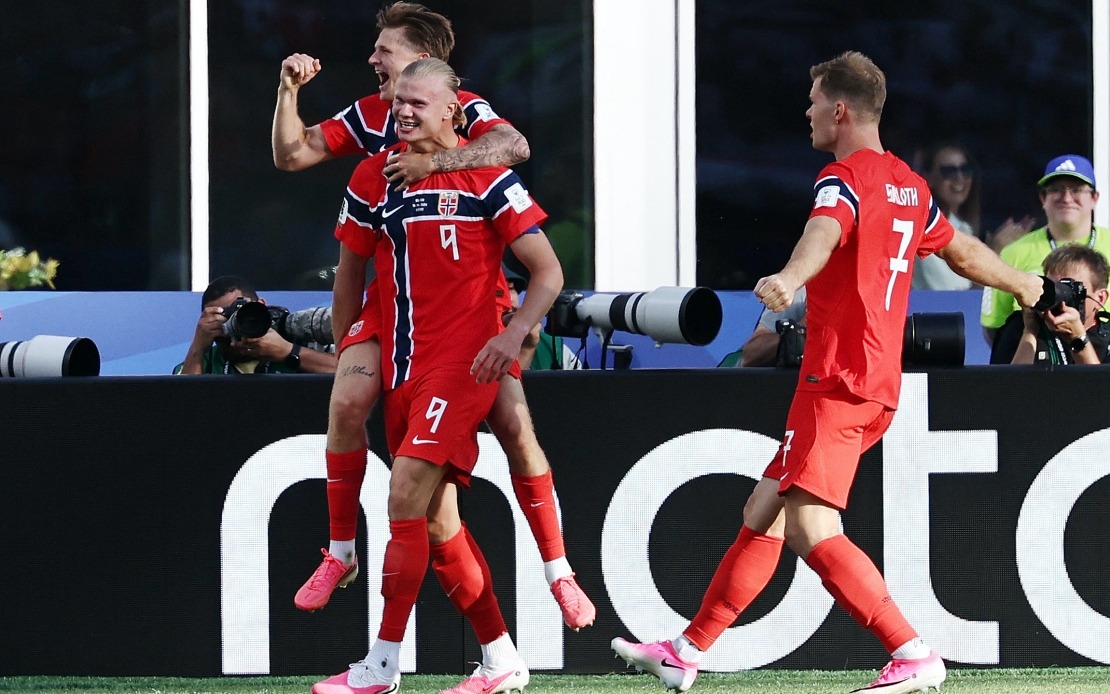
Norway's campaign at the World Cup has taken on a distinctly personal dimension, with three key players drawing inspiration and motivation from their fathers' participation in the tournament three decades earlier. Erling Haaland, Alexander Sørloth and Kristian Thorstvedt represent a rare convergence of football heritage and contemporary talent, each carrying the legacy of Alf-Inge "Alfie" Haaland, Gøran Sørloth and Erik Thorstvedt respectively, who represented their nation during the 1994 World Cup held in the United States.
The generational connection adds emotional resonance to Norway's competitive ambitions in the tournament. While the fathers' campaign ended disappointingly in the group stage three decades ago, their sons are positioned to achieve what their predecessors could not. This narrative of redemption and continuity resonates deeply within Norwegian football culture and provides the current squad with tangible motivation as they progress through their matches.
Norway commenced their tournament with a commanding performance, overwhelming Iraq 4-1 in their opening fixture. This emphatic victory established strong momentum and positioned the Scandinavian nation favourably within their group. The impressive start has validated the squad's technical capabilities and set the stage for what could become a deeper tournament run than the one experienced by the previous generation.
The immediate challenge presents itself against Senegal on Monday, a matchup that could prove decisive in determining whether Norway advances to the knockout rounds. A positive result would substantially bolster their progression prospects and allow them to approach their final group encounter from a position of strength. The convergence of these fixtures within a compressed timeframe means that the outcome of successive matches will largely determine whether Norway can surpass the historical ceiling established by their predecessors.
France represents the final opponent in Norway's group stage obligations, and facing one of the tournament's elite teams in a concluding match carries significant implications. Depending on results from the Senegal fixture and other concurrent matches, this encounter could prove academically important or potentially decisive in determining advancement scenarios. The scheduling creates a narrative arc that will test Norway's depth and resilience across the tournament's opening phase.
Haaland, Norway's preeminent talent, has become a focal point for the nation's World Cup aspirations. The Manchester City forward embodies the intersection of modern football excellence and family legacy, having pursued a similar professional trajectory to his father. When presented with archival photographs of his father from the 1994 tournament, Haaland expressed amusement at the generational contrast, noting his father's dramatically different appearance from that era, particularly remarking on his lengthy hair styling.
Beyond the headline star, Sørloth and Thorstvedt constitute integral components of Norway's tactical apparatus. Sørloth, who represents Atletico Madrid at club level, has articulated the profound personal significance of participating in a World Cup comparable to his father's experience. He has publicly credited his father with foundational football instruction, describing his participation as "simply great" and acknowledging the transmission of football knowledge across generations. His initial World Cup memories derive not from the 1994 tournament but from the 2002 edition staged in Japan and South Korea, which coincided with a family holiday in Denmark and created lasting impressions of watching the tournament alongside his father.
The contemporary squad benefits from institutional and cultural support extending beyond conventional football infrastructure. Royal patronage manifests through the expected attendance of hereditary Princess Ingrid Alexandra and Prince Sverre Magnus, the children of Crown Prince Haakon and Crown Princess Mette-Marit, at the Monday fixture in New Jersey. This level of royal engagement underscores the cultural significance attributed to Norway's tournament performance within the broader national consciousness.
Cultural expressions of support have transcended conventional boundaries, with Norwegian parliamentary members from across the political spectrum participating in vocal demonstrations of solidarity with the national team. These gestures, drawing upon Viking heritage motifs, illustrate the collective national investment in the squad's performance and reflect how international football tournaments mobilise expressions of national identity and unity across otherwise divided political constituencies.
For Malaysian and Southeast Asian observers, Norway's experience presents an instructive example of how familial continuity intersects with competitive football at the highest level. The personal narratives surrounding Haaland, Sørloth and Thorstvedt demonstrate that contemporary football success frequently connects to previous generational experiences and family transmission of sporting knowledge. The relationship between personal legacy and professional achievement resonates within Asian football contexts, where family involvement in player development similarly shapes career trajectories.
Norway's progression through the tournament will determine whether the sons' generation succeeds where their fathers' generation encountered disappointment. The narrative arc spans not merely tactical performance but also the intergenerational transmission of sporting aspiration and the possibility of historical redemption. As the Norwegian squad navigates subsequent matches, the symbolic weight of their fathers' unfulfilled ambitions provides psychological dimension to their competitive endeavours.
The broader significance extends to understanding how international football tournaments function as vehicles for exploring national identity, family legacy and generational continuity. Norway's particular circumstances illustrate these dynamics vividly, with three talented contemporary players consciously operating within the shadow and inspiration of their predecessors' experiences. Whether they ultimately transcend their fathers' tournament outcomes will constitute a defining narrative element for Norwegian football across the coming weeks.
%22%2F%3E%3C%2Fpattern%3E%3C%2Fdefs%3E%3Crect%20width%3D%22100%25%22%20height%3D%22100%25%22%20fill%3D%22url(%23ph20e1dg)%22%2F%3E%3Crect%20width%3D%22100%25%22%20height%3D%22100%25%22%20fill%3D%22url(%23ph20e1dp)%22%2F%3E%3Ctext%20x%3D%2250%25%22%20y%3D%2250%25%22%20text-anchor%3D%22middle%22%20dominant-baseline%3D%22central%22%20fill%3D%22rgba(255%2C255%2C255%2C0.95)%22%20font-family%3D%22Georgia%2C%20'Times%20New%20Roman'%2C%20serif%22%20font-weight%3D%22700%22%20font-size%3D%22272%22%20letter-spacing%3D%22-0.02em%22%3EMITRA%3C%2Ftext%3E%3C%2Fsvg%3E)
%22%2F%3E%3C%2Fpattern%3E%3C%2Fdefs%3E%3Crect%20width%3D%22100%25%22%20height%3D%22100%25%22%20fill%3D%22url(%23ph29qdrg)%22%2F%3E%3Crect%20width%3D%22100%25%22%20height%3D%22100%25%22%20fill%3D%22url(%23ph29qdrp)%22%2F%3E%3Ctext%20x%3D%2250%25%22%20y%3D%2250%25%22%20text-anchor%3D%22middle%22%20dominant-baseline%3D%22central%22%20fill%3D%22rgba(255%2C255%2C255%2C0.95)%22%20font-family%3D%22Georgia%2C%20'Times%20New%20Roman'%2C%20serif%22%20font-weight%3D%22700%22%20font-size%3D%22320%22%20letter-spacing%3D%22-0.02em%22%3ERim%3C%2Ftext%3E%3C%2Fsvg%3E)
%22%2F%3E%3C%2Fpattern%3E%3C%2Fdefs%3E%3Crect%20width%3D%22100%25%22%20height%3D%22100%25%22%20fill%3D%22url(%23phnm1xg)%22%2F%3E%3Crect%20width%3D%22100%25%22%20height%3D%22100%25%22%20fill%3D%22url(%23phnm1xp)%22%2F%3E%3Ctext%20x%3D%2250%25%22%20y%3D%2250%25%22%20text-anchor%3D%22middle%22%20dominant-baseline%3D%22central%22%20fill%3D%22rgba(255%2C255%2C255%2C0.95)%22%20font-family%3D%22Georgia%2C%20'Times%20New%20Roman'%2C%20serif%22%20font-weight%3D%22700%22%20font-size%3D%22320%22%20letter-spacing%3D%22-0.02em%22%3EPM%3C%2Ftext%3E%3C%2Fsvg%3E)