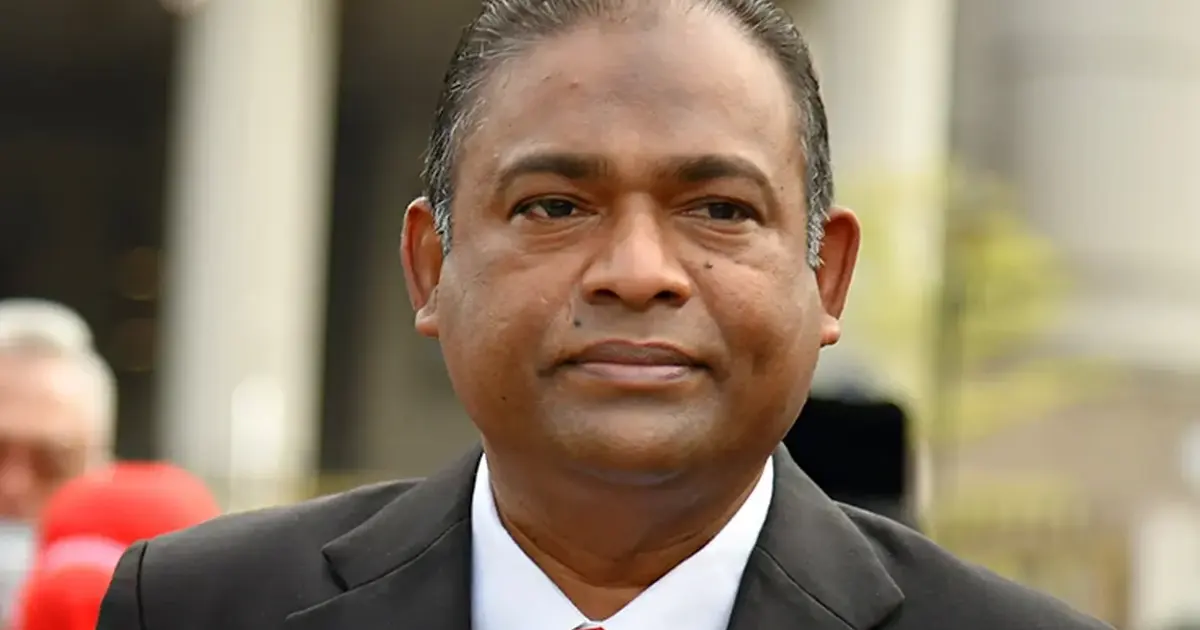
The family of former Tabung Haji chairman Abdul Azeez Abdul Rahim moved swiftly to quash rumours of his arrest on Wednesday, with his son publicly denying that the former Baling MP had been taken into custody by the Malaysian Anti-Corruption Commission. The clarification came after speculation rippled across social media platforms throughout the preceding night, as unsubstantiated claims gained traction among online users discussing the high-profile figure's status.
The rapid spread of unverified information on social media underscores a persistent challenge in Malaysia's information landscape, where allegations involving political figures and institutional corruption can escalate quickly without credible sourcing or official confirmation. In an environment where scepticism of official institutions remains prevalent, such narratives can gain considerable momentum before being formally addressed by those directly affected. The incident highlights the vulnerability of public figures to reputational damage caused by viral misinformation, regardless of its accuracy.
Abdul Azeez Abdul Rahim's tenure as chairman of Tabung Haji, the government-linked Islamic pilgrimage savings institution, places him at the intersection of religious affairs and financial management in Malaysia. The role carries significant public scrutiny given the fund's importance to Muslim Malaysian savers preparing for the Hajj pilgrimage. Any investigation into the conduct of individuals holding such positions would naturally attract heightened media attention and public concern, making timely clarifications from families or official sources critical in preventing narrative distortion.
The absence of official statement from the Malaysian Anti-Corruption Commission at the time speculation emerged created an information vacuum that social media users quickly filled with conjecture. In previous cases involving high-profile Malaysians and anti-corruption investigations, delays in official communication have frequently allowed inaccurate narratives to take root in public consciousness. The MACC's communication protocols during active investigations often prioritize confidentiality, but this procedural stance can paradoxically enable the spread of unverified claims in the interim.
The former Baling MP's prominence in Malaysian politics, combined with his leadership of a major Islamic institution, makes him a figure of interest not merely to financial watchdogs but also to the broader public concerned with governance standards. Previous controversies surrounding Tabung Haji's management and investment decisions have maintained institutional scrutiny over several years, creating a backdrop against which allegations involving its leadership carry implicit credibility among some observers, particularly those already predisposed to distrust official institutions.
Social media's architecture, designed to reward engagement and rapid sharing, creates perverse incentives for sensational claims to proliferate faster than corrections. A single false allegation about an arrest can reach tens of thousands of Malaysian users within hours, while subsequent denials often struggle to achieve equivalent reach. This asymmetry in information diffusion has become a recognized challenge for public figures seeking to manage their reputations in the digital age, particularly in Southeast Asia where social media penetration remains exceptionally high.
The timing of the rumour—emerging overnight and spreading before official responses could be formulated—reflects patterns commonly observed in Malaysian political discourse. Weekend or off-hours allegations allow speculation to build momentum before institutions like the MACC can issue clarifications during regular business operations. This temporal dimension of misinformation spread has real consequences for the individuals targeted, regardless of ultimate verification of claims.
For Tabung Haji specifically, the circulation of unsubstantiated arrest claims involving a former chairman carries implications beyond a single individual. The institution's public standing and the confidence of its members—primarily Muslim Malaysians with substantial savings invested in pilgrimage funds—depends partly on perceptions of institutional integrity and leadership credibility. Rumours about leadership arrests, even when false, can create anxiety among stakeholders concerned about their investments' security and management quality.
The son's public denial represents a necessary step in damage control, yet its effectiveness depends on media coverage and social media users' willingness to accept the clarification. In polarized information environments, families of public figures often find that direct denials lack persuasive force with audiences predisposed to believe allegations, particularly where institutional distrust runs high. The burden of proof effectively shifts onto the accused rather than onto those making claims, reversing conventional standards of evidence.
This incident contributes to an emerging pattern in Malaysian public discourse where unverified allegations achieve widespread circulation before verification mechanisms can function effectively. The proliferation of such incidents raises questions about the sustainability of public trust in institutions and information sources when misinformation can move faster than corrections. For policymakers and institutional leaders, the challenge becomes developing communication strategies that can compete effectively with viral misinformation while maintaining the confidentiality necessary for ongoing investigations or sensitive matters.

