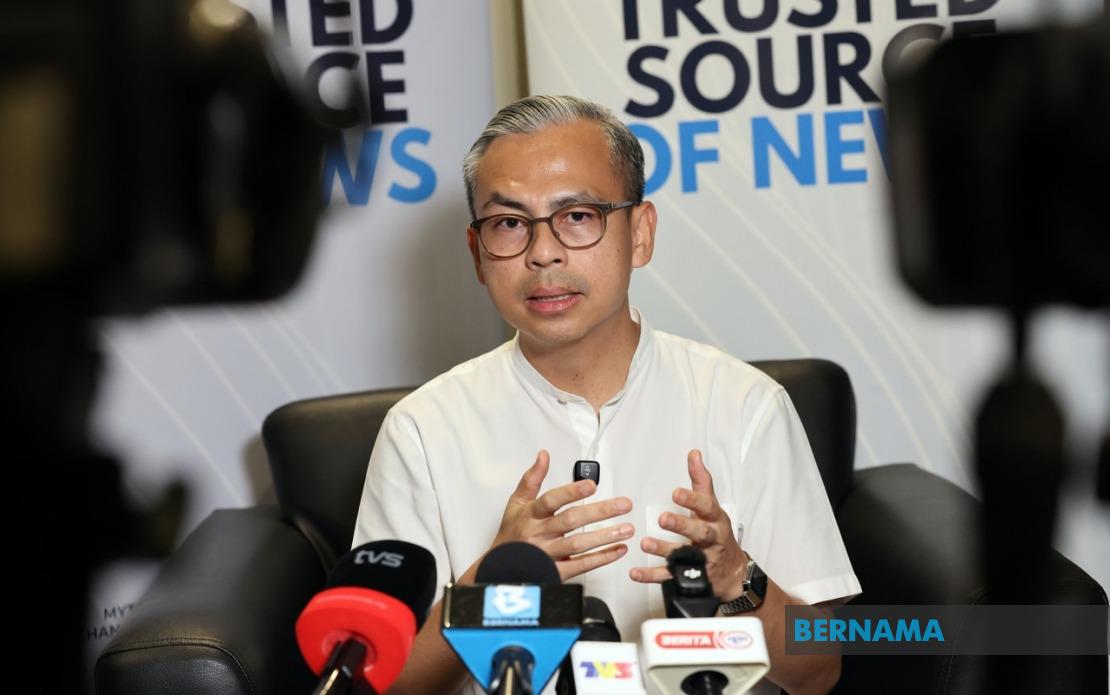
Communications Minister Datuk Fahmi Fadzil has urged social media platform operators to take a more aggressive stance in combating false information surrounding the 16th Johor state election, with particular concern centred on polling day. Speaking after inspecting the Malaysian National News Agency operations centre in Johor Bahru on July 7, Fahmi stressed the need for heightened vigilance and faster response times from digital platforms, especially during the critical hours when results are being announced and reported.
While acknowledging that major social media platforms maintain explicit policies prohibiting the dissemination of disinformation, Fahmi highlighted that the enforcement mechanisms remain inadequate for the scale and speed of the challenge. The minister expressed particular anxiety regarding the potential for misleading content about election results or constituency winners to circulate on polling night itself, creating confusion and undermining public confidence in the electoral process. Such scenarios could prove especially damaging in a closely contested election where false early results might influence voter behaviour or sow doubts about outcome legitimacy.
The government's concern reflects broader regional anxieties about electoral integrity in the digital age. Election-related misinformation has emerged as a significant threat across Southeast Asia, with instances in neighbouring countries demonstrating how rapidly fabricated claims can spread and potentially affect electoral outcomes or post-election stability. For Malaysia, where social media penetration remains exceptionally high and digital fluency is widespread, the risks are particularly acute. The speed at which unverified content travels through messaging applications and social platforms means traditional fact-checking mechanisms often lag behind viral falsehoods.
Fahmi called for enhanced cooperation between platform providers and the Malaysian Communications and Multimedia Commission (MCMC) to develop more robust counter-misinformation frameworks. The MCMC and Malaysian Media Council have previously signalled willingness to collaborate in tackling false information, particularly incidents involving the misuse of established media logos to create convincing but entirely fabricated graphics. Such synthetic media poses a particular challenge because the professional presentation lends false credibility to the disinformation, making it more likely to deceive voters.
However, the minister identified a critical distinction between two categories of misinformation requiring different interventions. One layer comprises content created through technical manipulation—fake screenshots, altered logos, and digitally falsified graphics. The second, and arguably more challenging category, consists of organically created user-generated content, encompassing both visual materials and textual claims that contain electoral falsehoods. This user-generated dimension extends beyond technical manipulation to encompass deliberate political disinformation campaigns, rumour-spreading, and the amplification of partially true but misleading narratives. Addressing this second category requires platform algorithms to identify and de-amplify potentially false claims rather than simply removing them, a more nuanced approach than outright deletion.
To date, the MCMC has not recorded formal complaints regarding social media campaign misconduct in the Johor election, though the absence of official complaints does not necessarily indicate an absence of problematic content. Many voters may not formally report misinformation they encounter, instead sharing concerns through personal networks or simply internalizing doubts about claim accuracy. Additionally, some misinformation may circulate within private messaging groups rather than on publicly visible platform feeds, making detection and enforcement more difficult.
Beyond the misinformation challenge, Fahmi outlined the government's electoral strategy in the final campaign week, emphasising efforts to mobilise outstation voters—Johoreans working or studying elsewhere who must return home to participate. This demographic has become increasingly important in Malaysian elections as rural-to-urban migration and interstate employment have accelerated. Public transport operators have reportedly responded to government initiatives by offering special packages and enhanced services to facilitate voter return, signalling recognition of this cohort's significance.
The government has taken additional steps to enable voting participation, including granting leave to students from the Youth and Sports Skills Training Institute (ILKBS) to return to their constituencies. Fahmi appealed to employers, particularly within high-employment sectors such as retail and food and beverage establishments, to demonstrate flexibility in allowing workers to take time off for voting. This appeal reflects awareness that Saturday voting may conflict with commercial operations in sectors with predominantly young, employed workforces.
Fahmi expressed hope that voter turnout would exceed 60 percent, framing electoral participation as both a civic duty and an opportunity for Johoreans to shape the state's direction for the subsequent four to five years. The ministry is reportedly encouraging parents to actively persuade adult children living outside Johor to return home specifically for voting, positioning participation as an expression of Johorean identity and investment in the state's future. This familial mobilisation strategy recognises that personal encouragement from trusted sources often proves more effective than institutional appeals.
Pakatan Harapan (PH) leadership has expressed confidence in its electoral prospects, attributing this partly to positive public reception of party campaign messaging and initiatives. The coalition's confidence reflects assessments of voter sentiment and organisational readiness, though Malaysian electoral outcomes have repeatedly surprised political analysts. The evolution of Johor's political alignment remains fluid, with shifting coalitions and voter preferences creating genuine competitive uncertainty.
The minister's statements underscore the contemporary political reality that electoral integrity now extends beyond traditional concerns about voting procedures and fraud to encompass information ecosystems and digital platforms. As Southeast Asian societies become increasingly digitally interconnected, the capacity of false narratives to propagate instantaneously creates novel challenges for election management and democratic integrity. Malaysia's experience during this Johor election will likely inform approach to future elections across the region, establishing precedents for platform accountability and government-industry cooperation in protecting electoral processes from digital-age threats.

