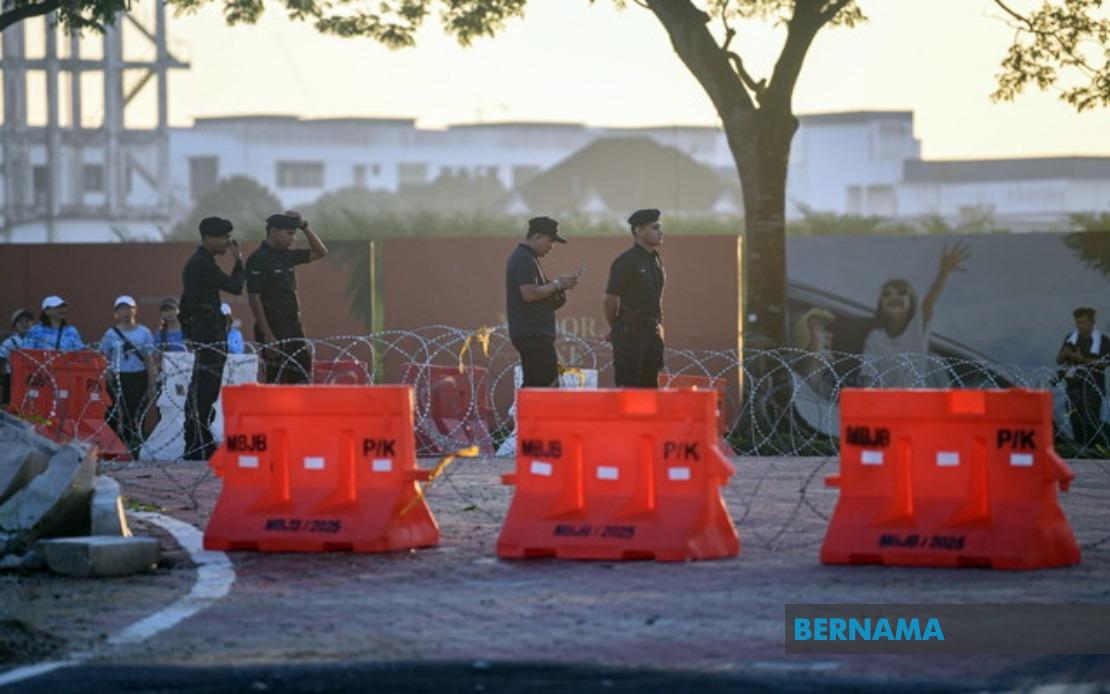
The electoral machinery in Johor moved into high gear on June 27 as nomination papers began flowing into 56 polling centres distributed across the state, setting in motion the formal campaign for the 16th Johor State Election. Clean skies and dry conditions throughout much of the morning provided an auspicious backdrop for what proved to be a largely incident-free day, with Election Commission officials and security personnel working in concert to maintain orderly queues and smooth document processing from the opening window at 9am through to 10am.
The coordinated security presence across all nomination centres underscored the electoral commission's determination to protect the integrity of the process, with uniformed personnel positioned strategically to manage foot traffic and prevent disruptions. This layered approach to maintaining decorum reflected lessons learned from past electoral contests and demonstrated the institutional readiness of Malaysian electoral administrators to oversee a substantial democratic exercise.
Party activists and grassroots supporters demonstrated their enthusiasm by gathering at several locations as early as 7.30am, creating a visible show of backing for their respective contenders even before the official nomination window commenced. These early arrivals painted a picture of genuine engagement with the electoral process, though the overall atmosphere remained disciplined and peaceful throughout the day.
The meteorological outlook provided by Malaysia's weather forecasters anticipated predominantly dry conditions across most districts during the morning hours, though afternoon thunderstorms were anticipated in scattered pockets of the state. Such seasonal weather patterns are routine for Johor's maritime climate, and election officials had already incorporated weather contingencies into their operational planning.
The magnitude of this electoral contest cannot be understated within the Malaysian political landscape. The Johor State Legislative Assembly comprises 56 seats, making this the substantive body responsible for directing policy and governance across one of the country's most economically significant states. The decision to dissolve the legislature on June 1 initiated a formal timeline that culminated in this nomination day, with early voting scheduled for July 7 and the main polling exercise fixed for July 11.
The electoral register itself reflects the demographic scale of democratic participation in Johor. Election Commission data documented a total of 2,727,926 registered voters, comprising 2,703,175 ordinary citizens eligible to vote, supplemented by 12,041 military personnel and their spouses, and 12,710 police personnel and their spouses. This composition underscores the breadth of the franchise extended throughout the state, spanning civilian, military, and law enforcement communities.
For Malaysian observers and political analysts tracking developments in peninsular politics, the Johor contest carries implications extending well beyond state boundaries. As the federation's southern economic engine and a bellwether for broader political sentiment, electoral outcomes in Johor frequently presage shifts in national political alignments. The nomination day proceedings, conducted methodically and without significant friction, suggested that the contest itself would unfold along predictable institutional lines, allowing voters across the state to make their choices in an environment of relative normalcy.
The Election Commission's operational competence on display during nomination day reflects years of institutional experience managing electoral processes across diverse terrains and demographic contexts. The distribution of 56 nomination centres across Johor's geographic expanse—from urban Johor Bahru to rural interior districts—represented careful logistical planning designed to ensure equitable access for candidates and voters alike. This decentralized approach has become standard practice in major Malaysian electoral exercises, reducing congestion and enhancing the quality of administrative service delivery.
Looking toward the campaign period stretching from late June through early July, political parties and independent contenders will now leverage the formal nomination of their candidates to mobilize supporters and articulate competing visions for Johor's future. The orderliness witnessed on nomination day provided a solid institutional foundation upon which the subsequent campaign narrative would be constructed, demonstrating that Malaysia's electoral machinery remains capable of managing large-scale democratic exercises with minimal disruption to public order.

