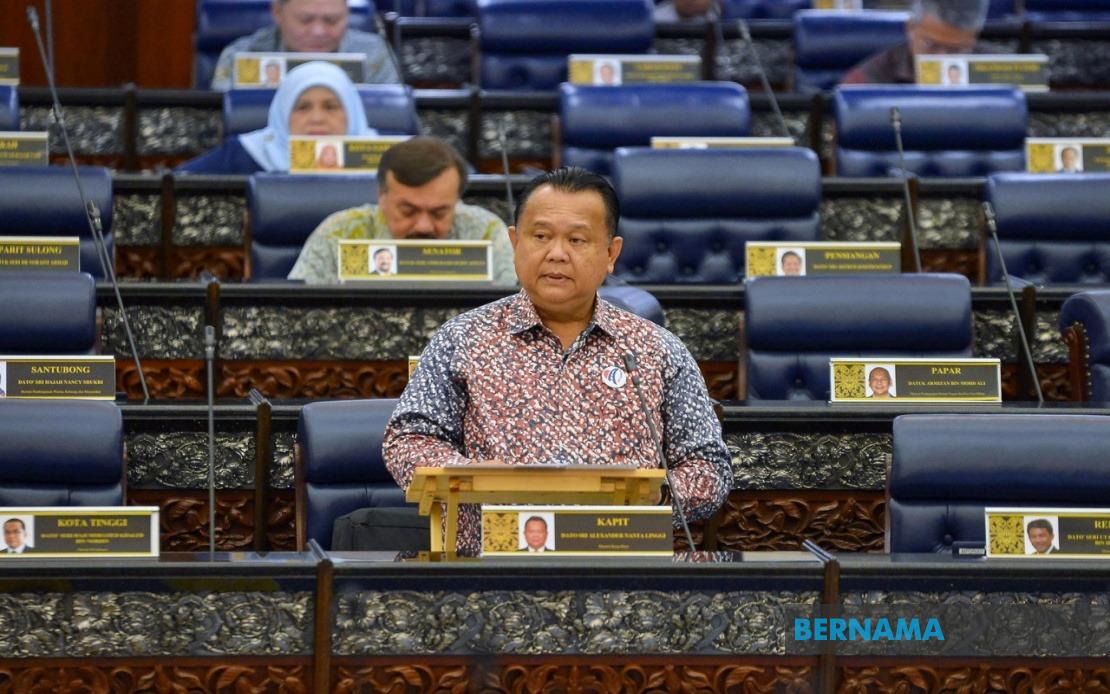
Works Minister Datuk Seri Alexander Nanta Linggi has provided significant validation for Malaysia's Smart Lane initiative, announcing that the traffic management system has successfully reduced congestion by between 30 and 50 per cent across multiple stretches of the North-South Expressway since its introduction in 2023. Speaking during parliamentary question-and-answer proceedings, the minister highlighted concrete evidence from the Malaysian Highway Authority that demonstrates the programme's effectiveness in managing peak-hour traffic flows and alleviating bottlenecks during festive periods when road usage typically spikes.
The Smart Lane system represents an increasingly critical infrastructure innovation for a nation grappling with rising vehicle numbers and urbanisation pressures. As Malaysia's automotive ownership continues its upward trajectory, particularly in the Klang Valley and other metropolitan corridors, conventional highway management approaches have struggled to accommodate demand. The North-South Expressway, which stretches over 650 kilometres and serves as a crucial artery linking Bukit Kayu Hitam in Kedah to Johor Bahru, experiences particularly acute congestion during school holidays and public holidays. The Smart Lane intervention therefore addresses a genuine bottleneck affecting millions of motorists annually and carrying significant economic implications for goods transport and business productivity.
Nanta emphasised that the initiative transcends mere congestion reduction by delivering measurable safety improvements across participating highway sections. Data compiled by the Malaysian Highway Authority from January through May 2024 recorded only 36 accident incidents at twelve Smart Lane locations during weekday operations, a figure that becomes more striking when contextualised against total traffic volumes along these routes. This accident density represents a notably lower proportion than comparable conventional lane segments, suggesting that the controlled environment and specific operational protocols inherent to Smart Lane systems genuinely enhance road safety outcomes rather than merely displacing risk elsewhere.
The minister's response directly addressed concerns raised by Zakri Hassan, a Perikatan Nasional representative from Kangar, regarding motorcyclist safety within shared-lane environments. Such parliamentary scrutiny reflects legitimate public anxiety, given that Malaysian roads disproportionately claim motorcycle riders' lives compared with four-wheeled vehicle occupants. However, Smart Lane data indicates that riders exercise heightened caution when negotiating shared spaces, producing fewer incidents than on conventional routes. This behavioural adaptation suggests that Malaysian motorcyclists possess situational awareness sufficient to modify riding patterns when infrastructure demands greater attention, a finding that contradicts assumptions that shared-lane systems invariably compromise vulnerable road user safety.
Accident analysis within Smart Lane zones reveals that human behaviour rather than systemic design flaws drives the majority of collisions. Investigators documented that primary causative factors include non-compliance with posted safety protocols, such as unauthorised emergency lane usage immediately before or after Smart Lane sections, abrupt lane changes executed without adequate warning, and vehicle immobilisation without legitimate justification. These findings suggest that further safety gains remain achievable through targeted driver education and enhanced enforcement of existing regulations rather than fundamental system redesign. The identification of behaviour-centric rather than technology-centric root causes provides a more optimistic prognosis for continued programme expansion.
To sustain safety assurance as Smart Lane coverage expands across the PLUS network, the Malaysian Highway Authority has mandated independent road safety auditing protocols. Concessionaires operating designated expressway sections must now commission comprehensive stage-five road safety audits at five-yearly intervals, comprehensive evaluations that examine Smart Lane implementation from multiple perspectives rather than restricting scrutiny to motorcyclist vulnerabilities alone. This systematic approach ensures that safety improvements remain evidence-driven and responsive to evolving traffic patterns, rather than relying upon reactive incident investigation after accidents occur. The audit framework thereby institutionalises continuous improvement cycles that should progressively enhance highway safety outcomes.
Beyond traditional monitoring, highway authorities are deploying advanced surveillance infrastructure to optimise real-time traffic coordination. Both KKR and the Malaysian Highway Authority are currently expanding their closed-circuit television networks with integrated artificial intelligence capabilities, enabling automated detection of traffic density fluctuations and dynamic lane assignment protocols. These technological enhancements transform highways from static infrastructure into responsive systems that adapt to immediate demand conditions, representing a significant evolution from conventional traffic management approaches that typically respond to congestion retrospectively rather than anticipating and preventing it. For Malaysian motorists, these investments promise progressively smoother journeys as algorithms become increasingly sophisticated at predicting congestion formation.
The Smart Lane initiative holds particular significance for Malaysia's transport policy objectives and regional competitiveness. As Southeast Asian economies intensify competition for manufacturing investment and regional logistics hubs, highway infrastructure efficiency becomes a tangible factor influencing location decisions by multinational corporations and supply chain operators. Thailand, Indonesia, and Vietnam are simultaneously investing in intelligent transport systems, meaning Malaysia cannot afford complacency regarding highway modernisation. The demonstrated success of Smart Lane positioning Malaysia as a Southeast Asian leader in practical infrastructure innovation, potentially attracting foreign interest in the nation's transportation networks and technical expertise.
For the broader Malaysian public, Smart Lane expansion carries immediate practical implications. Commuters on the North-South Expressway corridor, which encompasses major population centres and industrial zones across Selangor, Perak, Pahang, Negeri Sembilan, Melaka, and Johor, stand to experience meaningfully reduced travel times during peak periods. This translates into tangible quality-of-life improvements, reduced vehicle operating costs from decreased idling, and lower emissions from more efficient traffic flows. Small and medium enterprises dependent upon rapid goods transportation similarly benefit from more predictable journey times that enhance supply chain reliability. The cumulative economic benefits across the nation likely far exceed the infrastructure investment required.
Looking forward, the demonstrated success of Smart Lane on PLUS highways establishes a compelling case for expansion to other congested expressway networks. The East Coast Expressway, Middle Ring Road 2, and other major routes experience comparable congestion challenges, suggesting that similar interventions could yield comparable benefits. However, sustained political commitment remains essential, as long-term infrastructure modernisation programmes require consistent funding across electoral cycles and changes in government. The minister's parliamentary disclosure of Smart Lane's quantified performance metrics signals commitment to evidence-based policy that could encourage cross-party support for expanded implementation.
The Smart Lane initiative ultimately exemplifies how technological sophistication, operational discipline, and safety vigilance can combine to resolve infrastructural challenges that previously appeared intractable. As Malaysian roads continue accommodating growing vehicle numbers, systems like Smart Lane offer practical pathways toward maintaining mobility without proportionally expanding land consumption for new highways. For a nation constrained by geographic and budgetary limitations, maximising existing infrastructure efficiency through intelligent management represents not merely an option but an imperative for sustainable economic development.

