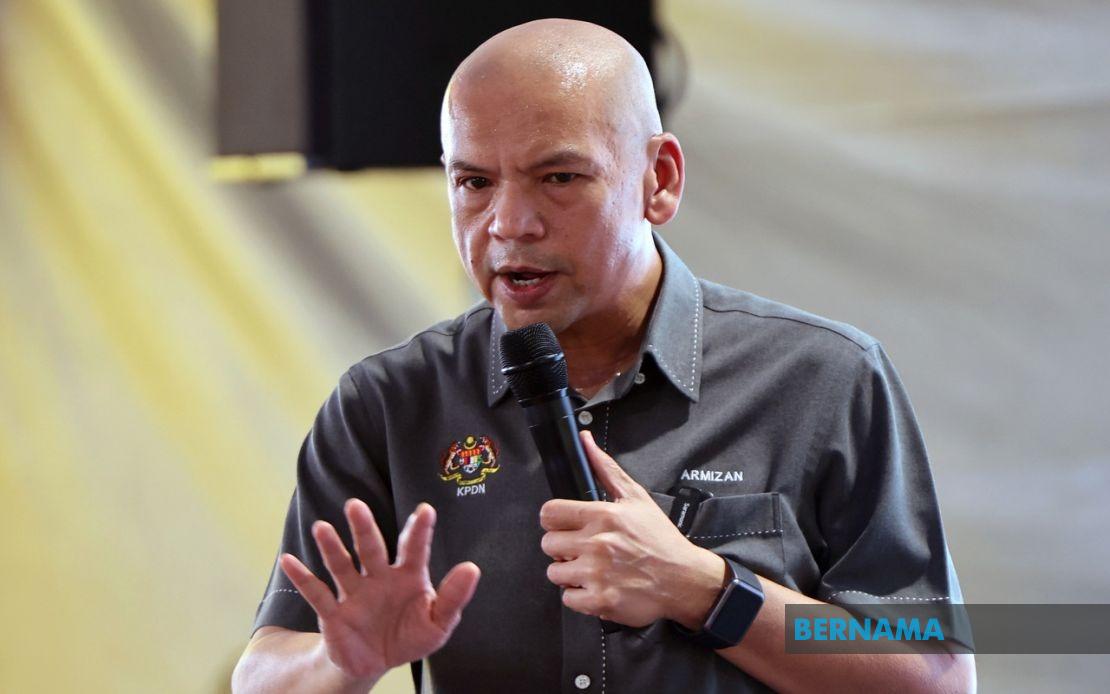
The Malaysian government has introduced a fresh layer of support for small businesses struggling with rising operating costs, allocating 300 litres of subsidised diesel per month to companies and local contractors through fleet card arrangements. The move, announced by Domestic Trade and Cost of Living Minister Datuk Armizan Mohd Ali in Kota Kinabalu, represents an effort to extend the benefits of the targeted diesel subsidy programme beyond its original scope. Since the initiative took effect on July 1 in Sabah, Sarawak, and Labuan, policymakers recognised that many micro-entrepreneurs faced barriers to accessing assistance under existing frameworks, prompting cabinet approval for this expanded intervention.
The scheme specifically targets diesel vehicles registered under partnership companies or sole proprietorships nationwide for business purposes, addressing a gap in the original Subsidised Diesel Control System (SKDS). The existing framework concentrated support on two primary transport sectors: public transport operators and logistics companies involved in moving essential goods and consumer necessities. However, Armizan highlighted that countless small enterprises fell outside these designated categories, forcing many business owners to absorb higher fuel costs that directly eroded their already thin profit margins. By establishing this separate allocation, the government acknowledges the economic reality facing Malaysia's vast informal and semi-formal business sector, which forms the backbone of countless rural and suburban communities.
The monthly quota of 300 litres per business entity represents a carefully calibrated response to competing policy pressures. Government officials must balance genuine assistance to struggling enterprises against the persistent risk of subsidy leakage, where fuel intended for legitimate business use is diverted to black markets or personal consumption. Armizan explicitly framed the government's approach around three pillars: managing the cost burden on citizens, controlling leakage through robust oversight mechanisms, and protecting the federal budget from unsustainable fiscal commitments. This triangular framework reveals the tension inherent in any subsidy programme—policymakers simultaneously aim to help businesses, prevent fraud, and maintain macroeconomic discipline.
Implementation of the expanded scheme will rely heavily on state-level coordination in Sabah and Sarawak, particularly in interior regions where geographic isolation and limited infrastructure complicate registration and verification processes. State agencies will be mobilised to register eligible businesses and confirm that applicants genuinely meet programme criteria, an important safeguard given Malaysia's past experience with subsidy abuse. The decentralised approach acknowledges that district administrators and community leaders possess on-the-ground knowledge essential for identifying legitimate small operators. For Malaysian readers in rural areas, this signals government recognition that support must reach beyond major urban centres where formal business structures predominate.
The announcement came during Armizan's visit to Kampung Sekalong in Menumbok, where he launched the MADANI Foster Village Project, a complementary initiative addressing infrastructure deficits in underserved communities. This village received RM500,000 in allocated funding for five development projects spanning a multi-purpose hall, road upgrades, culvert construction and repair, solar lighting installation, and a community landmark. The ministry expects these improvements to be completed within two to three months, providing residents with tangible amenities that facilitate economic activity and quality of life improvements. Armizan positioned these projects as part of a broader government strategy to narrow development gaps between urban and rural areas.
The MADANI Foster Village Programme reflects a holistic approach to rural development, bundling basic infrastructure improvements with economic support measures like the diesel subsidy. Such integrated strategies acknowledge that businesses cannot thrive without reliable roads, electricity, and water supply. By pairing fuel assistance with infrastructure investment, the government attempts to create environments where small enterprises can flourish. For Malaysia's rural population, these interventions represent tangible policy efforts to address longstanding regional disparities that have concentrated economic opportunity in metropolitan areas.
The targeted subsidy programme itself represents a significant departure from Malaysia's historical fuel subsidy model, which provided blanket support to all consumers regardless of income or need. Under the traditional system, affluent households and inefficient industries benefited equally with genuinely struggling families, distorting prices and encouraging waste. The shift toward targeted assistance aims to concentrate government resources on those facing genuine hardship, reducing fiscal drain while potentially improving economic efficiency. However, implementing such selectivity requires robust administrative capacity and careful design to avoid unintended exclusions or perverse incentives.
For small business operators across Malaysia, the 300-litre monthly allocation creates predictability that enables basic planning. Contractors and entrepreneurs can now anticipate a baseline fuel cost through the subsidy mechanism, though they must source additional quantities at market rates. This hybrid approach balances support without creating dependency or removing price signals entirely. Businesses lacking access to the subsidy remain incentivised to operate efficiently and seek competitive fuel suppliers, while recipients gain meaningful but finite assistance with their single largest variable cost.
The scheme's nationwide scope, despite being administered initially in three states, suggests the government envisions eventual expansion if the system proves effective and sustainable. By establishing the mechanism now in Sabah, Sarawak, and Labuan, officials can monitor implementation challenges, identify leakage risks, and refine administrative procedures before potentially scaling upward. This measured rollout approach represents pragmatic policy management, allowing iterative improvement rather than attempting simultaneous national deployment that might overwhelm regulatory capacity. For Malaysian businesspeople contemplating the programme's durability, this gradual expansion pathway suggests government commitment to the initiative.
Armizan's emphasis on remaining open to further improvements signals that this is not a final policy formulation but rather an evolving response to real-world conditions. As businesses register and utilise their allocations, officials will accumulate data about uptake patterns, leakage rates, and regional variations that should inform refinements. This adaptive stance reflects mature policy management where officials acknowledge that initial designs rarely prove perfect and that evidence gathered through implementation should shape future iterations. For Malaysian companies seeking support, this responsiveness offers hope that genuine operational difficulties will prompt policy adjustments.
The expansion of diesel subsidy access to small companies represents a policy acknowledgment that Malaysia's cost-of-living challenges extend beyond individual households to encompass micro-enterprises employing millions. By targeting this constituency specifically, the government attempts to prevent subsidy costs from cascading upward as businesses pass fuel expenses onto consumers through higher prices for goods and services. This indirect approach to consumer relief acknowledges that many of the products and services Malaysians depend on daily depend on the viability of small transport and service operators. In this sense, the programme aims to stabilise costs across the economy rather than merely providing direct welfare payments.
The initiative's emphasis on companies rather than individuals represents a deliberate policy choice reflecting economic realities. Many Malaysian entrepreneurs operate through formal business structures specifically to access government programmes, tax incentives, and banking facilities. By accommodating partnership companies and sole proprietorships, the subsidy scheme recognises the diversity of Malaysia's business landscape. The previous focus on individual applicants inadvertently favoured employees of large organisations over business owners, a distributional choice that raised fairness concerns. The revised approach attempts to level this playing field while maintaining programme integrity through verification mechanisms.
Looking ahead, the success of this expanded scheme will depend critically on administrative execution. Even well-intentioned programmes fail when implementation falters through insufficient staffing, unclear procedures, or inadequate coordination between federal and state authorities. The government's commitment to mobilising state-level agencies suggests awareness of these execution risks. As the programme operates through the remainder of 2024 and beyond, monitoring fuel allocation patterns and conducting periodic audits will provide evidence about whether the scheme is reaching intended beneficiaries while preventing diversion. For Malaysian stakeholders, the coming months will reveal whether this carefully designed intervention translates into genuine relief for struggling small businesses.

