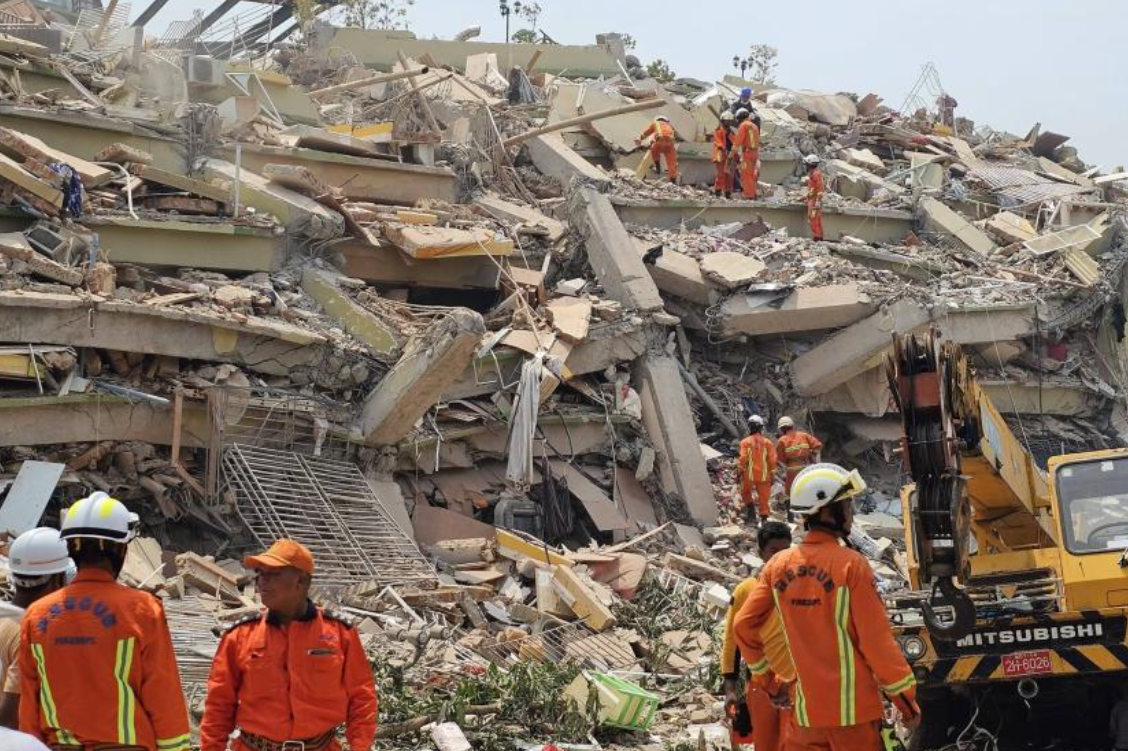
The owner of Sky Villa Condominium, whose structural failure during a devastating Mandalay earthquake resulted in more than 200 deaths, has been convicted and sentenced to five years of hard labour by the Aungmyaythazan Township Court. The case represents a significant legal reckoning in Myanmar's ongoing earthquake recovery, as authorities pursue accountability for the collapse of one of the disaster's deadliest structures.
U Naing Htun Lin faced charges under Section 304-A of the Penal Code, which addresses death caused by negligence. His trial commenced in mid-February at Aungmyaythazan Township Court, initially proceeding while he remained free on bail. However, circumstances changed substantially on March 17 when the court revoked his bail conditions and remanded him into custody to await the verdict. This reversal underscored the severity with which authorities viewed the case as evidence accumulated.
The judicial process reflects Myanmar's legal framework for accountability in construction-related disasters. The case was originally filed by U Zaw Moe Aung, a staff officer from the Special Investigation Department, who acted as the plaintiff throughout proceedings. The investigation centred on whether structural deficiencies or inadequate construction practices contributed to the condominium's failure when seismic forces struck the city. The conviction ultimately rested on establishing a causal link between the defendant's actions or omissions and the mass casualties.
On June 23, the court delivered its verdict, imposing the five-year sentence with hard labour provisions. The judgment, however, has not concluded the legal saga surrounding this disaster. Both prosecution and defence teams are pursuing appeals and revision proceedings, suggesting deep disagreement about either the conviction itself or the severity of the punishment. Additionally, the Aungmyaythazan District Court has initiated a criminal revision process, requesting the full case file for higher-level review, indicating that jurisdictional considerations or procedural questions may yet reshape the legal outcome.
The Sky Villa Condominium, an 11-storey residential structure situated between 21st and 22nd Streets on 60th Street in Aungmyaythazan Township, became emblematic of the earthquake's destructive power. Its collapse was particularly catastrophic, with recovery teams extracting over 200 bodies from the rubble. This casualty toll placed Sky Villa among the single most devastating building failures attributable to the earthquake, making it a focal point for disaster analysis and construction safety debates throughout Myanmar and the wider region.
The building was constructed by NTL Construction Company, which is managed by U Naing Htun Lin. The involvement of the developer's own company in the construction raises questions about responsibility chains within Myanmar's construction industry, where oversight mechanisms and enforcement of building codes have historically been inconsistent. The conviction of the owner himself, rather than merely corporate entities, signals a willingness by courts to pursue individual liability in such cases.
Beyond the criminal proceedings, U Naing Htun Lin's family has undertaken public attempts to address grievances of the affected community. Daw Thet Thet Khine, the owner's wife and managing director of NTL Construction Company, coordinated three separate commemorative ceremonies held at a monastery pavilion on 19th Street. These gatherings served dual purposes: acknowledging suffering and extending financial compensation to bereaved families, with each family receiving 10 million kyats per deceased relative. While such gestures may ease some victims' immediate hardship, they neither reverse criminal culpability nor address systemic failures that permitted the building to collapse catastrophically.
The sentence carries implications for construction accountability across Myanmar and Southeast Asia more broadly. Criminal conviction of a developer highlights growing judicial willingness to impose personal consequences for structural failures, a trend that contrasts with historical patterns where corporate shields often insulated individual decision-makers from prosecution. For Malaysian readers familiar with their own building safety regulatory frameworks, the Mandalay case illustrates both the consequences of inadequate construction standards and the potential for criminal liability when such standards are breached fatally.
The ongoing appeals and revision proceedings ensure that this case will remain active within Myanmar's legal system for months or potentially years ahead. Higher courts may modify the sentence, affirm it, or in rare instances overturn the conviction entirely if procedural irregularities emerge. The uncertainty underscores challenges within Myanmar's judicial system, where political transitions and institutional rebuilding have sometimes complicated consistency and predictability of legal outcomes. For foreign investors and regional developers monitoring Myanmar's investment climate, the case represents both accountability and unpredictability in how courts will ultimately resolve major construction liability disputes.
The earthquake itself exposed vulnerabilities in Myanmar's building stock and regulatory oversight. While natural disasters cannot be prevented, catastrophic collapses frequently reflect preventable human factors: substandard materials, inadequate design, insufficient structural reinforcement, or circumvented safety protocols. The conviction of U Naing Htun Lin, therefore, serves as both specific punishment and broader signal that developers cannot entirely escape consequences when their projects fail with massive loss of life. Whether this judicial message translates into systemic improvements in construction practices, regulatory enforcement, and structural resilience across Myanmar remains uncertain but represents the case's potential longer-term significance for regional development practices.

