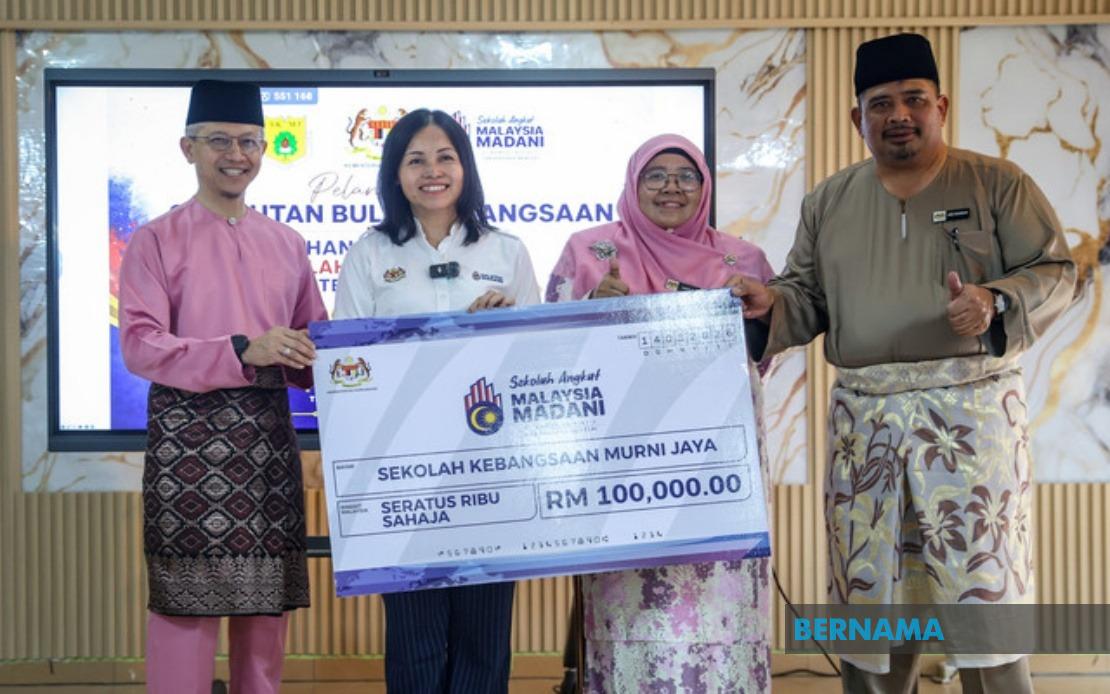
SK Murni Jaya in the Kulai district has become the recipient of RM100,000 in development funding through the Ministry of Communications' MADANI Adopted School programme, marking a significant investment in the institution's infrastructure and educational resources. The allocation, presented during a formal handover ceremony held at the school in Layang-Layang on August 14, represents the government's commitment to enhancing learning environments across Malaysian primary schools and bridging gaps in technological access within the education system.
Deputy Communications Minister Teo Nie Ching outlined the comprehensive nature of the improvements set to take place at the institution. The funding allocation encompasses multiple dimensions of school modernisation, addressing both physical infrastructure and digital learning capabilities. Four new school signboards will enhance the institution's visual identity and wayfinding, while the addition of two Smartboards destined for the school hall and resource centre will introduce interactive teaching technologies that can engage students more effectively than traditional methods.
The technological component of the project reflects a deliberate strategy to incorporate contemporary tools into classroom instruction. Ten iPads designated for the computer laboratory will expand students' access to digital devices, crucial in an era where digital literacy has become foundational to academic success and future employability. Beyond conventional academic infrastructure, the ministry has allocated resources for a Robot Sumo set specifically designed to support STEM and TVET (Technical and Vocational Education and Training) activities, reflecting national policy priorities to develop skills in science, technology, engineering, and mathematics among students from primary school onwards.
Physical comfort and operational functionality also feature prominently in the upgrade blueprint. Two additional air-conditioning units will be installed to ensure comfortable learning conditions throughout the campus, particularly important in Malaysia's tropical climate where heat can impair concentration and classroom effectiveness. Comprehensive lighting improvements will enhance safety and visibility across school premises, while the beautification of the school hall will create a more welcoming and aesthetically pleasing environment for assemblies, performances, and community gatherings. A new public address system will improve communication across the campus, enabling efficient announcements and emergency notifications.
Teo Nie Ching stipulated clear implementation timelines to ensure accountability and measured progress. The upgrade project at SK Murni Jaya is targeted for completion by October, setting a relatively compressed timeframe that underscores the ministry's urgency in rolling out these improvements. For other schools participating in the MADANI Adopted School programme receiving similar funding tranches, the ministry has mandated that all implementation work must be finalised before the calendar year concludes, aligning departmental initiatives with Ministry of Finance guidelines and ensuring standardised delivery across all beneficiary institutions.
An additional RM20,000 supplementary allocation has been earmarked specifically for the school canteen, with these funds dedicated to acquiring nineteen sets of tables and chairs. This provision recognises that adequate dining facilities constitute an essential component of comprehensive school infrastructure, supporting student nutrition programmes and creating appropriate spaces for meal consumption and informal social interaction among pupils.
The MADANI Adopted School scheme represents a structured approach to school development, where government ministries and departments adopt individual institutions and commit resources to targeted improvements. This framework enables systematic identification of facilities gaps and facilitates responsive allocation of funding to address specific institutional needs. For SK Murni Jaya, the initiative translates into tangible enhancements that will measurably improve teaching and learning conditions.
For Malaysian parents and educators, such allocations signal governmental recognition that quality education infrastructure requires ongoing investment. The emphasis on STEM equipment and digital resources particularly demonstrates alignment with long-term national economic objectives, as Malaysia seeks to develop a workforce capable of competing in technology-driven sectors. Schools in medium-sized towns like Kulai often face resource constraints compared to better-funded urban institutions, making such targeted programmes crucial for equitable educational access across the nation.
The completion deadline of October provides SK Murni Jaya with a defined implementation window, allowing school administrators to coordinate procurement, installation, and integration of new facilities into existing operations. The scope of improvements—ranging from classroom technology to environmental comfort to recreational learning tools—reflects a holistic understanding of what constitutes an enabling educational environment. Such comprehensive approaches tend to generate measurable benefits across student achievement, teacher satisfaction, and institutional functionality.

