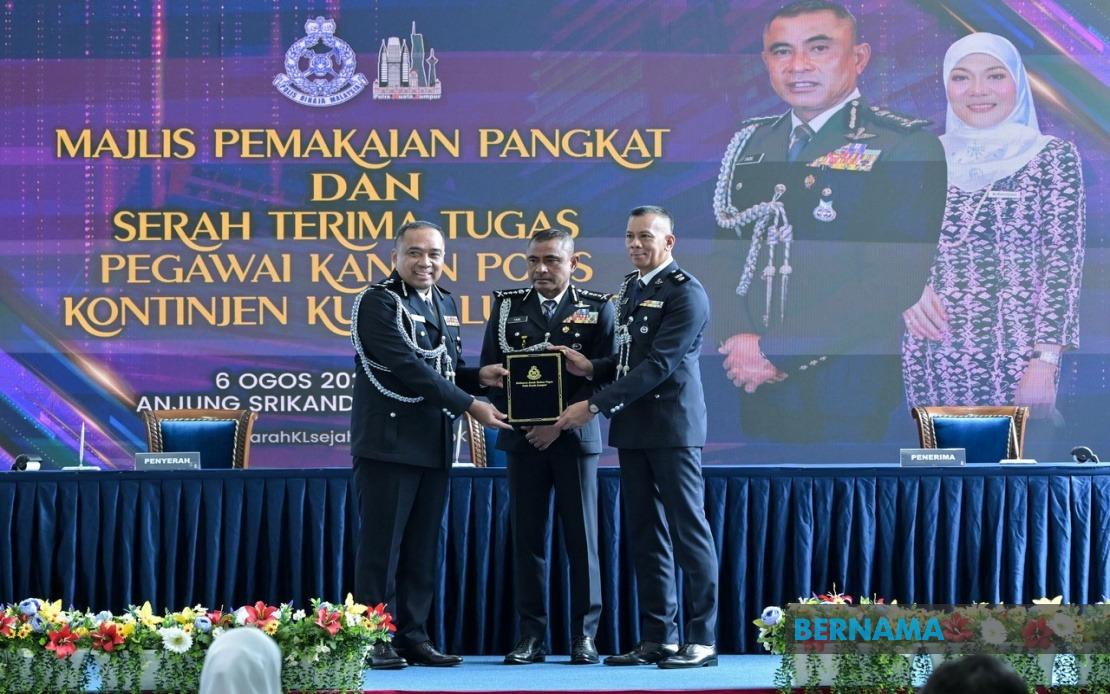
A significant realignment of Kuala Lumpur's police hierarchy took shape on August 6 when Datuk Fadil Marsus, the city's police chief, presided over a formal handover ceremony for six senior command positions. The event at the Kuala Lumpur police contingent headquarters marked one of the most substantial leadership reshuffles in recent months, affecting critical departments responsible for criminal investigation, drug enforcement, district policing and intelligence operations.
The restructuring demonstrates the Royal Malaysia Police's ongoing efforts to inject fresh perspectives into key operational units while maintaining institutional continuity. Such management transitions, though routine in large organisations, carry particular weight in law enforcement where leadership stability must be balanced against the need for operational innovation. The timing of these appointments reflects broader policing strategies being pursued across the capital's security apparatus, particularly as the force grapples with evolving criminal methodologies and community safety concerns.
Among the significant changes, SAC Zulkarnain Samsudin relinquished his position as head of the Criminal Investigation Department to SAC Sazlee Adam, signalling a transition in the leadership of the unit responsible for serious crime investigation across the capital. Simultaneously, the Narcotics Crime Investigation Department saw ACP Kee Hang Kee assume control from SAC Haslah Bachok, placing a new commander at the helm of operations against drug trafficking and abuse—a perennial challenge in urban Malaysia.
At the district level, substantial changes were implemented to ensure neighbourhood policing remained responsive and locally engaged. Supt Nuzulan Mohd Din took the helm of Dang Wangi district police operations, transitioning from SAC Sazlee Adam's previous oversight, while Supt Jasni Zolpa assumed leadership of Sentul district following SAC Basri Sagoni's move. These district-level appointments are crucial as they directly influence police visibility and community relations in two of Kuala Lumpur's densest residential and commercial zones.
The intelligence and operational backbone of the organisation also experienced reconfiguration. The Special Branch deputy chief position responsible for intelligence and operations moved from SAC Kamaruzaman Md Alib to ACP Saefuddin @ Mohd Fitri Abdul Rahman, a transition affecting the force's counter-intelligence and strategic operations. Complementing this shift, Supt Ong Seng Keong assumed the deputy chief role for the Criminal Investigation Department's intelligence and operations division, replacing SAC Zulkarnain Samsudin in a move that further demonstrates the cascading nature of these appointments.
In his remarks during the ceremony, attended by Kuala Lumpur deputy police chief Datuk Mohd Azani Omar, Fadil articulated the philosophy underlying these personnel movements. He characterised promotions and transfers not merely as recognition of individual competence, but as reflections of institutional confidence requiring recipients to demonstrate elevated standards of integrity, technical proficiency and professional commitment. This framing underscores expectations that officers elevated to senior roles will champion cultural standards throughout their commands.
Fadil further contextualised the reshuffle within the PDRM's broader operational philosophy. Leadership transitions, he noted, symbolise an unbroken chain of command continuity while simultaneously enabling the organisation to evolve through fresh insights and alternative operational approaches. This balance between stability and adaptive capacity remains essential for police forces managing rapid environmental changes, whether technological, demographic or criminal in nature. The chief emphasised that such transitions must not disrupt the fundamental objective of delivering reliable public security.
The timing of these appointments coincides with intensifying demands on Kuala Lumpur's police establishment. The capital faces increasingly sophisticated criminal enterprises ranging from organised property crime to transnational drug trafficking networks, requiring investigative units to maintain cutting-edge capabilities. Additionally, the metropolitan area's explosive population growth and complex urban dynamics demand district commanders capable of deploying community-oriented strategies alongside traditional enforcement approaches. Intelligence operations similarly face mounting pressure to counter security threats in an increasingly interconnected region.
Fadil's call for strengthened commitment to crime reduction, drug abuse prevention and enhanced investigation capabilities reflected real operational priorities facing the organisation. He particularly emphasised the importance of building deeper community partnerships, recognising that sustainable policing relies upon public cooperation and trust. For a force operating in a diverse metropolitan environment like Kuala Lumpur, such engagement becomes even more critical as residents from varied backgrounds interact with police services daily.
The reshuffle positions experienced commanders in roles where they can influence institutional direction. With six appointments affecting investigative, narcotics, district administration and intelligence portfolios simultaneously, the changes create opportunities for coordinated strategy implementation across previously siloed functions. The concentration of movements suggests deliberate design rather than routine rotation, indicating that senior leadership identified specific areas requiring attention or fresh approaches.
For Malaysian security observers and residents of the capital, these appointments represent neither dramatic upheaval nor mere administrative formality, but rather the measured evolution characteristic of professional police forces managing complex urban environments. The depth of experience represented by the transferring officers—who retain significant responsibility in their new postings rather than exiting the system—suggests organisational confidence that existing talent can address emerging challenges. Over coming months, the effectiveness of these appointments will become apparent through measurable changes in crime statistics, investigation outcomes, and community feedback regarding police responsiveness and professionalism.

