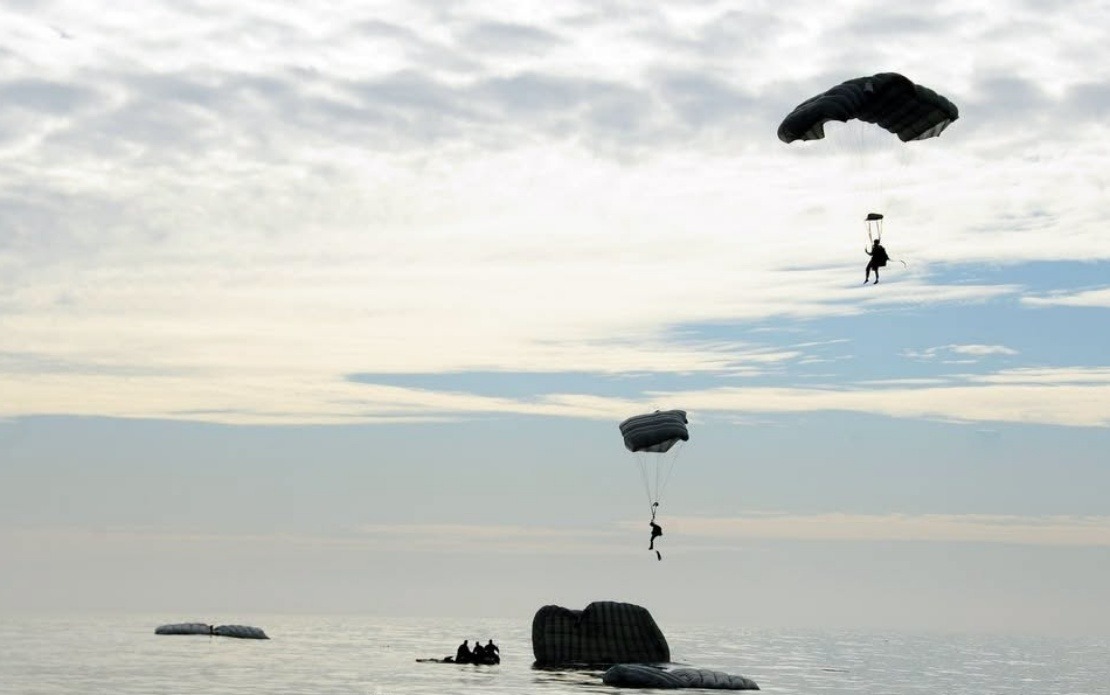
Six elite commandos from Malaysia's Naval Special Warfare Forces, known as PASKAL, have been safely recovered after an unplanned maritime ordeal during a training exercise in the South China Sea. The incident occurred when the personnel, conducting a free-fall parachuting drill, missed their intended landing zone due to sudden meteorological changes that dramatically reduced visibility in the area. All six were located floating in the waters and brought aboard a Royal Malaysian Navy vessel, which had been conducting operations in the region.
The Royal Malaysian Navy released a statement confirming the successful rescue operation, emphasizing that the entire situation was handled swiftly and professionally by its personnel. The unexpected nature of the exercise—where planned elements deviated significantly from their intended trajectory—provided an unscripted test of emergency response protocols and inter-unit coordination among navy assets deployed in the South China Sea. Weather remains a persistent variable in military training operations throughout Southeast Asia, where monsoon patterns and sudden squalls can dramatically alter conditions within minutes.
RMN officials framed the incident as validation of their rigorous preparation standards rather than a failure in planning. The statement highlighted that sudden atmospheric changes had severely compromised the team's ability to navigate toward their designated recovery point, forcing them to rely on backup procedures that ultimately proved effective. This characterization reflects how professional military organizations typically respond to unplanned training outcomes—by extracting lessons and emphasizing resilience rather than dwelling on the disruption to scheduled activities.
The response also underscores the high operational standards maintained within PASKAL, Malaysia's premier special operations unit. These forces undergo some of the most demanding training regimens in Southeast Asia, combining advanced combat skills with survival expertise and psychological resilience. The incident, while unintended, demonstrated that this preparation extended beyond combat scenarios to encompass genuine survival situations where personnel must maintain composure and follow protocols in genuinely hazardous circumstances.
The Navy's emphasis on the unit's motto, "Sentiasa yang Terbaik" (Always the Best), reflects how military organizations reinforce organizational culture through repeated messaging and lived experience. When unexpected situations resolve successfully, they become powerful validation of training philosophies. For PASKAL personnel, whose operational deployments potentially involve maritime infiltration, counterterrorism, and other high-risk activities, the ability to maintain discipline and follow survival protocols under stress directly translates to mission effectiveness.
Maintaining maritime security across the South China Sea requires both conventional naval assets and highly trained special operations personnel. Malaysia's claim to waters within this disputed region necessitates continuous presence and demonstrated operational capability. Training exercises like parachute operations serve multiple functions—they maintain personnel readiness while simultaneously establishing a visible military presence throughout Malaysian-claimed waters. The incident, despite its unplanned nature, likely reinforced the navy's operational presence in the area.
The balance between rigorous training and personnel safety remains a persistent challenge for military organizations worldwide. PASKAL's training philosophy evidently prioritizes realistic scenarios that push personnel beyond comfort zones, accepting that such intensity occasionally produces unintended complications. The success of the rescue operation suggests that safety protocols were indeed in place—recovery vessels monitored the exercise, communication systems functioned, and backup procedures activated appropriately. This layered approach to risk management is essential when operating in maritime environments where sudden deterioration in conditions can quickly create genuinely dangerous situations.
For Southeast Asian regional security, the demonstrated capability of Malaysian naval forces to execute complex operations and respond effectively to emergencies represents an important factor in regional stability calculations. The presence of well-trained, professional special operations forces contributes to deterrence and reassures neighboring states regarding maritime security commitments. The incident also illustrates the realistic training environments necessary for such capabilities—theoretical training produces different results than operations conducted in actual weather, actual darkness, and actual separation from planned recovery zones.
The South China Sea environment presents particular training challenges due to its strategic importance, heavy maritime traffic, and geopolitical sensitivities. Military exercises in contested waters require careful coordination with multiple stakeholders and heightened awareness of how training activities might be perceived by other claimants or extraregional powers. The Navy's controlled release of information about this incident demonstrates sophisticated communications management—providing transparency while emphasizing professional competence and operational effectiveness.
Looking forward, this incident will likely inform refinements to PASKAL training protocols, particularly regarding weather prediction and rapid decision-making regarding exercise continuation or modification. Military organizations constantly evolve training methodologies based on actual field experience. The six personnel involved, while experiencing an unexpected ordeal, likely gained genuine practical experience in maritime survival that no simulation could fully replicate. Their successful recovery and the unit's demonstrated capability to handle unexpected situations reinforce why PASKAL maintains its elite status within Southeast Asian special operations communities.

